Posted on

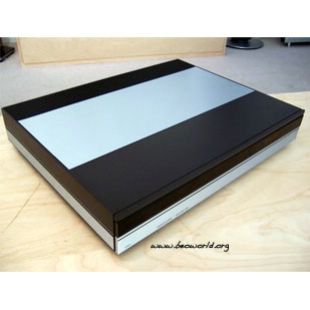
BeoCord VX5000

Bang & Olufsen BeoCord VX5000

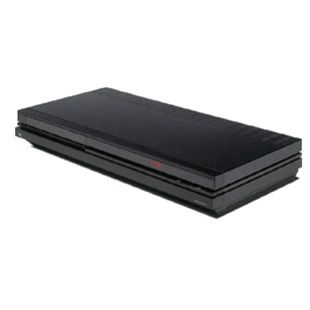
Designed by David Lewis, Beocord VX5000 was the flagship of the range in the late 1980’s, with the ability to display live pictures from up to nine different channels simultaneously. A TV guide that was hard to beat! The VX5000 worked best with a Bang & Olufsen TV, simply because they were made for each other. You could choose from either the contemporary MX or the classic LX series.

Beocord VX5000: the multi-role video recorder

Designed by David Lewis, Beocord VX5000 was the flagship of the range in the late 1980’s, with the ability to display live pictures from up to nine different channels simultaneously. A TV guide that was hard to beat! The VX5000 worked best with a Bang & Olufsen TV, simply because they were made for each other. You could choose from either the contemporary MX or the classic LX series.

Step by Step

When you wanted to analyse a Wimbledon championship down to the last detail you would find the slow motion facility a real boon. And of course it was superb for picking up tips to improve your sporting style. You could also freeze frames, not only on video, but also in the middle of a direct broadcast; the picture quality remained at its impressive best.

We all know how complicated programming some video recorders can be. With the Bang & Olufsen range you don’t need a degree in pure maths to succeed. A ‘menu’ on the screen gave you straightforward instructions. So easy that you would want to take advantage of programming that lets you preset recordings of up to six different programmes up to one year in advance!

There was a very handy Search function too; acting like the ‘Track Searching’ on an audio cassette recorder, it took you to the programme you want with minimal fuss and bother.

Video or all-night music

The VX5000 gave you the choice of either four hours of video, or up to eight hours of top-quality hi-fi sound to last the whole night through!

Beocord VX5000 was designed specially be use in conjunction with Beovision MX5000 TV when, together, you could pull in a live picture from another channel on the screen while you continued with the programme you were already watching. Very handy when you were waiting for a specific programme on another channel to start. Much the same could be done in later years with the advent of Picture-in-Picture – a module bought as an accessory for fitting into your television.

Posted on

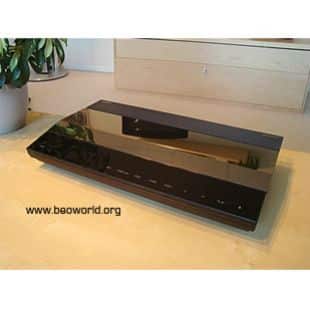
BeoCord V6000

Bang & Olufsen BeoCord V6000

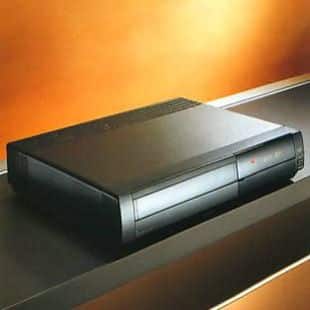
Beocord V6000 was a hi-fi stereo video cassette recorder designed to work with Beovision models ME6000 and MS6000.

Together they formed an integrated unit in which TV and video cassette recorder automatically share all commands and can be operated by the same remote control. This combination was designed to be used as a standalone TV/VCR combination. The VCR had all playback facilities as any standard VCR. It also had VPS/PDC and NTSC playback. The video recorder was controlled via a Beolink 1000 handset through the Beovision television.

Bang & Olufsen’s new generation of TV and video systems at the time that the V6000 was released, made it simpler an more comfortable to watch TV. All data stored in the TV: time and programme channels, were automatically stored in the VCR as well. The same applied when you connected your TV and video recorder to a Beolink system – the clocks on the various units within the system were automatically synchronised.

Posted on

BeoCord V3000

Bang & Olufsen BeoCord V3000

Beocord V3000 was designed to match Beovision LS5500 in looks and budget in order to allow video programming directly on-screen. It permitted eight programmes to be recorded up to one year in advance and had a superb quality slow motion and freeze facility. It also had twin speed recording and playback.

With the assistance of the Beolink 1000 remote control terminal you could handle complicated programming of the video recorder in the easiest possible way – direct via a menu on the TV screen. Beocord V3000 also had Bang & Olufsen’s uniquely fast access to taping any programme you were watching at that moment.

Press RECORD twice on the Beolink 1000 terminal and the VCR would automatically find the right channel in its memory and commence recording your TV programme. It was a fast mover too, having two winding speeds in both directions for picture search. Four video heads ensured that you obtained still pictures and slow motion in choice quality. Sound quality was in mono.

Posted on

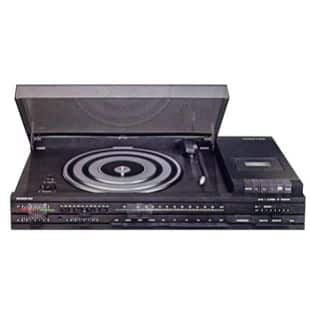
BeoCord 5000 (1984)

Bang & Olufsen BeoCord 5000 1984

A top-quality cassette recorder, perfectly matched to Beomaster 5000 as part of Beosystem 5000. When the two units were used together the cassette deck could be operated entirely by remote control.

Beocord 5000 was of very advanced design in both its technical features and in its control/operations systems. For the home recording enthusiast it offered superb standards of sound quality and precision engineering. Bang & Olufsen’s patented HX PRO recording system, Dolby B and Dolby C Noise Reduction and a 6-layer Canon combination head with a 1.8mm gap all contributed to a recording and playback performance that delighted even the most exacting technician.

For the novice or the non-technical music lover, Beocord 5000 represented a supremely straightforward way of making high-quality recordings and subsequently enjoying them in relaxing comfort.

Every possible convenience was built into the Beocord’s control system. There was a START/GO function that rewound the tape to its beginning and played it without further instruction. And an automatic ADVANCE function (tape search) that found the start of any required track from either end of the tape.

Selection between ferric, chrome and metal tapes was fully automatic, and setting the correct recording level was quick and easy using the input sliders and LED signal strength meters. You could switch instantly from one tape transport mode to another (e.g. from play to fast rewind) without any danger of tangling the tape or harming the mechanism.

The cassette tray and direct operation controls were housed in a motor-driven drawer which opened and closed at a touch. When used with Beomaster 5000, Beocord 5000 could, of course, be programmed to record or play automatically at any set time.

Connections: stereo microphone (DIN); Aux input DIN; data-link to Beomaster 5000 (one socket, 3-way switchable)

Posted on

BeoCord 4500

Bang & Olufsen BeoCord 4500

Beocord 4500 cassette recorder housed exciting details and distinguished technology. Like Auto Reverse, so you did not need to turn over the tape. Automatic registration of the type of tape, and Bang & Olufsen’s patented HX-PRO recording system that provided optimal sound reproduction. Both in design and technology, Beocord 4500 was a direct extension of Beomaster 4500.

The cassette recorder featured Bang & Olufsen’s own HX-PRO recording system which ensures that recordings are made as perfectly as possible. With the Beolink 1000 terminal or by lightly touching the panel itself, you could select a particular piece of music you wanted to hear. The search system found it automatically whether it was on Side 1 or Side 2 of the cassette. For Beocord 4500 had Auto Reverse so you did not have to turn the tape over.

The recorder was also equipped with Dolby B and knew exactly what type of tape you were using. Beocord 4500 could be used as part of the Beosystem 4500 hi-fi system.

Posted on

BeoSystem 9000C

Bang & Olufsen BEOSYSTEM 9000C

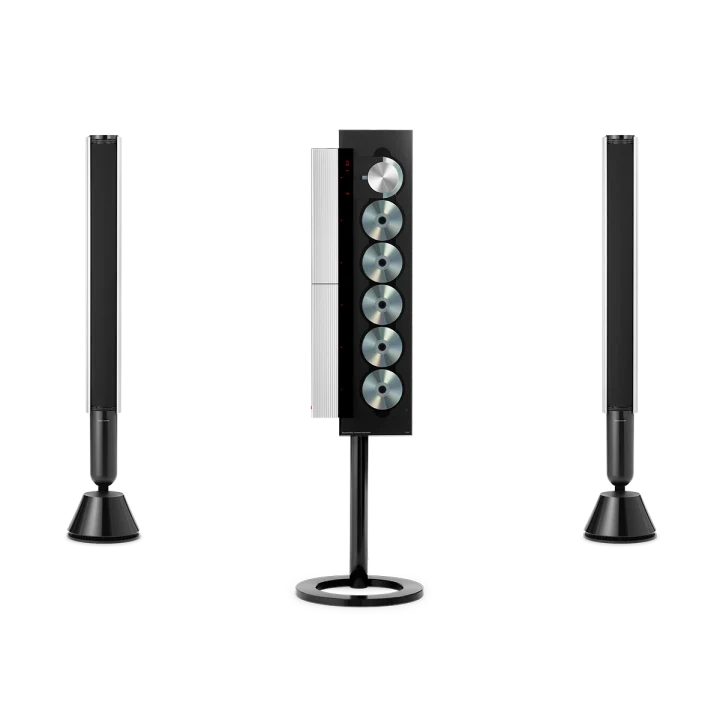
The Beosystem 9000c is a beacon of beautiful sound, and your personal record store window. Paired with the Beolab 28 speakers, we’ve brought the Beosound 9000 CD player to the present.

Only 200 of these exist
We’ve stripped the original Beosound 9000 CD player to its core and rebuilt it from the ground up. Guided by design legend David Lewis’ original vision to proudly display your music, instead of hiding it in a black box. Its tall, transparent form makes a gallery of your albums. A duo of Beolab 28s showcase the unbeatable fidelity of your CDs. It’s a goosebump-raising partnership of acoustics and aesthetics. This is Beosystem 9000c.
All the benefits of cutting-edge tech. All the beauty of classic design.
Beosound 9000c is an icon of the past. With an ear to the future. A new anodised floor stand and fabric cable add texture to the famous silhouette. Want to truly bring past into present? The integration of Beoconnect Encore enables the player to connect seamlessly with two Beolab 28s – and all their modern features. Sound you can direct as you choose. Bass that adapts to any room and placement. Precise stereo coordination. In an age where CDs are considered obsolete, Bang & Olufsen celebrates the legacy of the CD with the Beosound 9000c. As champions of fidelity, we meticulously recreated this iconic CD player to give you every note, detail and beat of your collection. Like you’ve never heard it before. It’s not just about the superior sound. It’s feeling the music in your hands. Lingering on the artwork. Carefully choosing your lineup. With a 90s style control panel and six-CD changer to play with, Beosystem 9000c brings that back in the biggest way possible. Every listening session becomes an event. Each time you press play, you touch the music and it touches you.
The engineering of Beosystem 9000c isn’t just for show. It is the show.
The CD clamp accelerates as quickly as a sports car. An LED ring shines as it takes your discs for a spin. And with that speed comes seamless switching between individual album tracks – no matter which CD they’re on. It’s a single, endless stream of sound. 31 years before digital got there. All housed under a glass case to keep the artwork and movement as crystal clear as the music.
Imagined in London. Born in Denmark.
Soho, London, 1995. Bang & Olufsen designer David Lewis walks past a record store window and stops in his tracks. He sees six CDs, laid out in a row. A gallery of album art. It gets his mind turning: imagine you could put your music on display, instead of hiding it away in a black box. The idea for the Beosound 9000 was born. A six-CD changer and record store window in one. Designed so that everyone can bring a CD to the mix. And fill the home with an endless stream of beautiful sound.

Posted on

BeoVox 1

BeoVox 1 provides an elegant and discrete in-wall or in-ceiling two-way passive loudspeaker solution with excellent sound performance and numerous placement options in one solution.

In the construction are selected high-quality loudspeaker units (one 16.5 cm woofer and one 2.5 cm tweeter) and applied a carefully designed cross-over network to improve its acoustic performance so the sound dispersion in the treble area is optimised.

Most in-wall loudspeakers are either round or square, but Bang & Olufsen has chosen the elegant, discrete, oval design for BeoVox 1 applying typical Bang & Olufsen craftsmanship. It will be available with either a white or black grille but at launch only the white version is available to order.

Many loudspeakers designed for installation in a wet environment may show an IP rating. This applies to products which can be dangerous to touch when water is in the vicinity because it may splash through the product surface and into the electronics. However, BeoVox1 is a product which is not directly connected to mains electricity so it may be installed directly over a bath or in a wet environment without the need to quote an IP rating.

Posted on

BeoCenter 2300

Bang & Olufsen BeoCenter 2300

Beocenter 2300 was dedicated to the CD enthusiast who, for example, like to store the titles of favourite CDs, or permanently skip unwanted tracks. It was known as Beosystem 2300 when connected to the BeoLab 2500 active speakers. It was eventually surpassed by BeoSound 3000 when it included more features and received a facelift in 2001.

Beocenter 2300 was developed from the idea of a flexible music system that could compete with the sound quality of heavy music systems. Thanks to the advent of active speakers, this was a possibility with both Beocenter 2300 and its similarly-equipped sibling (which also had cassette tape recording and playback) the Beocenter 2500. With active speakers, each of the powerful bass and treble units were equipped with their own separate amplifiers. In addition, the electronic cross-over network ensured full bass reproduction.

The loudspeakers were located on both sides of a centre console, where two clear glass covers automatically glided to the side when a hand was passed in front of them. Behind the glass covers there was access to the operating panel, receiver, CD player and a cassette recorder.

The receiver allowed the option of presetting 2 x 20 FM/AM radio stations. The cassette recorder featured Auto Reverse, Automatic Recording level, search function and Bang & Olufsen’s HX-PRO recording system, a system which ensures that the sensitive treble range is captured in recording. The memory in Beocenter 2300’s CD player allowed you to edit up to 100 CDs.

Both systems could be operated via their operating panel or a Beolink 1000 or Beolink 5000 remote control. There were sockets for headphones and connection to additional sound sources; extra loudspeakers can also be connected.

Beocenter 2300 was available with loudspeaker panels in cobalt grey, black, white, cerise or jade and could be made up to the Beosystem 2300 when incorporated with the BeoLab 2500 active loudspeakers.

Mounting Options

This classic design was reincarnated over a 21 year period with various mounts and stands. Floor stands were available with a pole stand or CD and tape storage, wall mount solutions allowed for the Hi-Fi only, or with BeoLab2500 speakers until these were discontinued

Posted on

BeoSound Ouverture

Bang & Olufsen BeoSound Ouverture

“BeoSound Ouverture: the design may be a Bang & Olufsen classic, but BeoSound Ouverture and BeoSound 3000 refuse to rest on their laurels. Access to new musical sources and fresh loudspeaker options ensure that the concept remains an open invitation to make something special out of your music” (B&O catalogue 2001 -2002)

This stereo has two different names: BeoSound Ouverture in Europe and BeoSound 4000 in the rest of the world. This is the only stereo system, so far, to support the new MasterLink system without any add-ons. It’s really a follow up to the Beocenter 2500 which was the first and original stereo with this somewhat different look. Along with the launch of this unit in 1991 (as the BeoSound 2500) Bang & Olufsen also started selling the new remote control – Beo4. The difference between the Ouverture and Beocenter 2500 is that the newer model doesn’t feature two-way communication and it has instead a completely new CD mechanism. It also holds some new features when it comes to the CD. But the most important difference is the MasterLink connection. With this system you can connect the unit to, for example, a BeoLab 2000 or BeoLab 3500 without any further electronics. Reach out and the doors glide quietly aside, while a gentle light spreads from within. It’s BeoSound Ouverture’s way of saying, “welcome” and part of the experience every time you put on a new tape or CD. CD player with programming, tape recorder with auto reverse, FM/AM radio with pre-set, timer function, optional Beo4 remote control operation, connections for Beolink® and headphones, optional wall bracket and floor stand. BeoSound Ouverture’s unassuming rubber key pad hides a contact foil, which, in turn, covers a matrix of vertical and horizontal cords. When a control is pressed, the cords connect and the microprocessor is activated.
Design
Music is more than just something you listen to, it’s an emotion you experience. So isn’t it time your favourite music was played on something that lets it express itself to the full? BeoSound Ouverture stands up and invites you to make something special out of your music – over and over again.
Features
Bring new life to old CDs by changing their track sequence with the Random Play function. Or programme it to skip over any unwanted tracks and to play the ones you want in the order you prefer. Transferring the music of a CD onto tape doesn’t have to mean poorer quality. The Ouverture constantly monitors and adjusts the signal during any recording to ensure a uniform sound level throughout – and will automatically stop recording when the CD finishes playing. There’s room for up to 30 pre-set stations on the Ouverture’s intelligent AM/FM radio.
So how do the sliding glass doors work?
The glass doors on the BeoSound 3000 and BeoSound Ouverture are opened and closed by steel wires driven by an electric motor via a gearbox. The motor is triggered by an infrared system that detects your approach… Why wake up to an annoying alarm clock when it could be your favourite piece of music instead? The timer function on the Ouverture can be programmed for the entire week and will automatically turn itself off again after playing for any length of time you choose.
Specials
Just raise a hand and watch as the glass doors glide silently aside. It’s the Ouverture’s way of saying “welcome” and reveals that a special experience is about to begin. Of course, a simple on/off button would do, but then what would be so special about that?

Easily Placed
It’s a dream come true – a music system that can fill your life with music without filling your home with equipment. The flat upright design of BeoSound Ouverture means that it’s slim enough to sit by itself upon the narrowest shelf or light enough to be hung directly on a wall with a pair of loudspeakers.
Use
With its mix of glass and aluminium, the Ouverture grabs the attention without shouting out loud. Its compact size and visual presence ensures that it enhances rather than dominates the surroundings in which it’s placed – which makes it the perfect audio system for the home and place of work. The stereo can also be controlled by the optional Beo4 remote control.

Mounting Options
This classic design was reincarnated over a 21 year period with various mounts and stands. Floor stands were available with a pole stand or CD and tape storage, wall mount solutions allowed for the Hi-Fi only, or with BeoLab2500 speakers until these were discontinued