Posted on

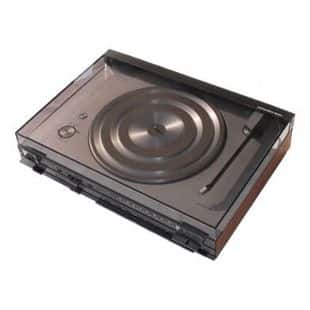
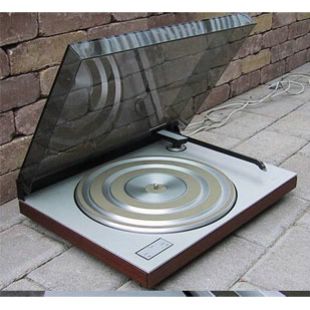
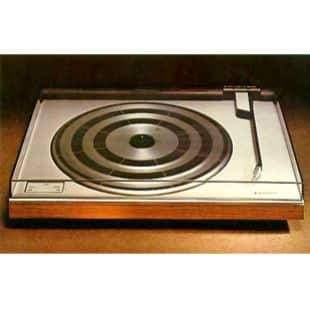
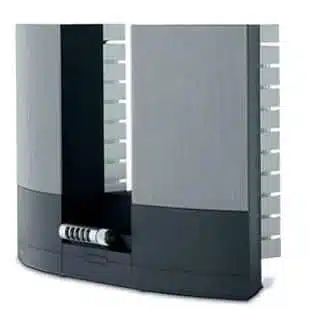
BeoLab 2000

Bang & Olufsen BeoLab 2000

With BeoLab 2000 the customer is able to extend choices with a range of dedicated Beolink® products. These offer the maximum convenience when it comes to moving and controlling sound and vision around the home.

BeoLab 2000 is the second speaker from Bang & Olufsen specially made for the Beolink® system, MasterLink, the first being BeoLab 3500. This product was designed by Anders Hermansen. All its required electronics are housed within the speaker and the only thing needed is a cable to be plugged in. As with all MasterLink products, BeoLab 2000 is totally auto-configurating.

On the front of the speaker there are buttons to select which source to listen: CD, tape and so on, as well as track selection and on/off. There is also a volume control of course. The speaker can also be operated via a remote control – for example the Beolink 1000 or Beo4. The sound is really impressive considering the very small net volume. This speaker is best used in smaller rooms such as kitchens and bedrooms.

In the kitchen, a BeoLab 2000 connected to the BeoSound Ouverture or BeoSound 3000 in the living room will give you hands-on control of various sources. Via the link to the Beovision Avant, you can follow the news on TV and only watch if something catches your interest. In the kitchen, the bathroom or the garage this little active loudspeaker gives you the option of remote or hands-on control of tape, CD, radio, timer and volume.

“When it comes to sound reproduction we believe there’s only one relevant parameter: How close can we come to the originally recorded sound. We feel an obligation not to disturb the intentions of the artist by adding unnatural elements to the acoustic image. Therefore all Bang & Olufsen loudspeakers share the same goal. They differ in size and shape and in terms of sound pressure level. But they are all developed to reproduce the natural, unaltered sound as closely as possible ” – Bang & Olufsen catalogue 2001 – 2002

BeoLab 2000 is a flexible Beolink loudspeaker which is easy to accommodate and gives you the option of hands-on or remote control. On the front panel you choose between CD, tape or radio, turn on & off, up & down. A bracket for wall or corner mounting is included

Why build amplifiers into the loudspeakers instead of keeping them separate?

Because you can reduce the size of the cabinet volume to one-third of the size of a conventional loudspeaker with the same sound capacity. The principle is called Active Loudspeakers, and what you get is a compact loudspeaker that can play at high volume without distortion or damage to its drive units. Furthermore, when amplifier, treble and bass units are paired for the same task, they can be tailored to compensate for each other’s shortcomings. What you hear is music that sounds exactly like the instrument it originally came from.

The fine art of control of BeoLab 2000

A control knob on the front of the BeoLab 2000 allows hands-on operation, when or if a Beo4 remote control is not at hand. A perforated disc inside the knob breaks a beam of light in front of a sensor that counts the number of perforations and adjusts the sound level accordingly. No wear and tear and no distortion from worn out resistors.
Posted on

BeoLab 1700

Bang & Olufsen BeoLab 1700

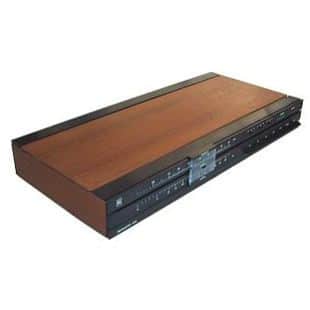
” This title and the picture of Beosystem 1700 might suggest a paradox to many readers. And in a way you are right. But there is a reason why Bang & Olufsen has separated this otherwise perfectly integrated high-fidelity system. The combination possibilities in Beosystem 1700 are so numerous that for many people the entire system is unnecessary. The essential part of the system is BeoLab 1700: a 2 x 20 watts RMS amplifier with ambiophonic stereo facilities.

BeoLab 1700 type 2605 was an amplifier designed to be used with Beomaster 1700 tuner.

The tuner, Beomaster 1700, the cassette-recorder, Beocord 1700 and the record player, Beogram 2000 (not shown) cover nearly all existing programme sources for the reproduction of music. Beovox 2702 loudspeakers complete the system. Beovox 1702 are recommended as side speakers for ambiophony, if this extra sound experience is desired. Now it is up to you to put your ideal Beosystem 1700 together. ”

The unit was a high-fidelity stereo amplifier whose technical specifications exceeded the DIN 45500 high fidelity norms by a wide margin. Frequency range was 20-30.000 Hz and power bandwidth was 10-50.000 Hz. Harmonic distortion was less than 0.1% at the normally used output (50 mW) and less than 0,5% at maximum power output (2 x 20 watts RMS). Music output was 80 watts total. With four loudspeakers – two front and two at the sides, ambiophony (an extension of stereo reproduction) could be achieved.

Apart from loudspeaker connections, there were sockets for tuner, tape recorder, record player and headphones. BeoLab 1700 had slider controls for volume, bass, treble and balance. A push button for LOUDNESS facilitated switching between an objective and a subjective linear reproduction. Monitoring (AB switching) could be carried out on BeoLab 1700 if the connected tape recorder had separate record and play-back heads.

Posted on

BeoGram 4002

Bang & Olufsen BeoGram 4002

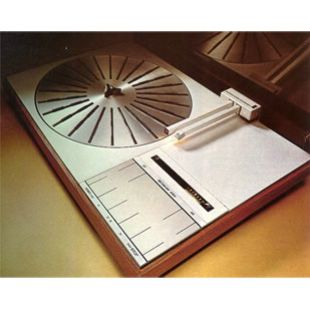
The replacement for the Beogram 4000, this deck actually existed in a number of forms, the first using the AC motor of the 4000 and later ones using a DC motor. Simplified compared to the 4000, it was cheaper to produce, if not buy, but maintained a very similar performance.

In terms of concept, performance and technical design, this record player was very much ahead of its time. All functions were governed by computer-like logic circuits. You just pressed START, that was all. Through the unique detector arm (parallel to the pickup arm) these circuits could judge the size of the record, determine its normal playing speed and instruct the pick-up arm to lower the stylus into the lead-in groove. Within a few seconds you would hear the music. If there was no record on the platter the stylus could not be lowered, so the system was safe as well as simple.

Records could be tracked more accurately because the tangential arm traced a straight line from the record’s edge to its centre, instead of tracing an arc as radial arms do. This method entirely eliminated inward bias (skating effect) and tracking angle error was almost non-existent.

The naked elliptical diamond stylus in the MMC 20EN (former MMC 4000) pickup cartridge helped ensure that Beogram 4002 got all of the information out of your record grooves while handling them in the gentlest possible way.

Bang & Olufsen’s Beogram 4002 turntable was awarded the ‘Gold Sim 74’ and ‘Top Form 74’ prizes in the category of electro-mechanics.

Beogram 4004/4002 could be made up as part of the Beosystem 4400 or the quadraphonic Beosystem 6000 when linked together with other compatible Bang & Olufsen products.

Beogram 4004/4002 was an electronically controlled stereo record player with tangential arm. The unit utilised a belt drive system to control the record deck. Thanks to the incorporation of advanced electronics, several advantages were gained from this new concept in record-players: high specification, supreme automation of all functions and the most gentle treatment of records. The tangential arm moved the pick-up in a straight line towards the centre of the record, reducing tracking error to a mere 0.04%. The record player was fitted with the MMC 4000 pick-up cartridge (later MMC 20EN) which had a frequency range of 20-25.000 Hz ±1.5 dB. It had an integrated, elliptical naked diamond stylus with a stylus pressure of 1g. Rotation of the turntable was governed by a synchronous motor which was power-driven via a stabilised oscillator which made it independent of mains voltage and frequency fluctuations. Wow and flutter was less than ± 0.05 % and rumble better than 65 dB. DIN B weighted. A photocell in the record-player’s second arm registered the size of the record and the speed at which it should be played. Advanced electronics governed the actions of the pick-up arm: lifting, lowering, etc. However, the record-player could be operated manually by use of the large “easy-touch” control plate. Operation of the record deck was very easy as all functions were governed by computer logic circuits. With its tangential detector arm that was parallel to the linear tracking tonearm, the unit could sense the size and speed of the record to be played and lowered the stylus into the lead-in groove. It had cueing controls to raise and lower the tonearm to where you wanted it on the record. If there was no record on the turntable and you pushed START, it would not lower the stylus on the turntable. Manual selectors to determine the speed of the record player were incorporated; however, the turntable was fully automatic so all you had to do was put on the record and press START.

Beogram 4004/4002 was fitted with a hinged dust lid which could be opened to any angle up to about 60 degrees or completely removed by easy sliding action.

Posted on

BeoGram 6000 (1974)

Bang & Olufsen BeoGram 6000

This deck was a variant of the Beogram 4002 but fitted as standard with a CD4 decoder. As with the 4002, there were two clear models , the earlier with the AC motor and the later with a DC motor.

The DIN plug was unusual in that it carried 4 discrete channels and was therefore best suited to the Beomaster 6000 or 3400. It did have a built in RIAA though and would play stereo records perfectly happily as the rear channels could be switched off.

The cartridge specified was the MMC6000, the ultimate cartridge in the range designed by and bearing the name of one of B&O’s pre-eminent engineers, Subir Pramanik.

Posted on

BeoGram 3400

Bang & Olufsen BeoGram 3400

Beogram 3400 was designed to play back quadraphonic-encoded records and incorporated an MMC 5000 with a Shibita diamond stylus. An optional CD4 decoder could be specified to allow play back of that type of LP as well SQ discs which could be played by any record player.

Quadraphonic sound

Bang & Olufsen produced two quadraphonic systems in the 1970s. The top model was Beosystem 6000 which comprised Beomaster 6000 and Beogram 6000. Beogram 6000 was a development of Beogram 4000 in that it was a tangential tracking turntable. It had an inbuilt CD4 decoder which was switchable. When ‘on’ it would detect the presence of the carrier frequencies and a display would illuminate on the record deck’s display as ‘4ch’.

The output of the Beogram was at line-level whether in 2- or 4-channel mode. The deck was attached to Beomaster 6000 via a 5-pin DIN lead with all the pins being wired. In Beomaster 6000 there was a replaceable board with a SQ decoder as standard. This was manually switchable. The operator therefore still needed to know the type of quad recording that was to be played. The purpose of the removable board was to allow upgrading should the record industry ever get its act together and find a common standard!

The second system was based on Beomaster 3400 and Beogram 3400 which had a radial deck and a smaller and simpler receiver. This again had similar functions. Beomaster 4000 and a few others had a facility called Ambiophonics which used a system of simulated four track sound from stereo records. Two Bang & Olufsen cartridges were made for playing CD4 records:

MMC5000 used a fairly standard Shibata profile

The top of the range MMC6000 used a profile designed by one of their own engineers – Subir Pramanik – and which bore his name

Posted on

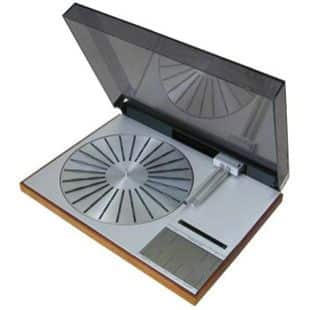
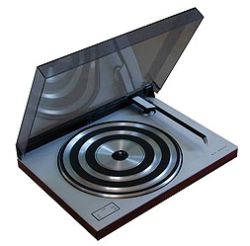
BeoGram 2000 (1974)

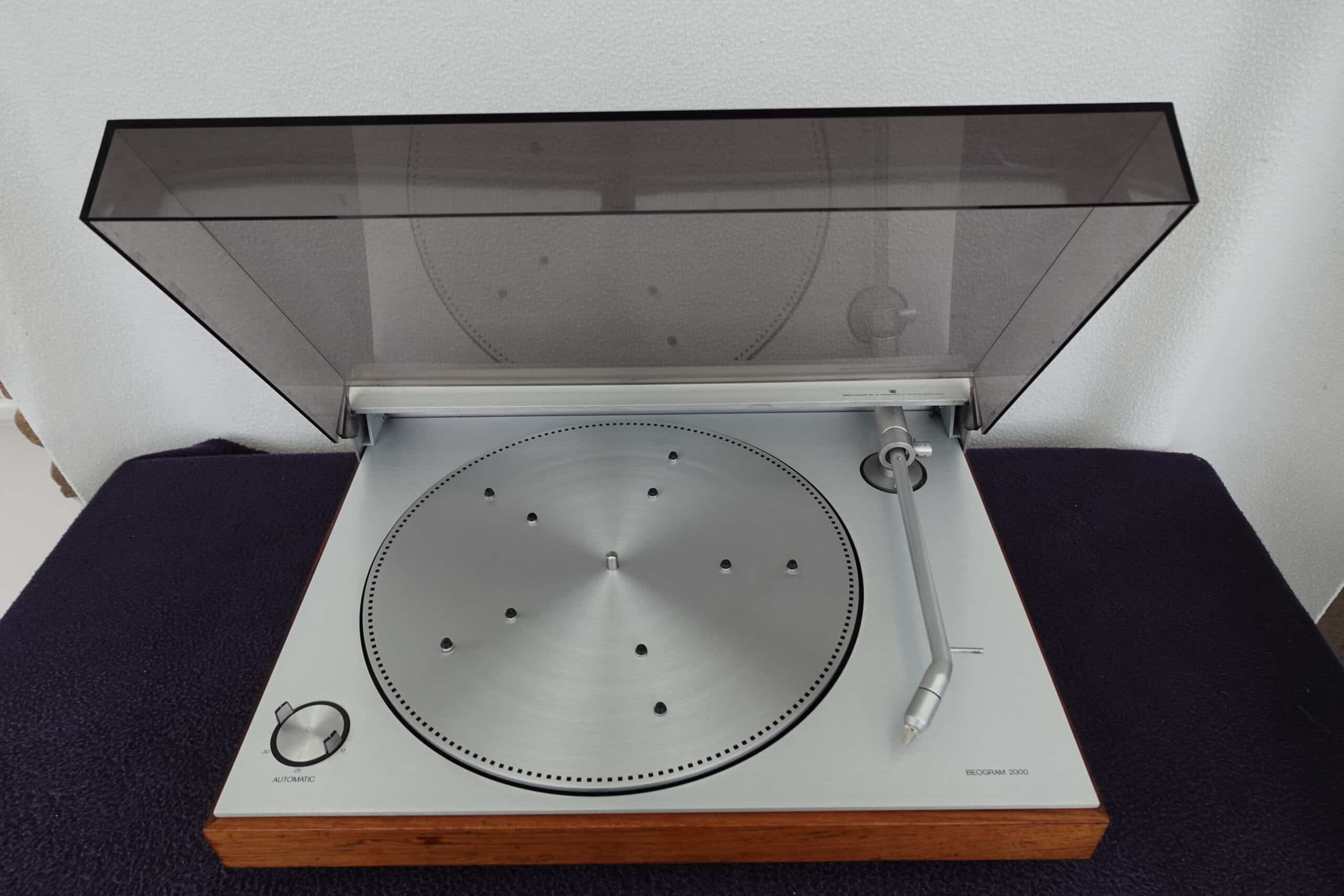
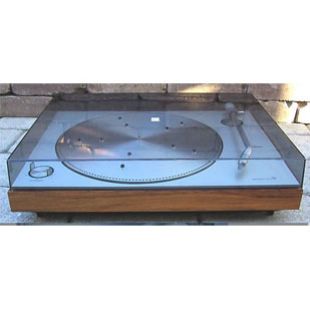
Beogram 2000 was an integrated two-speed (33rpm and 45 rpm) high-fidelity stereo record player with high specifications. But it was the simple, easy operation which was the most unique feature in Beogram 2000. A single master control executed all the essential functions.

All you need to do was to select the size of a record, 7″, 10″ or 12″ and press the button marked LIFT. Immediately, the turntable began to rotate at the correct speed (33 or 45 rpm) and the pick-up lowered into the first groove. At the end of the record, the pick-up arm returned to its resting position and the turntable switched off. Beogram 2000 was fitted with its own pick-up cartridge, SP 10A. This had a spherical naked diamond stylus.

Recommended- stylus pressure was 2 g. Its frequency range was 20-25.000 Hz ±3 dB. Distortion was lower than 1%, wow and flutter lower than 0.12% and rumble better than 60dB. Thanks to the pendulum suspension of the turntable and its pick-up am Beogram 2000 was insensitive to vibrations. A transparent dust lid was fitted to Beogram 2000. It could be opened at any angle up to 60 degrees or you could slide it off with ease.

This deck finally gave the ‘peg platter’ decks a proper lid. Not quite as advanced as the 1202, it was in all ways apart from the lid, a Beogram 1203.

Posted on

BeoGram 1203

Bang & Olufsen BeoGram 1203

Beogram 1203 was an automatic, high-fidelity stereo record-player with high specifications. It was beautifully-styled and extremely easy to operate. All you need to do was select the record size: 7″, 10″ or 12″ and press a button. The turntable automatically selected the correct speed: 33% or 45, and the pickup was lowered into the first groove.

At the end of the record, the arm automatically returned to its resting position and the turntable switched off. Beogram 1203 was fitted with its own pick-up cartridge, the SP 14A which had a spherical diamond stylus and a stylus pressure of 2g. Its frequency range was 20,000 Hz. ±3 dB. Distortion was lower than 1%, wow and flutter lower than ±0.15 % and rumble better than 58dB. The turntable and pick-up arm had a pendulum suspension which made the record-player insensitive to vibrations. A transparent dust lid and a spindle adaptor for playing centreless records were supplied with Beogram 1203.

It was in fact rather simpler than its immediate predecessor, the 1202 , and was based on the Beogram 2000 rather than the top of the range 3000.

Posted on

BeoCenter 1800

Bang & Olufsen BeoCenter 1800

Beocenter 1800 fulfilled hi-fi standards by a wide margin. The product was also way above the average in terms of ease and operation. Experience from Beomaster 1100 and Bang & Olufsen’s integrated gramophones were combined in the special space-saving unit, which on a specification level was on a par with many separates.

The FM section had automatic frequency control (AFC), four pre-set stations and light indicators. The amplifier’s power output was 2 x 22 watts RMS with less than 0,3% distortion at full power output.

The integrated gramophone was fully automatic. The user simply chose the size of the record and pressed a button – the machine did the rest. The pickup arm was of magnesium which was extremely light. This, together with the MMC 3000, a low-mass cartridge, made this one of the very few turntables on the marker that was capable of tracking warped records. The anti-skating device also worked automatically.

The pickup arm and the turntable mechanism had a special spring suspension which made the turntable shock and vibration resistant.

Records could be played with the dust lid closed, thus protecting both the turntable and the record collection from damaging dust particles. Beocenter 1800 had connections for tape recorder, two sets of stereo speakers and a pair of headphones.

When connected to a pair of Beovox Uni-Phase passive loudspeakers, it was known as Beosystem 1800.

Posted on

BeoGram 1102

Bang & Olufsen BeoGram 1102

Beogram 1102 was a fully automatic, hi-fi stereo record player with electronic servo-drive and high specification level. Operation was easy and straightforward. All functions were controlled by pressing the rectangular operating panel and if dissatisfied with the pitch of the record, speed could be adjusted by depressing the panel and rotating the little thumbwheel.
The pickup was an MMC 3000 with a spherical diamond. It tracked records at a stylus pressure of 1,2 grams. In order to fully exploit the pickup’s outstanding qualities, B&O constructed an extremely light magnesium pickup arm which, together with its unique suspension, ensured low inertia and thereby good conditions for correct contact between stylus and both walls of the record groove – at all times. Even warped records could be played satisfactorily.

Despite high specification levels, Beogram 1102 and 1902 automatic record-players are extremely easy to operate. All the technicalities are hidden under the surface.

Bang & Olufsen’s Electronic Servo Drive ensures that the rotatory speed of the Beogram 1102 and 1902 was always correct despite variations in the mains current supply. This is so because the system has a special feedback circuit which effects automatic corrections to compensate for these inherent variations

Beogram 1102 could be made up as part of the Beosystem 1100, together with other compatible Bang & Olufsen products

Beogram 1102 UK price in 1978: £97.00

These decks are beautifully made and offer super sound quality for almost no money. Much easier to maintain than the tangential decks simply because they are very simple! Excellent isolation from external vibrations – strongly recommended – and they were when new by Hi-Fi Choice! Simpler than the earlier 1100 – and better for that! A DC motor replaced the AC motor fitted to the 1100 and was electronically regulated with speed adjustment done through a potentiometer as opposed to the complicated measures used in earlier decks. This method would roll out across the range of Beograms.