Posted on

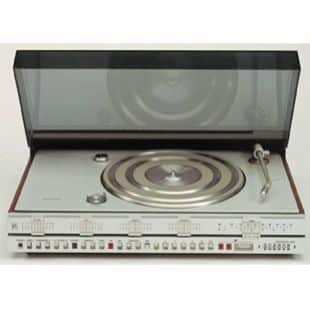
BeoMaster 4000

Bang & Olufsen BeoMaster 4000

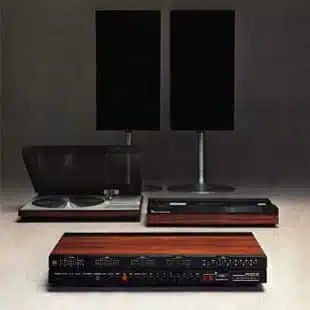
The amplifier section of this receiver had outstanding technical data: harmonic distortion was less than 0.1% at maximum power output and 0.06% at 50 mW. Frequency range was 20-30.000 Hz and effective bandwidth 10-35.000 Hz.

Frequency correction facilities were the LOW filter which reduced rumble on records (12 dB per octave at 80 Hz) and the HI filter which damped hiss (12 dB per octave at 4000 Hz). With the LOUDNESS control you could switch between objective and subjective linear reproductions. Beomaster 4000 had facilities for stereo and ambio reproduction. There were sockets for a record player and two tape-recorders, one allowing A\B monitoring. The headphone connection was placed on the receiver’s front. All inputs could be adjusted to give equal volume from all programme sources. The FM section had six pre-set stations. A light indicator assisted accurate tuning and an illuminated meter indicated the strength of a station. Field effect transistors, ceramic filters and integrated circuits were used.

When combined with a built-in record deck, the music centre was known as Beocenter 3500.

Receivers and amplifiers with the ambio function were products which, apart from stereo, could also reproduce the ambience or sound information of a room. Ambient information was included on most stereo vinyl recordings but could not be reproduced by a sound system with two loudspeakers or an ordinary stereo amplifier. Bang & Olufsen systems with the ambio function had facilities which electronically subtracted the difference signal (i.e. the difference between left and right channels) which contained ambient information. This information was fed into two extra loudspeakers which were placed as side speakers in a room. Ambiophony was an extension of stereo reproduction and enhanced the sense of realism. It could be used with nearly all stereo programme materials.

“Ambio is an extension of the type of sound reproduction known today as stereo.

Ambio is reproduced through four loudspeakers – two more than required for stereo.

Ambio is sensed as being more spatial and acoustically more life-like than conventional stereo. The sound picture has greater depth because you get the added feeling of being present of the concert hall, listening to the actual performance. Ambio is based on the principle that in the concert hall you not only receive sound impressions directly from the performing group, you also get reflections from the wall and ceiling. The spatial sensation is instrumental in providing the auditory experience and even a two-speaker stereo system will not bring it out fully. And you cannot accomplish the effect by connecting additional speakers to a conventional stereo amplifier because you still have the same left and right front signals merely distributed to more speakers.

In the Beomaster 4000 the left and right channels are subtracted from each other electronically and the resulting difference signal contains a certain amount of spatial information which is fed to the two new side speakers.

Many existing stereo records, FM broadcasts and tape recordings contain this spatial effect to a greater or lesser extent. In a concert hall, room acoustics will be recorded together with the actual programme material, appearing as time-delayed signals in both left and right channels. Recordings made in a strongly damped studio contain few time-delayed signals and the spatial sensation will therefore depend on how the producer mixed the sounds from the various instruments, perhaps adding acoustical effects by electronic means.

Multi-channel records such as SQ records, which are intended for use in a four-channel matrix system in order to bring out the sound effects , can be played successfully through the Beomaster 4000.

A good quality stereo turntable will provide ambio reproduction of both stereo and SQ records through your Beomaster 4000″
Posted on

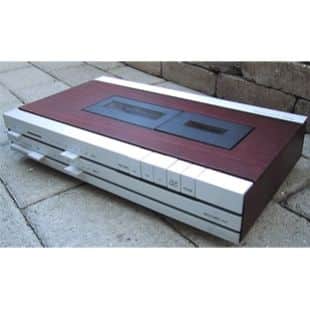
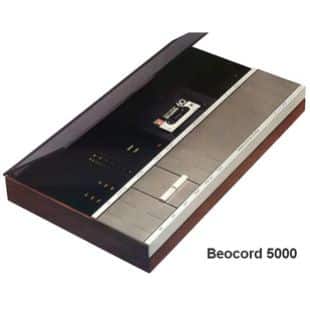
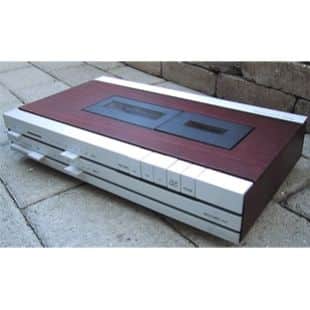
BeoCord 5000 (1975)

Bang & Olufsen BeoCord 5000 1975

Beocord 5000 was a superior cassette deck with a Sendust tape head, dual capstans and a special servo drive system which secured low wow and flutter-data. Electronic recording level indicators (Peak Programme Meters) and the Fade in/Fade out functions facilitated exceptional recordings of the most demanding types of music. An automatic demagnetizing device helped ensure optimum signal/noise ratio at all times.

A Hall generator secured the most reliable automatic stop at the end of play. Because it worked electronically it was superior to mechanical systems which are always subject to wear and tear, stress and strain. Naturally Beocord 5000 incorporated Dolby B Noise Reduction circuits. You could also switch from fast forward to fast rewind, or normal play, without endangering your tapes or damaging the drive mechanism.

Despite these technological refinements Bang & Olufsen still didn’t forget the greatest advantage of the compact cassette – that of convenience. That’s why Beocord 5000 was so easy to use. The logically-arranged easy-touch buttons were clearly marked to aid simple, problem-free operation. An illuminated read-out panel told you the operational status of the deck at all times. The display could be read through the black Perspex cover which protected the cassette housing against dust. The unit had two peak programme meters which reacted faster than conventional VU meters in registering recording level and thus ensuring optimum recording quality.

There were two main design models in the Beocord 5000 range:the three head type 4705 was replaced in 1977 with the twin head 4715/4716 models.

What you need to know is that these were the only cassette deck with a B&O designed mechanism. It was designed to be to cassette decks what the Beogram 4000 was to record players. From a technical point of view, it was way ahead of its time.

However it was stupendously complicated and this hit reliability hard. The three head version hardly ever worked fully and the later two head was only a little better. Gorgeous to look at and packed with features, it will break your heart! B&O replaced this with the Beocord 8000, which had a bought in tape transport….

Posted on

BeoCord 1100 (1975)

Bang & Olufsen BeoCord 1100

The fact that the Beocord 1100 was equipped with Dolby B Noise Reduction system immediately placed it among the market’s better cassette decks (catalogue 1977 / 78).

It had all the facilities you needed for recording compact cassettes and replaying them through an existing amplifier system. The combined record/playback head was made of Super Permalloy, an extremely durable material which ensured a long useful lifetime and had excellent magnetic properties. Other refinements included an electronic auto stop at end-of-tape and a switch for selecting between chromium dioxide and normal (ferric oxide) tapes.

The setting of correct recording levels was by way of individual controls used in conjunction with VU meters for left and right channels. Beocord 1101 was technically identical to Beocord 1100 but had a different exterior finish.

Posted on

BeoCord 1101 (1975)

Bang & Olufsen BeoCord 1101

The fact that the Beocord 1100 was equipped with Dolby B Noise Reduction system immediately placed it among the market’s better cassette decks (catalogue 1977 / 78).
It had all the facilities you needed for recording compact cassettes and replaying them through an existing amplifier system. The combined record/playback head was made of Super Permalloy, an extremely durable material which ensured a long useful lifetime and had excellent magnetic properties. Other refinements included an electronic auto stop at end-of-tape and a switch for selecting between chromium dioxide and normal (ferric oxide) tapes.

The setting of correct recording levels was by way of individual controls used in conjunction with VU meters for left and right channels. Beocord 1101 was technically identical to Beocord 1100 but had a different exterior finish.

Posted on

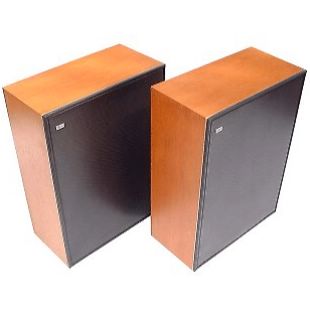
BeoVox 1001

Bang & Olufsen BeoVox 1001

The Beovox 1001 was a very similar loudspeaker to the Beovox 1200 (Beosystem 1200 version), but to match the new black finish of the Beomaster 1001 the metal grille was made black.

Sadly, the designers did not take the opportunity to fit a dome tweeter (as fitted to every other Beovox loudspeaker of the period), so the original (and outmoded) 2.5” cone type remained. As the Beomaster 1001 offered the facility of Ambiophonic stereo, 4 Beovox 1001s could be connected, and the model was also suggested for use with the Beogram 1500-1 record player.

Posted on

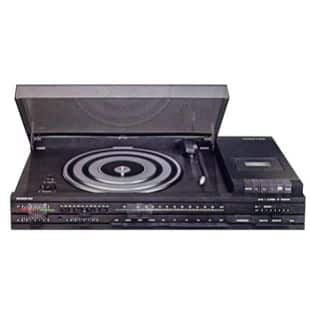
BeoCenter 3500

Bang & Olufsen BeoCenter 3500

A combination system with the quality and specifications of “separates”

Beocenter 3500 was built upon the Beomaster 3000 and combined a top quality FM tuner, an automatic record-player and a powerful stereo amplifier. The tuner had six pre-set stations for instant selection, plus a large manual tuning scale. There was an illuminated tuning indicator and a signal-strength meter to assist easy, accurate tuning. The powerful amplifier produced 2 x 40 watts RMS of high-fidelity output and was equipped with switchable filters.

There was a comprehensive range of connection facilities including sockets for two pairs of loudspeakers, headphones and a tape recorder with monitoring. The record-layer was fully automatic with one master-control for operating all functions. You only have to select the control position applicable to the size of the record, and touch a button. Beocenter 3500 was an ideal, simple way of enjoying high quality sound from records and radio. It was fitted with a robust hinged dust cover which protects records during play.

Features:

In the high-fidelity amplifier section, emphasis was placed on specifications, frequency correction and connection facilities. The LOUDNESS feature permitted switching between an objective or a subjective linear reproduction and the LOW and I-II filter controls gave a sharper regulation of frequencies in addition to the normal bass and treble controls. The LOW filter helped reduce rumble resulting from poor records. The EH filter reduced hiss. There were sockets and push buttons for two pairs of loudspeakers. The headphone socket was on the receiver’s front. The tape connection facilitated AB monitoring. All input signals could be adjusted at the receiver’s base to give equal sound intensity on all programme sources. The FM section had six pre-set FM station selectors.

A light indicator assisted accurate tuning and an illuminated meter registered the signal strength of a station. The FM section was extremely sensitive (better than 1.4 uV I.E.C.) and harmonic distortion was a mere 0.4%. Field effect transistors, ceramic filters and integrated circuits were used. The built-in record-player was perfectly matched to the rest of the unit, from a specification point of view. The fitted pickup cartridge, the SP 10A (later SP 12A) had a spherical naked diamond and a stylus pressure of 1.2 grams. Frequency range was 20 – 25000 Hz ± 3 dB and distortion was lower than 1%. Wow and flutter was less than 0.09% and rumble was better than 60 dB.

The record player section was easy to operate: you simply selected the size of the record you intend to play – 7″, 10″ or 12″ – and press a button. The record-player automatically selected the correct speed – 33 or 45 rpm – and lowered the pick-up into the first groove. When the record ended, the pick-up arm returned to its resting place and the turntable switched off. The turntable and pick-up arm had a pendulum suspension which made the record-player section insensitive to vibrations. Deep furrows in the turntable made it easy to pick up records. A stroboscope and a spindle adaptor for centreless records was provided. Beocenter 3500 was fitted with a hinged dust lid which was easily removed by a sliding action.

Beocenter 3500 had an extra Phono input. This was a ‘hang over’ from the Beomasters of the time which allowed two Beograms to be connected to the music centre. However, Phono 2 needed an RIAA pre-amplifier as it required a line level input. This feature became ‘Tape 2’ in later models.

Posted on

BeoLit 707

Bang & Olufsen Beolit 707

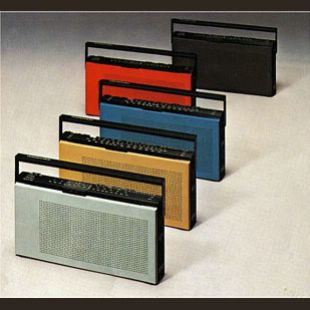
Beolit 707 received radio programmes on FM, long and medium wavebands. This portable radio was Bang & Olufsen’s handiest music system. Its sound reproduction quality was so outstanding that it invites even critical music lovers to listen to music programmes when they are away from home.

Power input was specified at a pure 1 watt and frequency range was 65-20 000 Hz: exceptional for a transportable radio receiver. A large tuning scale with thumb wheels made tuning easy. Bass and treble was adjusted separately and there was an AFC facility to keep FM stations correctly tuned.

Beolit 707 could be plugged into the mains supply or run from batteries. The cabinet was finished in coloured Nextel – a synthetic material with a suede-like finish which is washable ands scratch-proof. It was designed by Jacob Jensen, the same as its FM-only sibling, Beolit 505.

The Beolit was one of the very few portable radios that were suitable for reproducing more than just news broadcasts. Sound quality was so good that music programmes could be reproduced with a quality that made them worth listening to. The Beolit was fitted with a mains transformer and a detachable lead. Operation was simple and problem-free. And since portable radios can end up in unenviable situations, the Beolit was constructed to withstand some rough treatment.

A robust chassis protects the internal circuitry and a special surface treatment protects the radio from scratches. Dirty marks were easily removed with a damp cloth.

Posted on

BeoLit 505

Bang & Olufsen Beolit 505

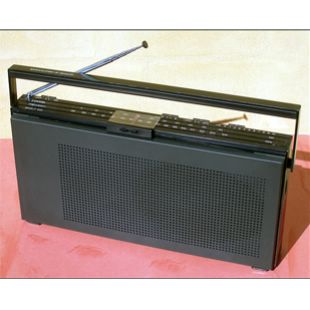
Beolit 505 was a pure FM radio with AFC facility to ensure clean, sharp reception. It had an in-built large, high quality speaker together with a built-in telescopic aerial. It had six programme indicators (affixed to sliding tuning scale) and connection for a tape recorder. It was designed by Jacob Jensen, the same as its FM and AM bigger brother, Beolit 707.

The Beolit was one of the very few portable radios that were suitable for reproducing more than just news broadcasts. Sound quality was so good that music programmes could be reproduced with a quality that made them worth listening to. The Beolit was fitted with a mains transformer and a detachable lead. Operation was simple and problem-free. And since portable radios can end up in unenviable situations, the Beolit was constructed to withstand some rough treatment.

A robust chassis protects the internal circuitry and a special surface treatment protects the radio from scratches. Dirty marks were easily removed with a damp cloth.

Posted on

BeoMaster 6000 (1974)

Bang & Olufsen BeoMaster 6000

A thoroughgoing ‘black box’. Nothing in the shape of the device revealed how it worked or what it was. Only the inscription on the top of the unit told the user just how the black ‘magic mirror’ was brought to life so it could show which function has been activated. The unit was Bang & Olufsen’s first remote-controlled hi-fi system.

Beomaster 6000 History

Beomaster 6000 was the realisation of the Topline prototype on which work had progressed over the preceding years. The long flat cabinet of the Beomaster 1200 with its operation from the top and the depressed knobs was repeated. But the Beomaster 6000 is the first representative of a new phase in Jacob Jensen’s oeuvre. The slide rule motif symbolised mechanical precision, but now the entire idiom is adapted to the abstraction it was necessary to submit in communicating using electronics.

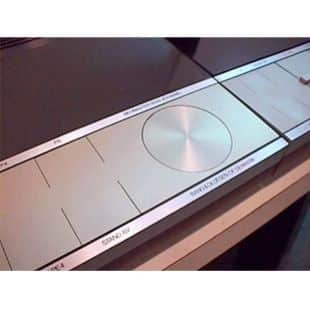
The visually, symbolically and tactilely easily understood slide rule operation belonged to the age of mechanisation and must be understood in extension of the modernistic machine aesthetics of the 1920s. The design of the Beomaster 6000 emphasises that it belongs to the electronic age and that it is part of the virtual, digital epoch. The volume is regulated stepwise by pressing one button to increase volume and another to reduce it. The buttons are gathered together in one large steel sheet, in which ‘tongues’ have been cut. These each have a play of less than half a millimetre as they are electronic micro-switches. The depressed adjustment knob, which made its first appearance in the General Electric radiogram study model around 1960, is an electronic tuner.

” The great quality of the slide rule motif was that it showed both the user’s input (setting) and the device’s output at the same time. The logical consequence of micro-electricity is a division of input and output – the electronics differ from mechanical operation in that their function is invisible. Jensen does what he can, nevertheless, to make it easy to understand what is happening. Input is placed in a silver-coloured control panel, while output (displays) is gathered under a sheet of dark glass. This magical black sheet, ‘the magic mirror’ that lights up while in use, is to give an extra experience over and above the purely aesthetical. The Beomaster 6000 is a very easy advanced quadraphonic radio. In view of the development team, four sound channels required your being able to adapt the sound to your position in the room. In this way, the first remote-controlled hi-fi system became a reality. ” – taken from ‘Jacob Jensen’ by Christain Holmsted Olesen.

Beomaster 6000 features

At the centre of the Beosystem 6000 was Beomaster 6000, a 4-channel amplifier with an FM tuner. Beomaster 6000 had a built-in SQ decoder (4-channel matrix) and was a full remote controlled system. Five FM stations could be pre-selected and there was manual tuning on the large illuminated FM scale. The FM tuner covered 87,5 – 104MHz. Tuning was carried out via feather-touch controls. The amplifier section was designed to cope with all sound reproduction systems: one, two or four channels. It produced 4×40 watts RMS (4 ohms) or 300 watts total music. 4-channel sound reproduction from records was popularly represented by two systems: CD4 discrete and SQ matrix.

CD4 (Compatible Discrete 4 channel) enabled high-quality sound reproduction with a high degree of separation between the four channels. CD4 was called at the time ‘TRUE 4 channel system’. However, many companies chose the SQ system because it was easily transmitted over FM and SQ records could be played on a high quality stereo record player. However, the price of convenience was less channel separation than the CD4 system afforded.

An SQ matrix decoder was incorporated in Beomaster 6000. Basically, its job was to reconstruct sound information for the two rear speakers. For CD4 records this reconstruction took place in the record-player, Beogram 6000.

Operation

Operation of Beomaster 6000 was child’s play. The large flat operation panel had logically grouped controls for all essential functions. Primary functions (e.g. programme source selection, volume, balance, bass and treble controls) were large, prominent, yet unobtrusive easy-touch buttons, while secondary functions (e.g. loudness, hi and low filters, etc) were smaller push buttons. Volume, balance, bass and treble controls were executed by a feather-touch of the finger tip. A servo-motor did the real work. An illuminated scale indicated position and control levels. There were facilities for frequency correction on all 4 channels. Each channel had a frequency range of 20-30,000 Hz. Distortion was lower than 0.1% at full power output.

Remote Control

The cordless (ultrasonic) remote control for the receiver could be bought as an accessory. This unit put you in true control of the music system. All the following functions could be controlled: volume, balance: left and right speakers; balance: front and rear speakers; five pre-selected FM stations; selection of external programme sources: record-player, tape/cassette-recorder; switching on and off (stand-by).

Connections

All necessary connection facilities were incorporated in Beomaster 6000: 4-channel record player, 2 or 4-channel tape-recorder. 4-channel headphones or two sets stereo headphones.

Beomaster 6000 was perfectly matched to partner the Beocord 5000 cassette recorder (introduced 1975). Beomaster 6000 was featured in an exhibition at New York’s MoMA (Museum of Modern Art) in 1975. At the time of its release it was the flagship of Bang & Olufsen’s hi-fi product range and was quite expensive to purchase. The UK price in 1978 was £581.50.

Accessories:

FM room aerial

An FM aerial type 8902010, was designed for use with Beomaster 6000 to be used in the home, within a certain radius of the radio transmitter. It was easily positioned at the rear of Beomaster 6000 and its two telescopic elements could be extended.