Posted on

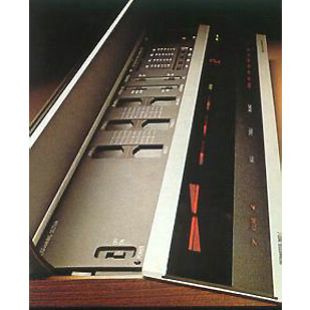
BeoMaster 1700 (1980)
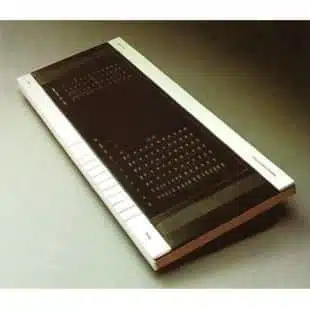
Bang & Olufsen BeoMaster 1700 1980

Beomaster 1700 was an AM/FM receiver in a class of its own. It was defiantly different when most high fidelity components still tended to look alike. Different in its design, its use of technology and the benefits it offered.

The FM section had facilities for presetting 5 favourite stations which could then be tuned instantly by pressing a button. The AM section covered both the Long and Medium wavebands. Hybrid filters were used to achieve high selectivity (the tuner’s ability to discriminate between the desired station and unwanted stations adjacent to it)The stereo amplifier was rated at 2 x 30 watts RMS with high quality sound reproduction up to the last watt. The tone control circuits were designed so that they could not limit or distort the quality of the reproduced sound before the amplifier’s maximum output level was reached.

All in all, the quality and performance levels of Beomaster 1700 were beyond reproach. As they should be, with the best technology. But what was most interesting was the creative use Bang & Olufsen made of technology – a (then) new operation system which afforded sharp, precise settings that were easy to locate on the scale. Two flexible slider controls formed the centre of this operation system. One was used to regulate volume level, bass, treble and speaker balance. The other was for the precise tuning of stations on Long, Medium and FM wavebands. The sliders had a sensitive, ridged surface that prevented the finger from slipping during operation.

The set’s large glass-covered communication surface, with its clear graphic indications aided easy operation. During use, response was light and immediate. Illuminated markers – light emitting diodes – kept you informed of the set’s operational status at all times. The surface was easy to clean with no irritating dust traps.

A Beogram 1700 and two Beovox C40 hi-fi loudspeakers complemented Beomaster 1700 in creating the well-balanced Beosystem 1700.

Well the above is the official line seen in the brochures. What could not be denied was the design of the 1700 which was innovative to say the least. I some ways it resembled the Beomaster 6000 quad except that it had a manual mechanism and clutches instead of the electrical control of the 6000. It gained a decent glass panel instead of the perspex of the 6000 but was let down by very poor quality plastics in the clutches, tractor drives that slipped and broke and an amplifier which was indirectly coupled compared to the direct coupled 1500 which it had replaced. Although it looked better than the 1500, it could not get close to the performance. Perhaps the beginning of a range designed more for looks than performance.

Posted on

BeoMaster 1900

Bang & Olufsen BeoMaster 1900

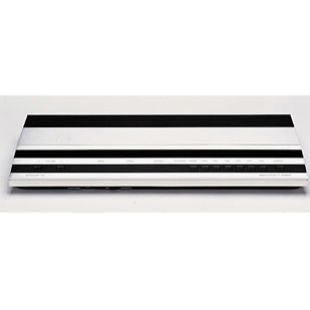
The 1970’s were exciting times for Bang & Olufsen. Another breakthrough during this decade was Beomaster 1900, a radio receiver and amplifier launched in 1976. Once again, design and operation differed dramatically from other contemporary products.

Originally designed by Jacob Jensen, Beomaster 1900, together with Beomaster 2400-2 were two advanced FM stereo receivers. They had identical technical specification and performance. Both were easy to use and easy to live with. Beomaster 2400-2 had the additional convenience of a cordless ultrasonic remote control module by which you could operate radio, amplifier and Beogram 2400 or 4004 record deck from a distance. Both receivers had touch-sensitive controls for operating the features and functions you used every day. All the secondary switches and adjustments were protected beneath a hinged lid, but an illuminated readout panel showed you the set’s operational status at a glance.

Beomaster 1900 boasted a powerful 2 x 30 watts RMS amplifier with distortion of less than 0,13%, five pre-set FM stations and comprehensive connection facilities. To operate it you simply touch the application “dimples” on the set’s front panel. The radio section had 4 pre-set stations which could be summoned at a touch and the phase-lock loop decoder provided excellent stereo separation even in difficult reception conditions The volume level could be pre-set at low, medium or high, and the music would always start at this level however much the volume control was altered last time the set was used.

The sets’ controls were divided into primary and secondary functions. The latter, which were less frequently used, were placed underneath the hinged aluminium panel where they were protected from dust and accidental movement.

A clear distinction was therefore made between the primary choice – accessible through a light touch – and the secondary choice, concealed under a lid hiding what the user did not need for daily use. At a stroke, what had been the norm for hi-fi in the past, with its macho grip and buttons, was eliminated. Instead, designer Jacob Jensen created a new design language, flat ‘flush-designed’ and electronically communicating, which did not target a few techno-freaks, but a much wider audience who wanted music rather than hi-fi equipment.

Beomaster 1900 had connections for two pairs of speakers, headphones, record player and cassette recorder. The receiver won the ID Award in 1976.

Posted on

BeoMaster 1900-2

Bang & Olufsen BeoMaster 1900-2

The 1970’s were exciting times for Bang & Olufsen. Another breakthrough during this decade was Beomaster 1900, a radio receiver and amplifier launched in 1976. Once again, design and operation differed dramatically from other contemporary products.

Originally designed by Jacob Jensen, Beomaster 1900, together with Beomaster 2400-2 were two advanced FM stereo receivers. They had identical technical specification and performance. Both were easy to use and easy to live with. Beomaster 2400-2 had the additional convenience of a cordless ultrasonic remote control module by which you could operate radio, amplifier and Beogram 2400 or 4004 record deck from a distance. Both receivers had touch-sensitive controls for operating the features and functions you used every day. All the secondary switches and adjustments were protected beneath a hinged lid, but an illuminated readout panel showed you the set’s operational status at a glance.

Beomaster 1900 boasted a powerful 2 x 30 watts RMS amplifier with distortion of less than 0,13%, five pre-set FM stations and comprehensive connection facilities. To operate it you simply touch the application “dimples” on the set’s front panel. The radio section had 4 pre-set stations which could be summoned at a touch and the phase-lock loop decoder provided excellent stereo separation even in difficult reception conditions The volume level could be pre-set at low, medium or high, and the music would always start at this level however much the volume control was altered last time the set was used.

The sets’ controls were divided into primary and secondary functions. The latter, which were less frequently used, were placed underneath the hinged aluminium panel where they were protected from dust and accidental movement.

A clear distinction was therefore made between the primary choice – accessible through a light touch – and the secondary choice, concealed under a lid hiding what the user did not need for daily use. At a stroke, what had been the norm for hi-fi in the past, with its macho grip and buttons, was eliminated. Instead, designer Jacob Jensen created a new design language, flat ‘flush-designed’ and electronically communicating, which did not target a few techno-freaks, but a much wider audience who wanted music rather than hi-fi equipment.

Beomaster 1900 had connections for two pairs of speakers, headphones, record player and cassette recorder. The receiver won the ID Award in 1976.

Posted on

BeoMaster 2000 (1974)

Bang & Olufsen BeoMaster 2000 1974

Beomaster 2000 at the time of its introduction in 1974 was an all-new model. The FM/AM stereo receiver was constructed to facilitate simple, logical operation.

Five FM stations could be pre-selected. Secondary controls which are not used daily were hidden under sliding panels. For example, the five FM pre-selectors, controls for AFC and muting (silent tuning), were discretely hidden away from view until such time as you needed them.

The construction of the stereo decoder was based upon a phase lock system which ensured constant high separation of channels. Manual tuning on the large FM/AM tuning scale was by means of a plain circular disc which was flush-mounted into the control panel. The tuning scale was illuminated and a light indicator assisted accurate tuning on an FM station. The AM section, (long and medium waves), had ceramic filters which enabled good separation between stations.

The newly developed automatic volume control effectively achieved a good balance between the weak and the strong AM stations. Darlington output circuits in the amplifier section produced 2 x 40 watts RMS or 150 watts total music, with less than 0.1 % harmonic distortion. One of the TAPE connections facilitated AB monitoring. It was possible to copy from one tape recorder to the other without having to fiddle with cables and sockets. There were sockets for two pairs of loudspeakers and for stereo headphones.

Two tape recorders could be connected and could be switched to enable copies of tapes to be made, in either direction. The set was housed in a large flat cabinet of a similar style to the Beomaster 1200 range, though the ‘slide rule’ pointer was replaced with a conventional dial, operated by a large flush aluminium wheel. A flywheel beneath this made manual tuning very smooth and the large diameter of the control, coupled with the now familiar dual light tuning indicator, also made it very accurate.

To complement slim appearance of the cabinet, a wire prop at the rear could be folded down, tipping the whole machine forward slightly enabling the controls and lights to be viewed more easily.

FM room aerial

Within a certain radius of the FM transmitter you could use the Bang & Olufsen room aerial, type 8902010. The aerial was easily fitted and the telescopic elements positioned as required.

This is one of the forgotten Beomasters. It utilised an amplifier design that would prove to be the most successful for B&O. It formed the basis for all the great amplifiers to follow in the range. Wonderful control of bass and plenty of reserve.

Posted on

BeoMaster 2000 (1983)

Bang & Olufsen BeoMaster 2000 1983

Beomaster 2000 was an advanced 2 x 25 watts RMS receiver with Long, Medium and FM band radio coverage. Four FM stations could be pre-set for instant recall. There was also provision for pre-setting one AM station.

The low-distortion stereo amplifier included a new feature unique to Bang & Olufsen. It was called Automatic Power Handling Control (APHC). This was a technique whereby the dynamic range and power parameters of the signal were continuously monitored, and if their combined effect threatens to cause amplifier clipping or damage to the speakers, the APHC circuit instructed the set’s microcomputer to turn the volume down to a safe level.

All primary functions were operated by finger-tip contact on the Beomaster’s Sensitouch control panel. There were no knobs or buttons to press. The status of all controls was shown on an illuminated display panel. Secondary controls were protected beneath a self-opening lid that was released by touching the unit’s front edge.

Beomaster 2000 could be made up as part of the Beosystem 2000, when linked together with other compatible Bang & Olufsen products. The receiver was designed by Jacob Jensen and was a direct descendant of Beomaster 2400.

Posted on

BeoMaster 2200 (1977)

Bang & Olufsen BeoMaster 2200

Beomaster 2200 was a 2 x 40 watts RMS FM/AM receiver with logical operation and high reliability.

Operation controls were separated into primary, secondary and tertiary functions. The primary functions – those you used every day – included programme selection, volume control and the off switch. They were easily accessible on the outside of the set. The secondary controls were under an aluminium panel. These included facilities for presetting 5 FM programmes; balance and tone controls; AFC (Automatic Frequency Control facility – which keeps stations properly tuned) and a mono/stereo switch. The tertiary functions, which were also hidden but easily accessible, were the connection sockets: you could make all connections for a record player, cassette deck, headphones and two pairs of speakers without moving the set.

Beomaster 2200 had a modular chassis. The modules were connected by wire-wrapping – a construction method that enhanced the product’s quality and reliability. This technique was originally adopted from computer production. The technique replaces conventional soldering, thereby eliminating any weaknesses arising from dry-joints, drop-outs and so on.

Volume adjustment was by means of a small slider along a numerical scale. Secondary controls included AFC (Automatic Frequency Control) coupled with silent tuning (AFC/ST), FM presetting dials for the radio, mono/stereo selection and loudspeaker switches.

These were all mounted beneath a hinged lid which opened when the PROGRAM panel was touched. A further compartment housed all the connection sockets which were easily accessible from the front of the unit. There was therefore a distinction between the functions which are frequently used, those that are used only once in a while, and those that would have been used a very few times during the set’s life.

The primary functions were for selecting the programme source, controlling volume and switching the set off – so these were the only controls that were on the outside of the set.

Beomaster 2200 could be made up as part of the Beosystem 2200, when linked together with other compatible Bang & Olufsen products.

Posted on

BeoMaster 2300

Bang & Olufsen BeoMaster 2300

Beomaster 2300 was the receiver heart of Beosystem 2300, released in 1983.

Beomaster 2300 was the receiver heart of Beosystem 2300, released in 1983.

The unit was a superbly-engineered FM radio/amplifier and delivered 2 x 30 watts RMS stereo output. Its sleek design was not only beautiful, but was intelligent too. Instead of buttons, touch-sensitive dimples operated all primary functions and the user’s instructions were confirmed on the read-out panel.

Five favourite FM radio programmes could be pre-set on individual tuning dials and the phase-locked loop decoder ensured excellent stereo separation, even in difficult reception conditions. The volume level could be pre-set at low, medium or high; each time Beomaster 2300 was switched on the music always started at the selected setting, however the volume control, was left the last time the receiver was used.

There were connections for two pairs of loudspeakers, headphones, record deck and cassette deck. The slim cabinet was finished in a choice of teak or rosewood and measured 62cm wide x 6cm high(13,5cm with the lid raised) x 25cm deep.

No remote control was included with the System; Beomaster 2300 in fact, was a direct descendant of Beomaster 1900, right down to the ‘dimple’ sensi-touch controls on the set top.

Posted on

BeoMaster 2400

Bang & Olufsen BeoMaster 2400-2

Beomaster 2400 together with Beomaster 1900 were two advanced FM stereo receivers. They had identical technical specification and performance. Both were easy to use and easy to live with.

Beomaster 2400 had the additional convenience of a cordless ultrasonic remote control module by which you could operate radio, amplifier and Beogram 2400 or 4004 record decks from a distance. Both receivers had touch-sensitive controls for operating the features and functions you used every day. All the secondary switches and adjustments were protected beneath a hinged lid, but an illuminated readout panel showed you the set’s operational status at a glance.

Equipped with the slim remote-control module you could select between four pre-set radio stations or record player input, adjust the volume up or down or put the System into Stand-by. The illuminated panel with its large display allowed to to easily see the state of play from anywhere in the room. The phase-locked loop decoder ensured a wide separation between stereo channels and remained stable over a very long lifetime. When a stereo broadcast was received, a symbol ‘S’ lit up automatically on the fascia of the set. Automatic Frequency Control (AFC) kept the selected radio station spot on tune, and a muting circuit cut out inter-station noise during tuning.

The stereo amplifier produced 2 x 30 watts RMS of high-fidelity output and had DIN sockets for the connection of two pairs of speakers, a record-player and a tape or cassette recorder.

A headphone connection was provided beneath the front edge of the unit. Controls not needed every day were situated beneath a hinged lid. These included tone and balance adjustment, FM pre-setting, loudness, AFC and MONO/STEREO switches, and a switch for selecting a basic initial volume level. This facility allowed you to choose the volume at which the amplifier began to play each time it was switch on – no matter how controls were left the previous time. On its primary control panel Beomaster 2400 had no knobs or buttons. The panel functioned electronically and needed only the contact of your finger to activate it. However, the ultrasonic remote control would have proved more useful. The set’s sophisticated indicator system would tell you instantly that your commands had been obeyed.

Beomaster 2400 was superceded by Beomaster 2400-2 in 1980.

Posted on

BeoMaster 2400-2

Bang & Olufsen BeoMaster 2400-2

Beomaster 2400 together with Beomaster 1900 were two advanced FM stereo receivers. They had identical technical specification and performance. Both were easy to use and easy to live with.

Beomaster 2400 had the additional convenience of a cordless ultrasonic remote control module by which you could operate radio, amplifier and Beogram 2400 or 4004 record decks from a distance. Both receivers had touch-sensitive controls for operating the features and functions you used every day. All the secondary switches and adjustments were protected beneath a hinged lid, but an illuminated readout panel showed you the set’s operational status at a glance.

Equipped with the slim remote-control module you could select between four pre-set radio stations or record player input, adjust the volume up or down or put the System into Stand-by. The illuminated panel with its large display allowed to to easily see the state of play from anywhere in the room. The phase-locked loop decoder ensured a wide separation between stereo channels and remained stable over a very long lifetime. When a stereo broadcast was received, a symbol ‘S’ lit up automatically on the fascia of the set. Automatic Frequency Control (AFC) kept the selected radio station spot on tune, and a muting circuit cut out inter-station noise during tuning.

The stereo amplifier produced 2 x 30 watts RMS of high-fidelity output and had DIN sockets for the connection of two pairs of speakers, a record-player and a tape or cassette recorder.

A headphone connection was provided beneath the front edge of the unit. Controls not needed every day were situated beneath a hinged lid. These included tone and balance adjustment, FM pre-setting, loudness, AFC and MONO/STEREO switches, and a switch for selecting a basic initial volume level. This facility allowed you to choose the volume at which the amplifier began to play each time it was switch on – no matter how controls were left the previous time. On its primary control panel Beomaster 2400 had no knobs or buttons. The panel functioned electronically and needed only the contact of your finger to activate it. However, the ultrasonic remote control would have proved more useful. The set’s sophisticated indicator system would tell you instantly that your commands had been obeyed.

Beomaster 2400 was superceded by Beomaster 2400-2 in 1980.

Posted on

BeoMaster 3000 (1985)

Bang & Olufsen BeoMaster 3000 1985

Beomaster 3000 was the central part of Beosystem 3000. It was an FM and AM receiver with four preset FM stations and a power output of 30 watts. Beomaster 3000 featured Automatic power Handling Control which protected amplifier and speakers against overload.

The electronic volume control ensured a smooth transition to more, or less, sound, and the volume level could be preset. By activating ‘mute’ you could silence a function without turning it off. Another touch, and the function resumed where it left off.

Add a Beocord 2000, a Beogram 3000 and maybe a Beogram CDX and you had a stylish and high performance set up. This receiver could be seen as the natural descendant of the Beomaster 2400-2.