Posted on

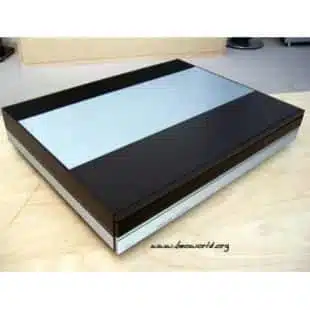
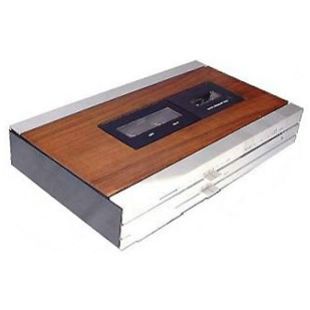
BeoCord 5000 (1984)

Bang & Olufsen BeoCord 5000 1984

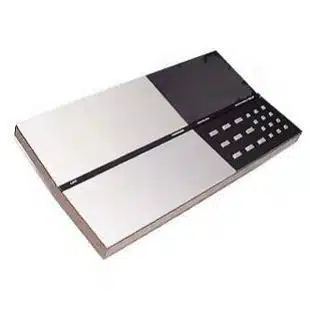
A top-quality cassette recorder, perfectly matched to Beomaster 5000 as part of Beosystem 5000. When the two units were used together the cassette deck could be operated entirely by remote control.

Beocord 5000 was of very advanced design in both its technical features and in its control/operations systems. For the home recording enthusiast it offered superb standards of sound quality and precision engineering. Bang & Olufsen’s patented HX PRO recording system, Dolby B and Dolby C Noise Reduction and a 6-layer Canon combination head with a 1.8mm gap all contributed to a recording and playback performance that delighted even the most exacting technician.

For the novice or the non-technical music lover, Beocord 5000 represented a supremely straightforward way of making high-quality recordings and subsequently enjoying them in relaxing comfort.

Every possible convenience was built into the Beocord’s control system. There was a START/GO function that rewound the tape to its beginning and played it without further instruction. And an automatic ADVANCE function (tape search) that found the start of any required track from either end of the tape.

Selection between ferric, chrome and metal tapes was fully automatic, and setting the correct recording level was quick and easy using the input sliders and LED signal strength meters. You could switch instantly from one tape transport mode to another (e.g. from play to fast rewind) without any danger of tangling the tape or harming the mechanism.

The cassette tray and direct operation controls were housed in a motor-driven drawer which opened and closed at a touch. When used with Beomaster 5000, Beocord 5000 could, of course, be programmed to record or play automatically at any set time.

Connections: stereo microphone (DIN); Aux input DIN; data-link to Beomaster 5000 (one socket, 3-way switchable)

Posted on

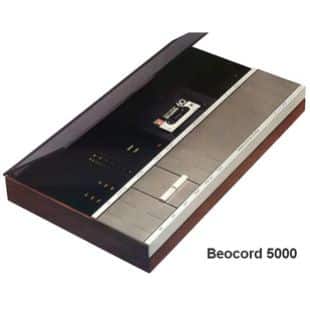
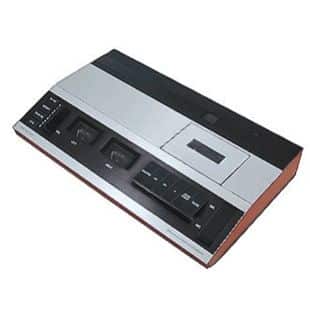
BeoCord 5000 (1975)

Bang & Olufsen BeoCord 5000 1975

Beocord 5000 was a superior cassette deck with a Sendust tape head, dual capstans and a special servo drive system which secured low wow and flutter-data. Electronic recording level indicators (Peak Programme Meters) and the Fade in/Fade out functions facilitated exceptional recordings of the most demanding types of music. An automatic demagnetizing device helped ensure optimum signal/noise ratio at all times.

A Hall generator secured the most reliable automatic stop at the end of play. Because it worked electronically it was superior to mechanical systems which are always subject to wear and tear, stress and strain. Naturally Beocord 5000 incorporated Dolby B Noise Reduction circuits. You could also switch from fast forward to fast rewind, or normal play, without endangering your tapes or damaging the drive mechanism.

Despite these technological refinements Bang & Olufsen still didn’t forget the greatest advantage of the compact cassette – that of convenience. That’s why Beocord 5000 was so easy to use. The logically-arranged easy-touch buttons were clearly marked to aid simple, problem-free operation. An illuminated read-out panel told you the operational status of the deck at all times. The display could be read through the black Perspex cover which protected the cassette housing against dust. The unit had two peak programme meters which reacted faster than conventional VU meters in registering recording level and thus ensuring optimum recording quality.

There were two main design models in the Beocord 5000 range:the three head type 4705 was replaced in 1977 with the twin head 4715/4716 models.

What you need to know is that these were the only cassette deck with a B&O designed mechanism. It was designed to be to cassette decks what the Beogram 4000 was to record players. From a technical point of view, it was way ahead of its time.

However it was stupendously complicated and this hit reliability hard. The three head version hardly ever worked fully and the later two head was only a little better. Gorgeous to look at and packed with features, it will break your heart! B&O replaced this with the Beocord 8000, which had a bought in tape transport….

Posted on

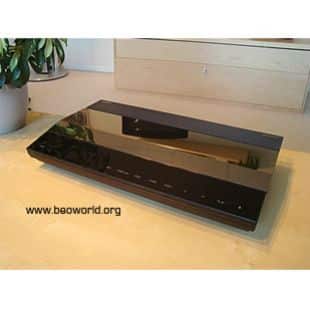
BeoCord 4500

Bang & Olufsen BeoCord 4500

Beocord 4500 cassette recorder housed exciting details and distinguished technology. Like Auto Reverse, so you did not need to turn over the tape. Automatic registration of the type of tape, and Bang & Olufsen’s patented HX-PRO recording system that provided optimal sound reproduction. Both in design and technology, Beocord 4500 was a direct extension of Beomaster 4500.

The cassette recorder featured Bang & Olufsen’s own HX-PRO recording system which ensures that recordings are made as perfectly as possible. With the Beolink 1000 terminal or by lightly touching the panel itself, you could select a particular piece of music you wanted to hear. The search system found it automatically whether it was on Side 1 or Side 2 of the cassette. For Beocord 4500 had Auto Reverse so you did not have to turn the tape over.

The recorder was also equipped with Dolby B and knew exactly what type of tape you were using. Beocord 4500 could be used as part of the Beosystem 4500 hi-fi system.

Posted on

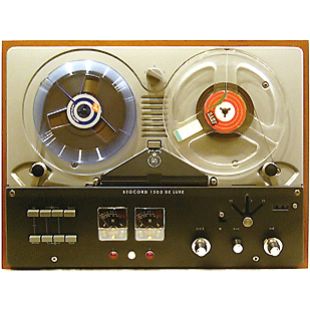
BeoCord 1500 De Luxe

Bang & Olufsen BeoCord 1500 De Luxe

“If you already own a hi-fi music system or a good radio set with a tape socket – in other words, if you have an amplifier system capable of replacing that provided in a tape recorder you may prefer this 2-track recording machine. Technical specifications are equal to those of the Beocord 2000de Luxe K, but there is no mixer section or output amplifier.

The Beocord 1500 de Luxe has built-in playback pre-amplifiers and is sold complete with gramophone/radio record pre-amplifier. This recording pre-amplifier may be exchanged for a microphone pre-amplifier if direct microphone recordings are required.

Dimensions: 205mm high, 450mm wide, 335mm deep. Choice of teak or Brazilian rosewood finish” – taken from the 1967 – 1968 Bang & Olufsen product catalogue.

Beocord 1500 DL was a stereo tape recorder which you could use with an existing stereo system. There was no built-in amplifier or microphone – the unit’s raison d’être was a means to make really good recordings from records or the radio. A single stereo input channel of standard DIN level was the only source, but two outputs were provided: one of a fixed DIN level, and the other (Line) of a variable level controlled by a concentric (L,R) knob on the control panel. With a special lead and the correct Beomaster, it was possible to do off-tape monitoring during recordings (although by using standard DIN connection through the ‘radio’ socket this function was not available).

Accessories for the 1967 range of Beocord Tape Recorders:

An elegant steel undercarriage on smooth-running castors was separately available for the Beocord models at that time. It was available in two versions: for Beocord 1100/Beocord 2000 de Luxe T, and Beocord 1500 de Luxe/Beocord 2000 de Luxe K, respectively.

Beocord 1500 DL was replaced by Beocord 1800 in 1970, which looked very similar but included several detail improvements, such as a die-cast chassis and optical automatic stop. Mechanically, Beocord 1500 DL was the same as Beocord 2000 DL and was offered in the same way in either 2 track + 4 track replay and 4 track only models. The Beomaster 900 RG Compact radiogram featured a recess of the exact size to fit Beocord 1500 DL which made it into a complete audio system.

Posted on

BeoCord 1500 (1979)

Bang & Olufsen BeoCord 1500 1979

Beocord 1500 matched several Beomaster receivers in design, concept and performance level. It was also technically compatible with non-Bang & Olufsen products. If you simply wanted to record and play back cassettes without any extra refinements or facilities, this deck was for you.

The slanted control panel was logically planned and really simple to use. The VU meters and sliding input control made the setting of correct recording levels easy and accurate. The 3-digit tape counter had a memory function that helped you locate the start of a particular passage of music.

Quality recording and playback was further ensured by the super Permalloy tape head, highly stable motor/drive system and Dolby B Noise Reduction circuit.

Posted on

BeoCord 900

Bang & Olufsen BeoCord 900

Beocord 900 was the simplest of Bang & Olufsen’s range of cassette-recorders.

Your only task was to choose the type of tape to put in: Cr02 or normal. Beocord 900 had large easy-to-read VU meters and recording controls were separate for left and right channels. There was a socket for a microphone and a push-button for mono recordings.

Tape-heads were made of Super Permalloy, a hard and extremely durable material which ensures a long useful lifetime. Wow and flutter was less than 0.28% (JIS method). Signal-to-noise ratio was better than 50 dB with chromium dioxide tapes.

Posted on

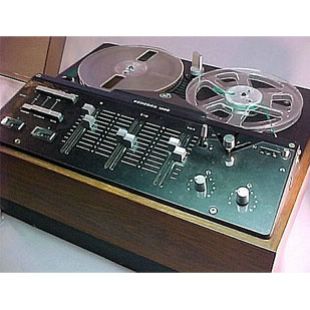
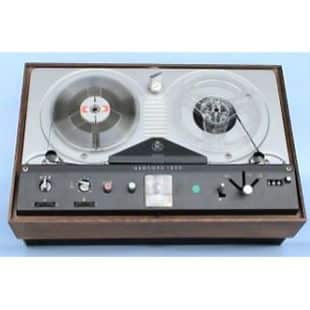
BeoCord 1000

Bang & Olufsen BeoCord 1000

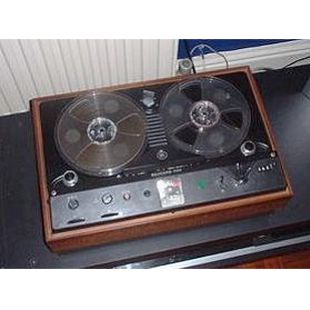
While Bang & Olufsen made wire recorders in the late 1940’s and early 1950’s they did not start to produce open reel tape recorders until the early 1960’s. However, as with all B&O products these were considered excellent quality and many are still in use today.

Beocord 1000 was introduced in 1966 – and the Beocord 1100 that replaced it in 1967 – were the budget models of the range. They were stereo machines but had only mono monitoring.

Beocord 1500 and Beocord 1800 eventually superceded these two models; Beocord 1800 featured a mixer as in more expensive machines and also incorporated both sound-on-sound and overdubbing capabilities. Beocord 2000 was the best-selling and the best-loved machine that the company produced; this was manufactured from 1965 to 1968 and was drowning in features many not seen on anything but professional machines until the late 1970’s.

In 1969 the company introduced Beocord 1200, Beocord 1600 and Beocord 2400.

Posted on

BeoCord 1100 (1967)

Bang & Olufsen BeoCord 1100 1967

Beocord 1100 – an all-transistor 2-track hi-fi mono recorder possessing a maximum of technical features: 3 tape speeds: 4.75cm/sec (recording of speech), 9.5cm/sec (recording of gramophone and AM radio), 19cm/se (recording of FM radio and direct recordings of music).

All reel sizes – including the 18cm reels. The amplifier, built on a printed integrated circuit principle, delivers no less than 10 watts of undistorted power output (built-in speaker 3 watts; extension speaker 10 watts). Automatic recording level control which may be switched on and off as desired. Two smooth-running specially engineered slack absorbers take up slack, ensuring absolutely smooth starting and stopping at all tape speeds. Electronic overload protection. Variable monitoring of the recorded signal. Top-quality low-noise tape drive motor built on rugged anti-torsion steel chassis. May be used as a separate microphone, radio, gramophone or guitar amplifier. Smooth-operating tape control lever. Large V.U. meter for visual recording level monitoring, input selector for gramophone, radio and microphone.

Separate bass and treble controls. Pause control lever with editing position. Automatic tape stop at end of tape and if tape breaks, also with metal foil. Tape counter. Speed selector with built-in on/off switch. Fast forward and reverse rewind. Output jacks for external speaker and low-impedance headphones. All jack plugs are international DIN standard types. Built-in splicing device. Permits recording from one tape recorder to another. Pilot lamp indicating that the instrument is switched on.

The Beocord 1100 is a convenient portable model (weighs 13,2kg) with built-in speaker and carrying handle, and its slim design makes it well-suited for placing on book shelves etc.

Space for radio cable, microphone with cable and stand, and recording cable.” – taken from the 1967 – 1968 Bang & Olufsen product catalogue.

Posted on

BeoCord 1100 (1975)

Bang & Olufsen BeoCord 1100

The fact that the Beocord 1100 was equipped with Dolby B Noise Reduction system immediately placed it among the market’s better cassette decks (catalogue 1977 / 78).

It had all the facilities you needed for recording compact cassettes and replaying them through an existing amplifier system. The combined record/playback head was made of Super Permalloy, an extremely durable material which ensured a long useful lifetime and had excellent magnetic properties. Other refinements included an electronic auto stop at end-of-tape and a switch for selecting between chromium dioxide and normal (ferric oxide) tapes.

The setting of correct recording levels was by way of individual controls used in conjunction with VU meters for left and right channels. Beocord 1101 was technically identical to Beocord 1100 but had a different exterior finish.