Posted on

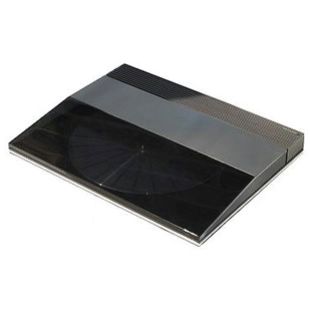
BeoGram CD 7000

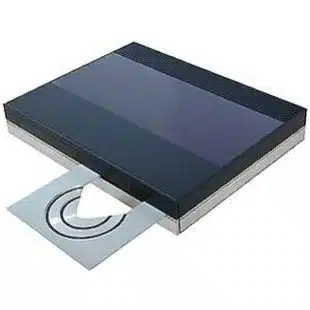
Bang & Olufsen BeoGram CD7000

Beogram CD 7000 was distinctive because of its authentic sound reproduction as well as its large dynamic range. It was equally suitable for symphonic music and rock. Its many functions allowed you to pre-programme tracks for playback in any desired order. This CD player was the last in line as far as separates were concerned, replaced with the likes of Beocenter 2300 and Beocenter 2500.

Features:

Exclusive computer-controlled CD loading mechanism with extremely fast access time

CD tray machined from a 4mm solid aluminium plate for maximum mechanical stability and convenient loading

Disc tray cut-outs with rubber lining for 12 and 8cm discs

Spring-suspended CD mechanism and magnetic disc clamp

Special functions, such as scan and sequence programming, were carried out from Beolink 7000

Dynamic readout on Beolink 7000 of all functions, track bar, remaining time, elapsed time, scan, etc.

CD players are now among the simplest constructions in the electronic world and standard players are based on very few components, a simple electronic layout and use of economical materials, both inside the product and in the cabinet. In the construction of CD7000 the main objectives were the achievement of excellent mechanical stability, convincing sonic qualities and easy access to the CD functions.

The loading mechanism, the way the clamp function and the suspension of the CD mechanism were all points that received special attention. The high quality of the mechanical solutions was continued in the electronic circuitry and both were highly integrated and interdependent of each other.

The CD tray was very solid and elegant and the loading mechanism extremely durable. The tray was made from a 4mm thick sheet of aluminium and the conical recess for the CD was milled and diamond polished to the smallest of tolerances – to prevent dust gathering in the recess. The circular rubber profile protected the disc during loading and unloading, while the triangular cut-out facilitated unloading. To avoid static build-up the tray was connected to ground and to avoid ‘ringing’, a damping plate was placed at the innermost part of the tray, inside the cabinet.

The motorised movement of the CD tray was very fast and gentle. The movement was controlled by the microcomputer via an optocoupler and was a very stable mechanical solution with two parallel chrome plated brass rail tubes and precision plastic roller bearings. A nylon coated steel cord wire was applied for maximum duration and quiet transport. The electronically governed transport was very smooth, started the movement slowly, then speeded up very quickly, decelerating when the disc approached the clamp. Furthermore, it secured against possible damage occurring from obstacles either in front of the tray or in between tray and cabinet.

While the tray approached the clamp the disc was gently lifted off the tray and clamped between the CD mechanism and magnet. The magnet was placed on a bridge across the CD mechanism and when it engaged the disc the magnet was lifted away from the bridge. While the disc was rotating, the magnet was not in contact with the cabinet, but only the disc and CD mechanism.

This assembly was insulated very efficiently from the cabinet to prevent vibrations from the outside. A special suspension was designed, with 4 steel springs, encased in rubber. The springs ensured that the CD mechanism was fixed in the horizontal plane (i.e. across the disc), while a certain amount of movement was allowed in the vertical plane (i.e. up and down). Test showed that the servo system counteracts movements in the vertical plane better than in the horizontal plane, and the suspension thus was a good compromise with regard to immunity from external vibrations. The inherent frequency of the suspension was placed at 25 Hz to avoid tracking and focusing errors, which were prone to emerge if the CD mechanism was subjected to vibrations around 100 Hz and upward. Furthermore, at this frequency interference with the inherent frequency of the CD cabinet was also avoided.

The electronics

The CD format is one of the most precisely defined audio formats, but it is still possible to design differentiated products. The electronic solutions in CD 7000 were just as elaborate, the computer controlled loading just being one of the elements. Separate power supplies were available for the digital and analogue parts, and in connection with a careful print layout Bang & Olufsen achieved the most respectable electronic specifications. The digital-to-analogue filtering was special as well. First, a standard digital filtering (4 x oversampling) was applied to filter away the sidebands below 176,4 kHz. The analogue filtering at 176,4 kHz was carried out by a modified order filter. To avoid remnants of the 176,4kHz sideband having an effect on the filtering, a special suction circuit cut off the frequencies above 156,4 kHz. The modified filter was known as a ‘Bessel elliptical filter’. It had a very gentle filter characteristic and was not susceptible to ripple phenomena, phase distortion or ageing.

The functions

As with the other sources, operation was via the Beolink 7000, with full display readout of all functions. Special functions available included: the space function, where a pause of 4 seconds was added between tracks to facilitate track search on a tape recorded from CD 7000. Scan gave playback of the first 15 seconds of each track and was especially useful in connection with a sequence programming.

While you were scanning the CD, tracks could either be selected (compiled) or omitted and when the last track had been scanned, playback of the programmed sequence commenced. Sequence programming could also be carried out independently of the scan function and if you used the select programming, playback could be non-chronological. If you used the reject programming to leave out specific tracks, playback would be chronological.

Beogram 7000 could, ideally, be used as part of Beosystem 7000
Posted on

BeoGram CD 4500

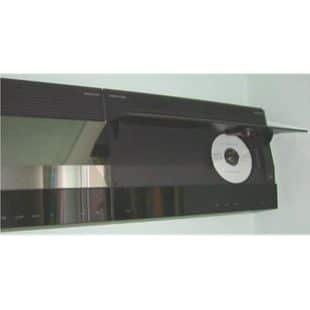
Bang & Olufsen BeoGram CD4500

The sound reproduction achieved by Bang & Olufsen’s CD 4500 CD player was truly outstanding.

It played both 12cm and 8cm compact discs and had an ingenious ‘step’ function which allowed you to go straight to a chosen track selected from anywhere on the disc. The CD player was one of the most technologically-advanced pieces of hi-fi on the market at the time and yet was one of the easiest to operate. The explicit display always indicated what the CD player was doing all the time – for example, which track was being played, and how many tracks there were on the played compact disc.

Beogram CD 4500 could be used as part of the Beosystem 4500 hi-fi system.

Posted on

BeoGram 7000

Bang & Olufsen BeoGram 7000

Like many Bang & Olufsen turntables, Beogram 7000 was designed with a tangential arm, which ensured optimal playing of the record. It also came equipped with the patented OPP system (Optimal Pivot Point), so that the pick-up – MMC2 – was not disturbed by vibrations.

  • Fully automatic and remote controlled via Beolink 7000
  • Integrated MMC 2 pickup cartridge
  • Tangential tonearm with OPP (Optimum Pivot Point)
  • Pendulum suspended sub-chassis
  • Built-in RIAA amplifier

By the mid-1990s the CD had rapidly become a replacement for the black vinyl record with many new albums released only in the CD format. This is why Bang & Olufsen ceased production of its record decks, with Beogram 7000 being the last in a very long line of high quality turntables. However, even today the vinyl format is alive, as so many treasured record collections were originally based on the vinyl format in its heyday, with many more of the more esoteric albums still awaiting CD reissue. The requirements that have to be met by a record player have become threefold:

“The preservation of precious vinyl records in as perfect a condition as possible

The ability to pick up information from the grooves and reproduce them faithfully

The operation must be made as similar to the other sources in a system as possible.”

Beogram 7000 met and exceeded all these requirements. The MMC2 pick-up cartridge weighed only 1,6g – the lowest own weight of any pick-up cartridge – and had a very high compliance and low effective tip mass. The result was a very good tracking ability with little record wear and in combination with the contact line nude diamond the optimal contact with the groove walls was ensured – to pick up the full music information. The MMC principle – Moving Micro Cross – gave a high channel separation, especially in the bass range, a low distortion and very little channel difference, which are all elements that significantly contribute to the achieved sound quality.

The MMC cartridge was mounted in a tangential tonearm, which eliminated tracking errors. The unique Optimum Pivot Point and the pendulum suspended sub-chassis made the reproduction virtually immune to vibrations from the outside.

The tonearm’s axis for horizontal movement was positioned behind the vertical axis and thus behind the tonearm’s centre of gravity. If the pivot point for horizontal movements vibrated, the rear part of the arm with the counterweight also vibrated, whereas the stylus remained still, because it was in the centre of the vibrations. The MMC was completely integrated with the tonearm and the low weight of the cartridge meant that the tonearm resonance could be optimised to the ideal value of 10 – 15Hz.

The pendulum suspension efficiently insulated the inner chassis with tonearm and platter from the outer cabinet to prevent vibrations to affect playback. The suspension consisted of three pendulums and leafsprings and gave the inner chassis an inherent resonance of 5 – 6 Hz.

Operation of Beogram 7000 was via Beolink 7000. The turntable automatically determined record size and selected playback speed accordingly (33 or 45 rpm.). If no record was registered, playback did not begin. It was only possible to lower the pick-up cartridge if there was a record on the platter. When you operated Beogram 7000 from Beolink 7000 you could not by accident lower the stylus outside of the record surface. By preventing unauthorised operation of Beogram 7000, Bang & Olufsen gave priority to both the preservation of the pick-up cartridge and the vinyl records.

Beogram 7000 could ideally, be used as part of Beosystem 7000
Posted on

BeoGram 9500

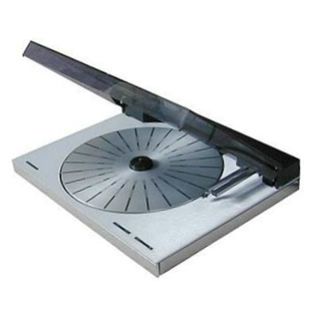
Bang & Olufsen BeoGram 3404

In design, technology and operating philosophy, the Beogram 9500 turntable was a perfect match for the Beocenter 9500 system.

Using a light-weight MMC2 cartridge, its electronic tangential arm played each record at the exact angle it was cut giving the most precise reading of the grooves ensuring that every nuance of a recording was captured.

The arm was suspended by a patented Bang & Olufsen system which helped prevent vibrations from any source reaching the cartridge. And the chassis suspension acted as an effective buffer against external vibrations.

Posted on

BeoCenter 9300

Bang & Olufsen BeoCenter 9300

Beocenter 9300 really defined the word ‘classic’. It was for those who preferred to enjoy the music rather than to pore over the product manual. The design of the 9300 was around for many years before production ceased in the late 1990’s. It was available in many different versions; for example 8000, 9000, 9500 and the this last version: Beocenter 9300.

The differences between the 9500 and the 9300 was that the 9300 had a new and improved CD mechanism fitted which was faster than the previous versions. Some minor differences were that the 9300 lacked two-way remote communication and an equalizer loop-through. However, the 9300 still is still among the Bang & Olufsen greats!

BeoCenter 9300 could operate with active as well as passive loudspeakers. A mere touch activated BeoCenter 9300 and a line of sensi-touch options glowed on the lower glass display. The 9300 was a complete music system for people who prefer to enjoy music rather than poring over a product manual.

Features:

2 x 80 watt amplifier, CD player with programming, tape recorder with auto reverse, FM/AM radio with 30 preset stations, finger touch control, optional Beo4 remote control operation, connections for Beolink® and headphones, Master Control Link. There was also the option of using the BeoCenter with or without active speakers, such as BeoLab 4000 (shown above). A stand could also be bought as a separate item

Posted on

BeoCenter 9500

Bang & Olufsen BeoCenter 9500

The mirrored exterior of aluminium and smoked glass gave no hint of the power hidden beneath the surface of Beosystem 9500. Central to the concept was the AM/FM receiver. On the flanks, CD player and cassette recorder awaited their turn in the spotlight. When they were needed, a light touch on the display panel was all that was required to make lids glide to the side giving immediate access to disc or cassette. The Beocenter was designed by Jacob Jensen and was the direct descendant of Beocenter 9000. The two models features here were superceded in 1994 by Beocenter 9300.

Simple logical operation

A light touch directly on Beocenter 9500 was all you needed to access its operation. The illuminated display led you logically through the programming and other functions always showing you what to do next. This ease and simplicity of use was the first impression you obtained of the music system. And equally easy to use was the optional remote control Beolink 1000 terminal.

Entertainment and information from three reliable sources

You could preset up to 20 FM and AM stations on the Beocenter 9500 receiver. And when you made your choice, search and fine tuning were completely automatic. Also, you could preset the receiver to switch on automatically to catch the news, or perhaps a favourite serial at just the right time. If you were out, the cassette recorder could be programmed to record and you could play back at your leisure.

You could also use the Beocenter 9500 receiver as a guaranteed alarm. In the event of a power failure during the night, the clock instantly switched to its own built-in batteries to ensure that you awoke at just the right time.

The CD player which accommodated both 12cm and 8cm compact discs was also ready for your commands. It gave you instant access to a specific track anywhere on the disc and allowed you to change the order in which the tracks were played, or to simply choose only those tracks you wished to listen to. Technology at its most convenient best. When used with Beogram 9500 the music system was known as Beosystem 9500.