Posted on

What’s my Bang & Olufsen worth?

What’s my Bang & Olufsen worth?

Values?

Its always very difficult to give an exact value for used Bang & Olufsen products as tastes and fashions change regularly. However, you can be rest assured that Bang & Olufsen products (in general) hold their money well compared to other brands.

The best way to get an indication of the current market price is to look at places such as eBay UK making sure to check the sol prices rather than what is currently for sale. Do a product search, but remember not to take one price as gospel.. Each auction end value for the same product can sometimes differ wildly for no apparent reason (mainly due to an excellent description and photos on a particular listing or a bidding war between potential buyers!) – so its always best to work out an “average value”. You can also get a rough idea from pre-owned Bang & Olufsen specialists, and part exchange products that Official Dealers are clearing – but remember these people offer guarantees and have overheads so prices may be slightly higher than a private sale.

Condition

One thing to always remember about Bang & Olufsen is that Condition is Everything. People who buy B&O are generally perfectionists when it comes to their AV – so expect a lot less than market price if the item is in poor condition. On the flip side – if you have an absolutely Mint Condition product, you can more often than not attract a premium. Mint Condition means not a mark on it though… some peoples ideas of Mint can really vary!!

One last thing to remember is to clean the products before you offer them for sale. So many times people offer for sale a dusty, dirty and fingerprint covered piece of Bang & Olufsen and wonder why nobody wants to buy it. A little time spent carefully cleaning will pay dividends!

Posted on

BeoVision Capri KJ

BeoVision Capri KJ

Once the post-War TV boom was over, many of the manufacturers which had emerged during the 1950s disappeared, frequently because the market had become saturated. Others, including B&O, survived because of their foresight. They had begun to focus on other product areas.

Beovision Capri TV was as a result of this foresightedness. It came in various guises, including the Capri KJ (1962 – 1965), Capri SJ/FM (1961 – 1965), Capri Moderne (1963 to 1965) and Capri KL (1964 – 1965), Capri TV 611 FM (introduced 1964)

B&O engineers, for instance, had seen that transistors would replace radio tubes – and realised that a new and exciting future lay before them. Radio with FM, stereophonic music and, perhaps later, even colour TV.

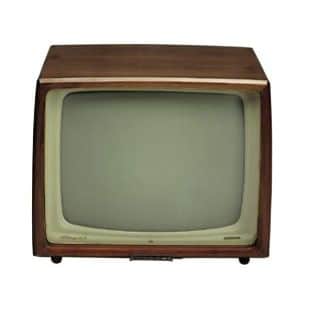
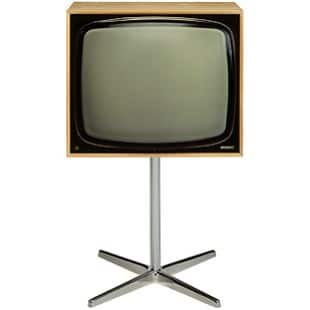
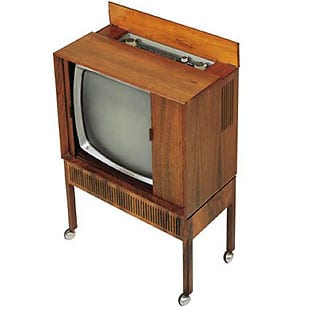
The television of the 1950s had every chance of becoming popular – and it did. Capri was an elegant little television that was available with a trolley, with fixed legs or as a shelf model. The cabinet was made of teak or high-gloss walnut, as used in furniture production. Because of innovations in the furniture industry in the use of materials, more and more furniture was being made of teak, but the products of the radio sector were walnut. Bang & Olufsen needed to adapt the products to the furniture that people had bought for their homes. Teak became popular. Over the next 6-7 years, Bang & Olufsen changed the selection of materials for its products from walnut to teak. Later, the more exclusive Brazilian rosewood came in the 1960s as an alternative to teak -cabinets. Capri was available in two different sizes, 17 or 21 inches.

One of the first major lessons learned about television was that reflected light could spoil the picture. People would often switch off the light in the room to give the picture some contrast while watching television. To protect their eyesight, people were advised to leave one lamp on in the room. To counter this problem, a solution was developed in the form of the ‘Bang & Olufsen Spectral Filter’ in anti-reflection curtains. It was a slightly tilted greyish screen in front of the picture tube. “Your eyes are protected and you can enjoy the programmes in a living room with full illumination,” the 1959 sales brochure stated. The spectral screen was a simplified version of what is today called the contrast screen.

(Source: Beolink Magazine: ‘The First 50 Years of Television’ © Bang & Olufsen a/s 2002)

Posted on

BeoVision Capri SJ

Once the post-War TV boom was over, many of the manufacturers which had emerged during the 1950s disappeared, frequently because the market had become saturated. Others, including B&O, survived because of their foresight. They had begun to focus on other product areas.

Beovision Capri TV was as a result of this foresightedness. It came in various guises, including the Capri KJ (1962 – 1965), Capri SJ/FM (1961 – 1965), Capri Moderne (1963 to 1965) and Capri KL (1964 – 1965), Capri TV 611 FM (introduced 1964)

B&O engineers, for instance, had seen that transistors would replace radio tubes – and realised that a new and exciting future lay before them. Radio with FM, stereophonic music and, perhaps later, even colour TV.

The television of the 1950s had every chance of becoming popular – and it did. Capri was an elegant little television that was available with a trolley, with fixed legs or as a shelf model. The cabinet was made of teak or high-gloss walnut, as used in furniture production. Because of innovations in the furniture industry in the use of materials, more and more furniture was being made of teak, but the products of the radio sector were walnut. Bang & Olufsen needed to adapt the products to the furniture that people had bought for their homes. Teak became popular. Over the next 6-7 years, Bang & Olufsen changed the selection of materials for its products from walnut to teak. Later, the more exclusive Brazilian rosewood came in the 1960s as an alternative to teak -cabinets. Capri was available in two different sizes, 17 or 21 inches.

One of the first major lessons learned about television was that reflected light could spoil the picture. People would often switch off the light in the room to give the picture some contrast while watching television. To protect their eyesight, people were advised to leave one lamp on in the room. To counter this problem, a solution was developed in the form of the ‘Bang & Olufsen Spectral Filter’ in anti-reflection curtains. It was a slightly tilted greyish screen in front of the picture tube. “Your eyes are protected and you can enjoy the programmes in a living room with full illumination,” the 1959 sales brochure stated. The spectral screen was a simplified version of what is today called the contrast screen.

(Source: Beolink Magazine: ‘The First 50 Years of Television’ © Bang & Olufsen a/s 2002)

Posted on

BeoVision Capri Moderne

BeoVision Capri Moderne

Once the post-War TV boom was over, many of the manufacturers which had emerged during the 1950s disappeared, frequently because the market had become saturated. Others, including B&O, survived because of their foresight. They had begun to focus on other product areas.

Beovision Capri TV was as a result of this foresightedness. It came in various guises, including the Capri KJ (1962 – 1965), Capri SJ/FM (1961 – 1965), Capri Moderne (1963 to 1965) and Capri KL (1964 – 1965), Capri TV 611 FM (introduced 1964)

B&O engineers, for instance, had seen that transistors would replace radio tubes – and realised that a new and exciting future lay before them. Radio with FM, stereophonic music and, perhaps later, even colour TV.

The television of the 1950s had every chance of becoming popular – and it did. Capri was an elegant little television that was available with a trolley, with fixed legs or as a shelf model. The cabinet was made of teak or high-gloss walnut, as used in furniture production. Because of innovations in the furniture industry in the use of materials, more and more furniture was being made of teak, but the products of the radio sector were walnut. Bang & Olufsen needed to adapt the products to the furniture that people had bought for their homes. Teak became popular. Over the next 6-7 years, Bang & Olufsen changed the selection of materials for its products from walnut to teak. Later, the more exclusive Brazilian rosewood came in the 1960s as an alternative to teak -cabinets. Capri was available in two different sizes, 17 or 21 inches.

One of the first major lessons learned about television was that reflected light could spoil the picture. People would often switch off the light in the room to give the picture some contrast while watching television. To protect their eyesight, people were advised to leave one lamp on in the room. To counter this problem, a solution was developed in the form of the ‘Bang & Olufsen Spectral Filter’ in anti-reflection curtains. It was a slightly tilted greyish screen in front of the picture tube. “Your eyes are protected and you can enjoy the programmes in a living room with full illumination,” the 1959 sales brochure stated. The spectral screen was a simplified version of what is today called the contrast screen.

(Source: Beolink Magazine: ‘The First 50 Years of Television’ © Bang & Olufsen a/s 2002)

Posted on

BeoVision Capri 611 FM

BeoVision Capri Range

Once the post-War TV boom was over, many of the manufacturers which had emerged during the 1950s disappeared, frequently because the market had become saturated. Others, including B&O, survived because of their foresight. They had begun to focus on other product areas.

Beovision Capri TV was as a result of this foresightedness. It came in various guises, including the Capri KJ (1962 – 1965), Capri SJ/FM (1961 – 1965), Capri Moderne (1963 to 1965) and Capri KL (1964 – 1965), Capri TV 611 FM (introduced 1964)

B&O engineers, for instance, had seen that transistors would replace radio tubes – and realised that a new and exciting future lay before them. Radio with FM, stereophonic music and, perhaps later, even colour TV.

The television of the 1950s had every chance of becoming popular – and it did. Capri was an elegant little television that was available with a trolley, with fixed legs or as a shelf model. The cabinet was made of teak or high-gloss walnut, as used in furniture production. Because of innovations in the furniture industry in the use of materials, more and more furniture was being made of teak, but the products of the radio sector were walnut. Bang & Olufsen needed to adapt the products to the furniture that people had bought for their homes. Teak became popular. Over the next 6-7 years, Bang & Olufsen changed the selection of materials for its products from walnut to teak. Later, the more exclusive Brazilian rosewood came in the 1960s as an alternative to teak -cabinets. Capri was available in two different sizes, 17 or 21 inches.

One of the first major lessons learned about television was that reflected light could spoil the picture. People would often switch off the light in the room to give the picture some contrast while watching television. To protect their eyesight, people were advised to leave one lamp on in the room. To counter this problem, a solution was developed in the form of the ‘Bang & Olufsen Spectral Filter’ in anti-reflection curtains. It was a slightly tilted greyish screen in front of the picture tube. “Your eyes are protected and you can enjoy the programmes in a living room with full illumination,” the 1959 sales brochure stated. The spectral screen was a simplified version of what is today called the contrast screen.

(Source: Beolink Magazine: ‘The First 50 Years of Television’ © Bang & Olufsen a/s 2002)

Posted on

BeoVision Capri TV 514K

Once the post-War TV boom was over, many of the manufacturers which had emerged during the 1950s disappeared, frequently because the market had become saturated. Others, including B&O, survived because of their foresight. They had begun to focus on other product areas.

Beovision Capri TV was as a result of this foresightedness. It came in various guises, including the Capri KJ (1962 – 1965), Capri SJ/FM (1961 – 1965), Capri Moderne (1963 to 1965) and Capri KL (1964 – 1965), Capri TV 611 FM (introduced 1964)

B&O engineers, for instance, had seen that transistors would replace radio tubes – and realised that a new and exciting future lay before them. Radio with FM, stereophonic music and, perhaps later, even colour TV.

The television of the 1950s had every chance of becoming popular – and it did. Capri was an elegant little television that was available with a trolley, with fixed legs or as a shelf model. The cabinet was made of teak or high-gloss walnut, as used in furniture production. Because of innovations in the furniture industry in the use of materials, more and more furniture was being made of teak, but the products of the radio sector were walnut. Bang & Olufsen needed to adapt the products to the furniture that people had bought for their homes. Teak became popular. Over the next 6-7 years, Bang & Olufsen changed the selection of materials for its products from walnut to teak. Later, the more exclusive Brazilian rosewood came in the 1960s as an alternative to teak -cabinets. Capri was available in two different sizes, 17 or 21 inches.

One of the first major lessons learned about television was that reflected light could spoil the picture. People would often switch off the light in the room to give the picture some contrast while watching television. To protect their eyesight, people were advised to leave one lamp on in the room. To counter this problem, a solution was developed in the form of the ‘Bang & Olufsen Spectral Filter’ in anti-reflection curtains. It was a slightly tilted greyish screen in front of the picture tube. “Your eyes are protected and you can enjoy the programmes in a living room with full illumination,” the 1959 sales brochure stated. The spectral screen was a simplified version of what is today called the contrast screen.

(Source: Beolink Magazine: ‘The First 50 Years of Television’ © Bang & Olufsen a/s 2002)

Posted on

BeoVision Capri KL

Once the post-War TV boom was over, many of the manufacturers which had emerged during the 1950s disappeared, frequently because the market had become saturated. Others, including B&O, survived because of their foresight. They had begun to focus on other product areas.

Beovision Capri TV was as a result of this foresightedness. It came in various guises, including the Capri KJ (1962 – 1965), Capri SJ/FM (1961 – 1965), Capri Moderne (1963 to 1965) and Capri KL (1964 – 1965), Capri TV 611 FM (introduced 1964)

B&O engineers, for instance, had seen that transistors would replace radio tubes – and realised that a new and exciting future lay before them. Radio with FM, stereophonic music and, perhaps later, even colour TV.

The television of the 1950s had every chance of becoming popular – and it did. Capri was an elegant little television that was available with a trolley, with fixed legs or as a shelf model. The cabinet was made of teak or high-gloss walnut, as used in furniture production. Because of innovations in the furniture industry in the use of materials, more and more furniture was being made of teak, but the products of the radio sector were walnut. Bang & Olufsen needed to adapt the products to the furniture that people had bought for their homes. Teak became popular. Over the next 6-7 years, Bang & Olufsen changed the selection of materials for its products from walnut to teak. Later, the more exclusive Brazilian rosewood came in the 1960s as an alternative to teak -cabinets. Capri was available in two different sizes, 17 or 21 inches.

One of the first major lessons learned about television was that reflected light could spoil the picture. People would often switch off the light in the room to give the picture some contrast while watching television. To protect their eyesight, people were advised to leave one lamp on in the room. To counter this problem, a solution was developed in the form of the ‘Bang & Olufsen Spectral Filter’ in anti-reflection curtains. It was a slightly tilted greyish screen in front of the picture tube. “Your eyes are protected and you can enjoy the programmes in a living room with full illumination,” the 1959 sales brochure stated. The spectral screen was a simplified version of what is today called the contrast screen.

(Source: Beolink Magazine: ‘The First 50 Years of Television’ © Bang & Olufsen a/s 2002)

Posted on

BeoVision 9 – Plasma

BeoVision 9 - Plasma

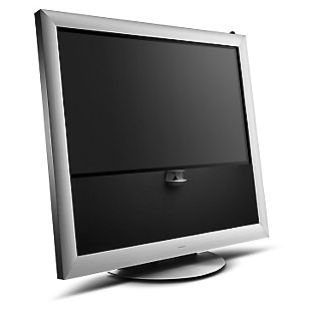
Beovision 9 – A state-of-the-art audio-video unit.

BeoVision 9’s digital sound processor is designed to drive the sound in up to 7.1 channels (the predominant format is still 5.1). You can connect up to 10 BeoLab speakers!

The “space ship” like form factor is driven by the Acoustic Lens Technology (ALT) that delivers a unique 180 degrees horizontal dispersion that maintain a constant tonal balance in all locations, both from direct and reflected sound. Another exclusive feature is the Adaptative Bass Control (ABC): at the press of a button the speaker measure the acoustic properties of the room and adapts its performance accordingly.

The BeoVision 9 is a complete home entertainment solution with a 50 inch HD plasma TV, a powerful center speaker (with ALT) and a built-in BeoMedia. It can be connected to other manufacturers set-top boxes, and has an integrated access to net radio, digital music, photos and the web. In addition, this intelligent device automatically adjusts the brightness and contrast to the ambient light using a dedicated sensor. You can navigate the TV guide, the music and photo files, control the sound volume, orient the display around its axis, all this from the Beo 4 remote control.

David Lewis, the designer, thinks that a TV is not an appealing object, so he succeeds in transforming it in a beautiful piece of furniture.

Posted on

BeoVision 9000

BeoVision 9000

As an alternative in furnishing styles, the high-technology chassis of the Beovision 8800 was combined with the traditional skills of Danish furniture craftsmanship. The result was the luxurious Beovision 9000.

When you purchased this model, you obtained all the quality and convenience of modern TV technology plus the pride and pleasure of owning and living with a fine piece of furniture.

Beovision 9000’s cabinet was finished in genuine, rich-grained teak and rosewood and had a beautifully crafted tambour screen door that rolled back to reveal the screen – and switched the set on at the same time. When you had finished viewing, you just slid shut the door. The set shut itself off automatically. The screen was protected from dust and accidents, and you were never confronted with a blank staring screen every time you entered the room.

All the technical features and facilities of the Beovision 8800 were included in this luxury 26″ model. The infra-red remote control Terminal allowed you to operate all primary functions from your armchair – including Teletext and the Beocord 8800 video cassette recorder if you chose those options.

Beovision 9000 was a replacement for Beovision 6002 – its predecessor was similar in looks to Beovision 9000 but was fitted with an ultrasonic remote control Commander. In turn, the model was superceded by Beovision 9002 in 1984.