Bang & Olufsen Tie Pin 2
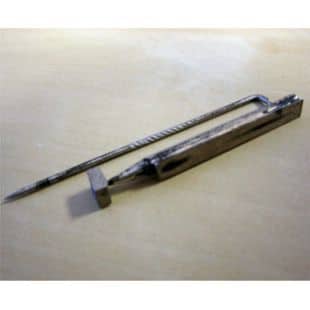
Here is a selection of Bang & Olufsen Tie Clips and Pins produced for promotional purposes.
The dark metal tie clip is modelled on a miniature Beolink 1000, and the dark coloured tie pin you can see is a Beolab 8000!!

Here is a selection of Bang & Olufsen Tie Clips and Pins produced for promotional purposes.
The dark metal tie clip is modelled on a miniature Beolink 1000, and the dark coloured tie pin you can see is a Beolab 8000!!
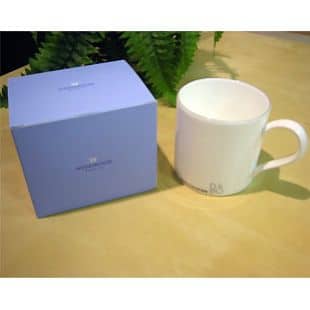
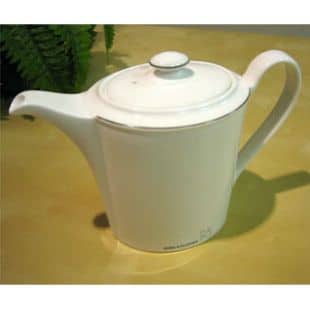
Coffee Pot by Wedgewood which formed part of the Bang & Olufsen branded Coffee set used by Official Dealers, and made from High Quality Bone China.
Rarely seen for sale, but could actually be ordered from your dealer when issued in the early/mid 2000’s.

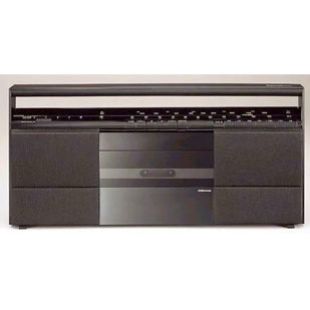
Small, compact and elegant, Beosystem 10 was the ideal companion when you were away from a main audio system.
It offered stereo radio with FM and AM/LW reception with three pre-set FM stations. The cassette recorder played every type of tape with the built-in stereo speakers providing excellent sound quality. There was also an optional wall bracket, and you could connect a turntable or extra cassette recorder, external speakers and Form 1 or Form 2 headphones.
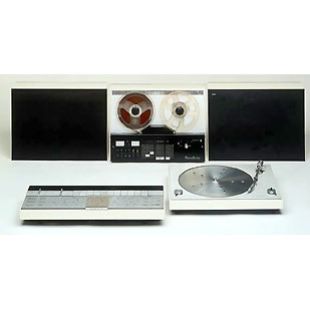
Beosystem 1200 – made up of Beomaster 1200, Beocord 1200 and Beogram 1200 was Bang & Olufsen’s B&O’s first designed system. The design ‘kinship’, which emphasised the interdependence between B&O’s various products, became a characteristic of B&O for many years. Beosystem 1200 was one of the first products selected by New York’s Museum of Modern Art for the museum’s permanent collection (not exhibition) in 1972.
The 1200 series represented the logical continuation of the line of development and design which put B&O at the forefront of manufacturers of entertainment electronics.
In 1969 the Danish Society of Industrial Design awarded Bang & Olufsen and Jacob Jensen the ID prize for the Beomaster 1200 radio/amplifier, Beogram 1200 turntable and Beocord 1200 cassette recorder for unusually beautiful and user friendly design. The jury emphasised in particular the Beomaster 1200 receiver which pointed in a new direction for the design of radios.
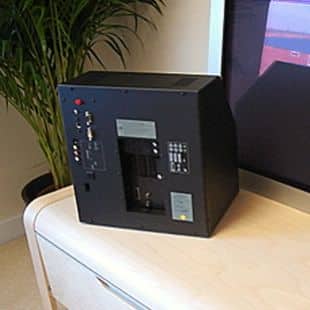
This was the Audio Visual processor designed for use with the Beovision 4. It contained all the connections necessary to make it the hub of an integrated Beolink system.
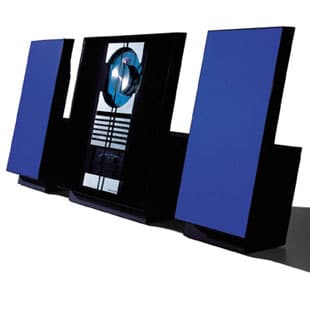
David Lewis’ Beosystem 2500 from 1991 marked a new era of design for hi-fi. In its design, he set out to emphasise the function of the machine. The front is protected by a Perspex eyeshade which slides inwards when in use. Lewis here introduced the flat, standing shape which has come to characterise his Bang & Olufsen designs; for instance BeoSound 9000.
Its interface, designed by Sally Beardleys, is simple and well thought out. Since Beosystem 2500 is very compact it has taken a lot of work to make its small loudspeakers effective and harmonious. Among other things this has been solved by making use of separate power sources to the loudspeakers in order to optimise their sound. The design was followed up by BeoSound Century, which, compared to the 2500 is smaller and cheaper.
Tradition had it that music systems should be recognised at such. However, not so at Bang & Olufsen. In spite of its size, Beosystems 2300 and 2500 featured operation and performance on a level that compared with larger B&O audio systems. And adding to the magic of the fascinating new sound experience at the time of its introduction, was the way that the smoked glass doors slid open the instant the beams are broken by a wave of your hand – revealing the controls beneath.
Beosystem 2300 / 2500 gave you two extremely powerful active loudspeakers – BeoLab 2500 – which acted as completely integrated components in the system. The source selection and programming keys you needed to operate Beosystem 2300 / 2500 were located in a central keypad. And just above them was an illuminated display which could keep you informed of the source and track you were listening to. Every time you touched a key, the display told you exactly which function you activated.
Beocenter 2500, or Beosystem 2500 as it was called when used with BeoLab 2500 active speakers, was developed from the idea of a flexible music system that could compete with the sound quality of heavy music systems. Thanks to the advent of active speakers, this was a possibility with both Beocenter 2500 and its CD-only capable Beocenter 2300. With active speakers, each of the powerful bass and treble units were equipped with their own separate amplifiers. In addition, the electronic cross-over network ensured full bass reproduction.
The loudspeakers were located on both sides of a centre console, where two clear glass covers automatically glided to the side when a hand was passed in front of them. Behind the glass covers there was access to the operating panel, receiver, CD player and a cassette recorder.
The receiver allowed the option of presetting 2 x 20 FM/AM radio stations. The cassette recorder featured Auto Reverse, Automatic Recording level, search function and Bang & Olufsen’s HX-PRO recording system, a system which ensures that the sensitive treble range is captured in recording. The memory in Beocenter 2300’s CD player allowed you to edit up to 100 CDs.
Both systems could be operated via their operating panel or a Beolink 1000 or Beolink 5000 remote control. There were sockets for headphones and connection to additional sound sources; extra loudspeakers can also be connected.
Beocenter 2500 was available with loudspeaker panels in cobalt grey, black, white, cerise or jade. It was later known as BeoSound Ouverture and could be made up to the Beosystem 2500 when incorporated with the BeoLab 2500 active loudspeakers.
Mounting Options
This classic design was reincarnated over a 21 year period with various mounts and stands. Floor stands were available with a pole stand or CD and tape storage, wall mount solutions allowed for the Hi-Fi only, or with BeoLab2500 speakers until these were discontinued
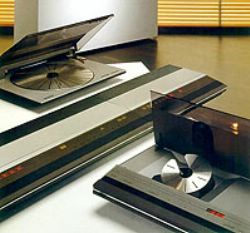
Beosystem 3300: blending science and art
Bang & Olufsen designs are always refreshingly different – a pleasure to look at as well as to hear. Which could be why the company has earned itself over the years coveted places in the Museum of Modern Art in New York.
Beosystem 3300 was the latest addition to a collection which fascinated people from all over the world. You could hang it on the wall among your other works of art; or place it where you like – those sleek, modern shapes would always look good.
But Beosystem 3300 had a great deal more to offer than an ultra-modern appearance. With records, tapes, radio and compact discs it was a top quality music system that really knew how to perform, according to the 1988 catalogue.
Beomaster 3300
The radio-amplifier was the heart of the system, connected by Datalink to the other equipment and passing on the commands you gave via remote control, or by a light touch directly on the panel.
You could preset up to five radio stations. The amplifier had a power output of 2 x 30 watts and a power handling system which prevented overloading and distortion.
Colours: white or metallic grey
Beocord 3300
You had the benefits of the very latest technology with this tape player. Such as Bang & Olufsen’s patented HX Pro recording system which enriched the sound image by giving vastly superior reproduction of the treble range.
You were certain to approve of the wealth of useful features, too. For example, if the record finished while you were recording, the tape stopped automatically and restarted automatically when you turned the record over.
When you pressed STOP after a recording, a four second pause was inserted between tracks with the automatic search system. Clever stuff – all designed to make life easier and more fun.
Colours: white or metallic grey
Beogram 3300
It is always better both for your records and for sound quality to play a record the way the master was made – in a straight line from the edge to the centre. This tangential arm record player did just that, giving a far more precise reading of the signals in the groove. The MMC4 cartridge made a vital contribution too; it was a feather-weight, with a stylus pressure of only 1,2 grams, giving outstanding sound quality but minimising wear and tear on your records.
There was more protection too – invaluable for all-night parties. The electronically controlled tangential arm was suspended so that it isolated mechanical vibrations from the cartridge. The suspension chassis was also thoroughly engineered to neutralise vibrations. So you could keep on dancing – the record player could take it!
Beogram CD3300
It’s a fact that not all compact disc players are ideal for all types of music. Some of them seem to highlight certain parts of the frequency range. But you could be confident that Bang & Olufsen’s CD players didn’t discriminate between rock and roll and classical. They smoothed over faults in the CD very cleverly too, because not all compact discs are perfect. So it was just as well that Bang & Olufsen CD players were and still are!