Posted on

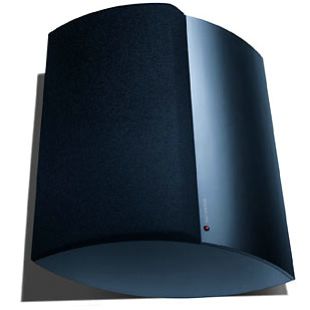
BeoLab 8000

Bang & Olufsen BeoLab 8000

As easy on the eye as they are on the ear, BeoLab 8000 loudspeakers defy conventional thinking in delivering the maximum sound from the minimum of space.

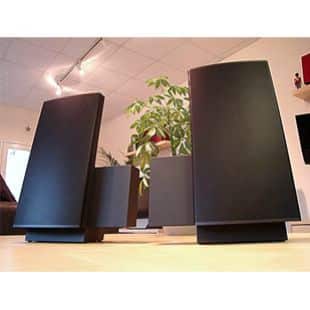
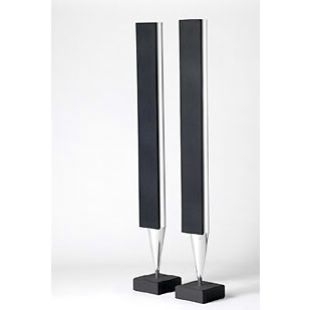
There’s not much point in thinking about BeoLab 8000 in terms of watts, woofers or tweeters. There has never been loudspeakers that look like this – or so clear and rich a sound produced from such slender cabinets. BeoLab 8000 represents both the engineering skills as well as the design capabilities from Bang & Olufsen. Nobody has ever built a speaker with such little net volume, only 5,3 litres, with such an impressive sound.

As with all modern B&O speakers, the 8000s are active, meaning that each element has its own amplifier. In fact, each speaker holds two amplifier units. The biggest advantage in separating the amplifiers is that it enables the loudspeakers the ability to obtain maximum sound pressure from each element without distortion. The 8000s use the same reflective finish as the BeoLab Penta allowing them to blend well into their surroundings. By 2001 BeoLab 8000 became the most popular active speaker to date.

” When it comes to sound reproduction we believe there’s only one relevant parameter: How close can we come to the originally recorded sound. We feel an obligation not to disturb the intentions of the artist by adding unnatural elements to the acoustic image. Therefore all Bang & Olufsen loudspeakers share the same goal. They differ in size and shape and in terms of sound pressure level. But they are all developed to reproduce the natural, unaltered sound as closely as possible ” – Bang & Olufsen catalogue 2001 – 2002

There’s no great secret to creating good speakers – but they do (normally) have to be big. When it comes to speakers, one of the driving forces behind Bang & Olufsen’s product development is combining the most modern of technology with good aesthetics. The result is that the company avoids filling people’s houses with speakers the size of phone boxes; instead replacing them with elegant pillars or beautifully-designed wall-mounted units. Formed from a single piece of aluminium that eliminates the distortion problems of traditional speakers, BeoLab 8000 is mounted on a solid, cast iron base and will create the perfect effect wherever you choose to place it.

Placing the amplifiers directly into BeoLab 8000 not only improves its overall sound performance, it also makes it possible to reduce its size by up to a third. This active loudspeaker technology gives B&O the freedom to combine the purest of sounds with the simplest of shapes. A slim 132cm tall and just 10cm in diameter the graceful column of BeoLab 8000 will never dictate any furniture arrangements.

Why build amplifiers into the loudspeakers instead of keeping them separate?

Because you can reduce the size of the cabinet volume to one-third of the size of a conventional loudspeaker with the same sound capacity. The principle is called Active Loudspeakers, and what you get is a compact loudspeaker that can play at high volume without distortion or damage to its drive units.

Furthermore, when amplifier, treble and bass units are paired for the same task, they can be tailored to compensate for each other’s shortcomings. What you hear is music that sounds exactly like the instrument it originally came from (See active speakers).

Deep bass: how to make deep bass with a shallow cabinet

All loudspeakers, regardless of brand, size or construction, make sound by converting electric energy into acoustic energy. They push air in waves, which is what our ears pick up. To get high sound pressure, you need to move a lot of air.

You can use a very large diameter loudspeaker membrane, which moves a very short distance. Or (as Bang & Olufsen prefer), you can make the membrane “deeper”, in other words, make it move a greater distance with a smaller diameter. Imagine two balloons, one round and shaped like a ball, the other long and tubular. Both contain the same amount of air; it’s simply their shapes that are different. A side benefit to the deeper membrane is that it allows a smaller cabinet, with greater freedom as far as form and function are concerned. Since no two loudspeaker units have exactly the same physical characteristics, Bang & Olufsen calibrate them individually to make certain that the sound of each and every loudspeaker leaving our factory is identical.

By employing an active electronic crossover network with equalization, we’re able to adjust frequencies before they’re amplified. The signal from the sound source is shaped before distribution to the separate power amplifiers for bass and treble. In this way, the performance of the various components is “fine-tuned”, until they produce an ideal, harmonised output, which will be the same, no matter which BeoLab loudspeaker you feast your eyes upon.

The custom made driver units of a BeoLab loudspeaker feature extra-heavy membranes with longer movement, which help produce a deeper bass.

Adaptive Bass Linearisation

Adaptive Bass Linearisation (ABL) is a process patented by B&O and is incorporated in BeoLab loudspeakers. The idea is to use the surplus capacity in amplifiers and driver units, arising by normal listening levels, for a bass extension – a sound reproduction with more bass, than the loudspeaker otherwise would be able to produce.

The function is adaptive. This means that the loudspeaker adapts to the signal it receives. Loudspeaker drivers are therefore fully exploited, without suffering mechanical or electronic abuse, and the built in amplifiers are not subjected to signals would otherwise create an overload situation.

ABL gives stunning bass reproduction considering the size of the loudspeaker in which it is incorporated, under normal listening levels.

BeoLab 8000: active loudspeaker, 2 power amplifier modules, adaptive bass linearisation, aluminium cabinet and solid iron (11kg) base.

News: From January 2003, BeoLab 8000 was obtainable with new driver units giving extra bass at low levels. While not delivering as much as a BeoLab 2 (dedicated sub-woofer) the bass drivers with the newer BeoLab 8000 have a marked improvement over their predecessors. The upgrade involved new frequency equalization and improved ABL system. These improvements are mostly apparent at high volume levels. The changes are implemented form serial 16992475 onwards.
Posted on

BeoLab 6002

Bang & Olufsen Beolab 6002

An update to the cheapest of the column speakers, this saw the Class AB amplification discarded along with the large heat sinks. Instead 2 cool running ICE amplifiers were fitted, both rated at 125W.

The LED was repositioned and the finish of the foot changed to match the TV range. A three position switch for wall, corner and free position settings was now fitted and the previous model’s phono plug was deleted. 2 Powerlink sockets were still present though.

Posted on

BeoLab 6000

Bang & Olufsen BeoLab 6000

As easy on the eye as they are on the ear, BeoLab 6000 loudspeakers – designed by David Lewis – defy conventional thinking in delivering the maximum sound from the minimum of space.

There’s not much point in thinking about BeoLab 6000 in terms of watts, woofers or tweeters. There has never been loudspeakers that look like this – or so clear and rich a sound produced from such slender cabinets. BeoLab 6000 represents both the engineering skills as well as the design capabilities from Bang & Olufsen.

BeoLab 6000 is probably one of the most famous speakers around today being a part of the standard exhibition at the Museum of Modern Art in New York along with some other Bang & Olufsen equipment, namely the Beovox Cona (a subwoofer) and the Beocord VX5000, which by the way looks almost exactly as the VX7000 does. BeoLab 6000 is a smaller version of the BeoLab 8000 with the same active construction but with even smaller net volume: 3 litres.

A great advantage with the BeoLab 6000 is the fact that it has two PowerLink connections giving the possibility to loop-through the signal to the second speaker directly. This speaker is used very often as the second pair in a Dolby Pro-Logic setup for example in the AV9000 system.

” When it comes to sound reproduction we believe there’s only one relevant parameter: How close can we come to the originally recorded sound. We feel an obligation not to disturb the intentions of the artist by adding unnatural elements to the acoustic image. Therefore all Bang & Olufsen loudspeakers share the same goal. They differ in size and shape and in terms of sound pressure level. But they are all developed to reproduce the natural, unaltered sound as closely as possible ” – Bang & Olufsen catalogue 2001 – 2002

Features:
BeoLab 6000 fills the room with sound

The choice is simple – you can fill your home with big black boxes, or you can make a stand with BeoLab 6000 and fill it with beautiful sound and beautiful looks.

Aluminium

Formed from a single piece of aluminium, BeoLab 6000 is shaped to stand out from its surroundings, but coloured to match any Bang & Olufsen audio or video setup.

Active loudspeaker benefits

How does B&O reduce the overall size of a loudspeaker, but improve its sound performance? It can only be done by placing the amplifiers directly into the loudspeaker cabinet. It’s called ‘Active Loudspeaker Technology’ and is used to combine the purest of sounds with the smallest and simplest of shapes.

Fits any room

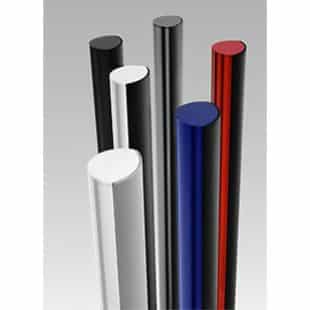
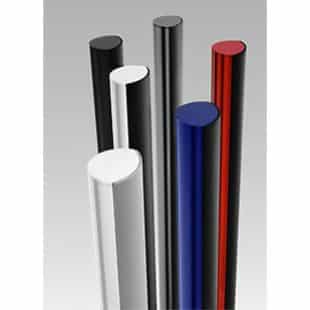
With a height of just 110cm and a depth of 10cm, finding space for a pair of BeoLab 6000 speakers is never going to be a problem. Its superior sound capabilities ensure that its performance will never dictate your placement options. The polished aluminium cabinet is available in a range of colours – black, blue, green, red and natural – that will match any Bang & Olufsen audio or video setup.

Materials and finish

The deliberate choice of material, and the final surface treatment of the products’ finish, are characteristic of Bang & Olufsen and one of their true core competences. B&O’s designers know that people use several of their senses in experiencing a product. They therefore derive great pleasure from tactile experiences, whether they are touching a cold or a warm surface, or one that is smooth or textured. The span of materials used for Bang & Olufsen products is wider than that of any other company within the trade, and they are carefully selected for their high quality and their ability to fit naturally into a home environment. The finish is then refined to perfection and created to provide a tangible experience that supports the visual impression.

Why build amplifiers into the loudspeakers instead of keeping them separate?

Because you can reduce the size of the cabinet volume to one-third of the size of a conventional loudspeaker with the same sound capacity. The principle is called Active Loudspeakers, and what you get is a compact loudspeaker that can play at high volume without distortion or damage to its drive units.

Furthermore, when amplifier, treble and bass units are paired for the same task, they can be tailored to compensate for each other’s shortcomings. What you hear is music that sounds exactly like the instrument it originally came from (See active speakers)

Deep bass: how to make deep bass with a shallow cabinet

All loudspeakers, regardless of brand, size or construction, make sound by converting electric energy into acoustic energy. They push air in waves, which is what our ears pick up. To get high sound pressure, you need to move a lot of air.

You can use a very large diameter loudspeaker membrane, which moves a very short distance. Or (as Bang & Olufsen prefer), you can make the membrane “deeper”, in other words, make it move a greater distance with a smaller diameter. Imagine two balloons, one round and shaped like a ball, the other long and tubular. Both contain the same amount of air; it’s simply their shapes that are different.

A side benefit to the deeper membrane is that it allows a smaller cabinet, with greater freedom as far as form and function are concerned.

Since no two loudspeaker units have exactly the same physical characteristics, Bang & Olufsen calibrate them individually to make certain that the sound of each and every loudspeaker leaving our factory is identical. By employing an active electronic crossover network with equalization, we’re able to adjust frequencies before they’re amplified. The signal from the sound source is shaped before distribution to the separate power amplifiers for bass and treble.

In this way, the performance of the various components is “fine-tuned”, until they produce an ideal, harmonised output, which will be the same, no matter which BeoLab loudspeaker you feast your eyes upon. The custom made driver units of a BeoLab loudspeaker feature extra-heavy membranes with longer movement, which help produce a deeper bass.

Adaptive Bass Linearisation

Adaptive Bass Linearisation (ABL) is a process patented by B&O and is incorporated in BeoLab loudspeakers. The idea is to use the surplus capacity in amplifiers and driver units, arising by normal listening levels, for a bass extension – a sound reproduction with more bass, than the loudspeaker otherwise would be able to produce.

The function is adaptive. This means that the loudspeaker adapts to the signal it receives. Loudspeaker drivers are therefore fully exploited, without suffering mechanical or electronic abuse, and the built in amplifiers are not subjected to signals would otherwise create an overload situation.

ABL gives stunning bass reproduction considering the size of the loudspeaker in which it is incorporated, under normal listening levels.

BeoLab 6000: active loudspeaker, 2 power amplifier modules, adaptive bass linearisation and aluminium cabinet.

Posted on

BeoLab 4000

Bang & Olufsen BeoLab 4000

” When it comes to sound reproduction we believe there’s only one relevant parameter: How close can we come to the originally recorded sound. We feel an obligation not to disturb the intentions of the artist by adding unnatural elements to the acoustic image. Therefore all Bang & Olufsen loudspeakers share the same goal. They differ in size and shape and in terms of sound pressure level. But they are all developed to reproduce the natural, unaltered sound as closely as possible ” – Bang & Olufsen catalogue 2001 – 2002

Squeeze a pair of BeoLab 4000s into the bookcase in your study and link them to the music system in the living room, via a Beolink® ‘eye’, which responds to your remote control. Whether it’s a matter of placement or simple colour co-ordination, BeoLab 4000 turns flexibility into an art form. Placing amplifiers directly in the loudspeakers themselves not only improves sound quality but allows the manufacturer to reduce the cabinet’s overall size. The result is a compact loudspeaker that can sit on a shelf, bookcase or hang, at almost any angle, from the wall or ceiling. Available in six vivid colours, BeoLab 4000 is equally at home in a stereo setup, a surround sound system or as superior multimedia speakers for your computer.

Features:

BeoLab 4000 fills the room with sound

You can’t see sound, but that doesn’t mean that it has to be totally invisible. BeoLab 4000 is formed from aluminium that’s polished until it shines like a mirror. It also comes in an array of colours – not only to suit your interior decoration, but because life itself is full of colour

Aluminium

Aluminium is the perfect material for BeoLab 4000. It’s light, but offers an impressive stiffness despite a thickness of only a few millimetres. It also makes it easier to obtain the loudspeaker’s unique curved form, which is important for avoiding problems with audible artefacts due to internal standing waves in the cabinet

Active loudspeaker

The equation used to be a simple one; the louder the sound, the bigger the loudspeaker – but not anymore. Placing the amplifier directly into the loudspeaker allows us to reduce the overall size of the BeoLab 4000 to one third of a conventional loudspeaker with the same sound capacity.

Adaptive Bass Linearisation

Adaptive Bass Linearisation (ABL) is a process patented by B&O and is incorporated in BeoLab loudspeakers. The idea is to use the surplus capacity in amplifiers and driver units, arising by normal listening levels, for a bass extension – a sound reproduction with more bass, than the loudspeaker otherwise would be able to produce.

The function is adaptive. This means that the loudspeaker adapts to the signal it receives. Loudspeaker drivers are therefore fully exploited, without suffering mechanical or electronic abuse, and the built in amplifiers are not subjected to signals would otherwise create an overload situation.

ABL gives stunning bass reproduction considering the size of the loudspeaker in which it is incorporated, under normal listening levels.

Why build amplifiers into the loudspeakers instead of keeping them separate?

Because you can reduce the size of the cabinet volume to one-third of the size of a conventional loudspeaker with the same sound capacity. The principle is called Active Loudspeakers, and what you get is a compact loudspeaker that can play at high volume without distortion or damage to its drive units. Furthermore, when amplifier, treble and bass units are paired for the same task, they can be tailored to compensate for each other’s shortcomings. What you hear is music that sounds exactly like the instrument it originally came from.

The cube

During the development phase, all BeoLab loudspeakers are put through their paces in ‘The Cube’, Bang & Olufsen’s own acoustic measurement facility. In the 12 x 12 x 13 metre room, the entire audible spectrum is played through the loudspeaker to give a perfect picture of it’s sound ‘fingerprint’.

Performance

To ensure an optimal performance every time you listen to it, a BeoLab loudspeaker constantly fine-tunes the signal received from the sound source before distributing it out to the separate bass and treble power amplifiers.

The listening panel

Since it’s humans that will listen to BeoLab 4000, it’s important that a human ear should also measure its quality. That’s why Bang & Olufsen employs its own Listening Panel to scrutinise every step in a loudspeaker’s development. If any sonic shortcomings are discovered, the whole project is returned to the drawing board.

Individual Calibration

Since no two loudspeaker units have exactly the same physical characteristics, we calibrate them individually to make certain that the sound of each and every BeoLab 4000 loudspeaker leaving the factory is identical.

Appearance

Using aluminium for the cabinets is not just about looking good. Despite a thickness of only a few millimetres, it’s a remarkably strong metal that’s easily shaped to eliminate the problems with audible artefacts due to internal standing waves in the cabinet.

Rule of thumb

Substitute cabinet volume (the amount of space a loudspeaker takes up) for amplifier power (which doesn’t take up much) and cabinets like that of the BeoLab 4000 can be reduced to one-third the size of a conventional, passive loudspeaker with the same sound capacity.

Flexibility in placement

You can use BeoLab 4000 as your main loudspeakers or as extras in a Bang & Olufsen surround-sound set-up. Their ability to fit into the smallest of spaces, or to be hung on the wall at almost any angle, also makes them the perfect loudspeaker for the Beolink® system. BeoLab 4000 owes its shape to the fact that active loudspeakers produce heat if they have to play for a long time without a pause. Squeeze it into a bookcase and it will still have sufficient cooling air around it, no matter how many books it shares its space with. Raised on the optional stand, BeoLab 4000 presents itself at the same angle as BeoSound Ouverture.

Even Cooler?

2007 saw the introduction of the Beolab 4000 Mk2 . Almost unheralded, the main change was the use of ICE amplifiers to replace the AB type. At first glance it would appear that the amplifiers from the Beolab 4 were being used. These offered a power output of 35W each with 2 being used. This was remarkably similar to the real output of the older amplifiers and not surprisingly the maximum sound levels achievable were not changed. Indeed it was unlikely that any customers would have noticed the change if not told.

Part numbers: BeoLab 4000 front covers

  • Green 1603894
  • Grey 1603895
  • Black 1603896
  • Yellow 1603897
  • Blue 1603898
  • Red 1603899

Mounting Options

Wall mounting brackets were supplied with this model. Pole mounted Floor Stands were the only other option.

Posted on

BeoLab 3000

Bang & Olufsen Beolab 3000

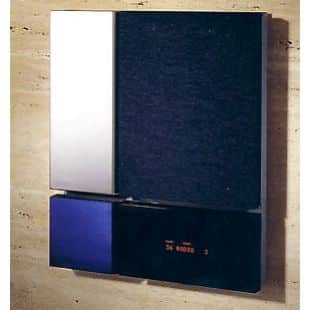
Quality loudspeakers provide well-modulated sound expression, and at the same time a visual personality that also commands attention. Bang & Olufsen’s BeoLab 3000 and Beovox 3000 loudspeakers had both the voice and the looks for a leading, acoustic role. Because of their thin shape, they became known as Panel loudspeakers.

Panel loudspeakers were one of the most exciting examples of how Bang & Olufsen united advanced technology and stunning design to achieve totally new effects. They didn’t look like high specification loudspeakers,, but their sound gave them away. Even at full volume they kept the total sound picture in perfect balance.

The elegant, flat loudspeakers were designed to be hung on the wall. And with their calm surfaces of blue or grey fabric coupled with beautiful, polished steel they looked like works of art presented in their own right. The idea of the panel speakers was based upon an advanced, acoustic principle that uses the wall as an active part of the sound reproduction, without causing the wall itself to vibrate.

They were available with or without amplifier and display showing which source was playing, at what volume, and which track number on a CD or tape you were listening to.

With display and amplifier the panel, speakers were called BeoLab 3000. Without, they were known as Beovox 3000.

The options depended on which Bang & Olufsen sound system was connected. You obtained maximum utilisation from Beosystems 6500, 4500, 3500 and Beocenters 9500 and 8500.

Why build amplifiers into the loudspeakers instead of keeping them separate?

Because you can reduce the size of the cabinet volume to one-third of the size of a conventional loudspeaker with the same sound capacity.

The principle is called Active Loudspeakers, and what you get is a compact loudspeaker that can play at high volume without distortion or damage to its drive units. Furthermore, when amplifier, treble and bass units are paired for the same task, they can be tailored to compensate for each other’s shortcomings. What you hear is music that sounds exactly like the instrument it originally came from.

Mounting Options

Wall mounting brackets were supplied with this model. No other mounting solution wall offered.

Bang & Olufsen’s preferred supplier for brackets and stands, STBbrackets, have made a range of solutions specifically for this model. Distributed throughout the World by the Bang & Olufsen store network, the STB options add to the diversity of mounting options and positions available.

»Wall Mounting Brackets

Wall Bracket for BeoVox & BeoLab flat panel speaker range

WB3000 has been introduced to meet a growing demand to mount Bang & Olufsen flat panel speakers to the wall. The bracket (sold as a pair) is a faithful reproduction of the original which was supplied with the speakers. These beautiful speakers can now be installed on to the wall, where they are a genuine and authentic Bang & Olufsen statement.

Posted on

BeoLab 2500

Bang & Olufsen BeoLab 2500

BeoLab 2500 are active loudspeakers designed to match the BeoSound Ouverture and the BeoSound 3000. With their built-in amplifiers, they sound as if they’re three times their size. Hang them on the wall or place them on bookshelves.

They match both the Beocenter Ouverture and 3000 (previous to this they were used with both the BeoSound 2300 and 2500 music systems) with perspective and clarity, despite their modest dimensions. The explanation of the wide sound lies in the built-in amplifiers in each cabinet: one for bass and one for treble, so that they never have to compete for the same amplifier.

Features:

BeoLab 2500 are active loudspeakers with 2 built-in power amplifier modules to combine with the current (2002) BeoSound 3000 and BeoSound Ouverture. As speakers for the BeoSound 2300 and 2500 music systems, they were available in Blue Lapis, Black Granite, Red Garnet, Green Malachite, Yellow Dolomite and Silver Galena. However, new metal frets were introduced at the end of 2001. From the previous replaceable cloth fronts, they are now manufactured in pearlescent aluminium (see below). These new perforated metal frets presently come in 5 different colours – natural aluminium, black, blue, green and russet to match those of BeoSound 1.

“When it comes to sound reproduction we believe there’s only one relevant parameter: How close can we come to the originally recorded sound. We feel an obligation not to disturb the intentions of the artist by adding unnatural elements to the acoustic image. Therefore all Bang & Olufsen loudspeakers share the same goal. They differ in size and shape and in terms of sound pressure level. But they are all developed to reproduce the natural, unaltered sound as closely as possible ” – Bang & Olufsen catalogue 2001 – 2002

Adaptive Bass Linearisation

Adaptive Bass Linearisation (ABL) is a process patented by B&O and is incorporated in BeoLab loudspeakers. The idea is to use the surplus capacity in amplifiers and driver units, arising by normal listening levels, for a bass extension – a sound reproduction with more bass, than the loudspeaker otherwise would be able to produce.

The function is adaptive. This means that the loudspeaker adapts to the signal it receives. Loudspeaker drivers are therefore fully exploited, without suffering mechanical or electronic abuse, and the built in amplifiers are not subjected to signals would otherwise create an overload situation.

ABL gives stunning bass reproduction considering the size of the loudspeaker in which it is incorporated, under normal listening levels.

Mounting Options

BeoLab2500 were originally mounted to the HiFi with wall bracket 2087 or physically separated and mounted onto furniture as a bookshelf option.

Posted on

BeoLab 20

Bang & Olufsen BeoLab 20

The crowning glory of Beolab 20 is the Acoustic Lens that delivers smooth high-frequency sound in full 180 degrees. The results are uncompromising listening experiences across your room and much greater freedom in terms of where you place your speaker for optimal sound.

SOUND
Hear it and believe it.

Very few speakers can rival the formidable combination of power and poise of the Beolab 20. At the heart of its refined acoustic performance is a custom-built digital sound engine, that’s refined to optimise every single component inside this wireless speaker.

DESIGN
Sophisticated from the inside out

Beolab 20 is a truly powerful speaker, designed with an elegant and surprisingly compact appearance. With the body almost entirely draped in your choice of high-quality fabric, this stylish speaker easily adapts to its surroundings.

ADAPTIVE BASS
Creating the perfect lows

To deliver precise and intensive bass without the risk of damaging your speaker at high volumes, our Adaptive Bass Linearisation technology constantly monitors and adapts the speaker’s bass performance.

ROOM ADAPTATION
Superior sound from any position

Every speaker will sound different depending on its position in a room. Beolab 20 features our innovative room adaptation technology that optimises the audio performance based on your speaker’s actual placement in a corner, against a wall or free-standing.

Posted on

BeoLab 4

Bang & Olufsen BeoLab 4

“BeoLab 4 is a compact, flexible loudspeaker concept at a highly attractive price point. In addition to its use with the BeoSound 4 music system, BeoLab 4 can also be combined with PCs or be part of other Bang & Olufsen music systems. Offering a large number of positioning options, BeoLab 4 is scheduled for initial roll-out in the second quarter “- taken from Bang & Olufsen’s Financial Report, August 2005 .

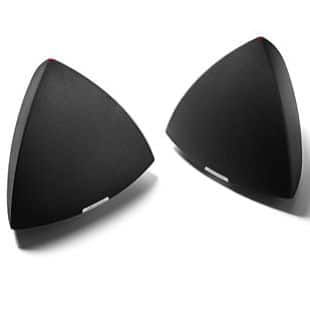
BeoLab 4 was launched in November 2005 as a new entry-level loudspeaker concept. They are designed to be discreet yet offer exceptional performance for their size. They can be used as stereo loudspeakers with an audio system, as front or rear loudspeakers within a surround sound set-up, and as link room loudspeakers or with a computer.

BeoLab 4 are 2-way stereo loudspeakers with a 2cm tweeter and a 10 cm bass loudspeaker. Each driver is powered by a 30 Watt ICE power amplifier. They also feature a placement switch to adapt the bass performance depending on their position in the room. This is similar in operation to BeoLab 2 with a wall-mounted, corner or free-standing position. In line with the versatile concept, BeoLab 4 adapts its bass performance to the specific placement in the room. A switch is set to match a wall-mounted position, a corner position or a free-standing position to ensure optimum performance. BeoLab 4 features Adaptive Bass Linearization (ABL), Bang & Olufsen’s proprietary technology for ensuring superior bass performance from loudspeaker cabinets with modest physical dimensions.

Pyramid power to super charge your laptop

With a 3.5 mm mini jack Line input, dedicated PC mode and low price, BeoLab 4 is a realistic solution to be sold with non B&O masters such as PCs or as even for portable MP3 players There are two new adaptors to support connection to these sources:

6270273 2 – piece set of 3.5 mm mono mini plug > RCA M, for BL4 w/ non B&O system.

6270250 3.5mm stereo mini plug > 2 x 3.5 mono mini plugs for PC connected to BL4s

Placement
To support the versatility of the loudspeaker, BeoLab 4 is supported with a range of stand options. On its built-in foot, BeoLab 4 can easily be placed on a bookshelf or a table. Furthermore, BeoLab 4 can be mounted on the wall or to the ceiling by means of the optional wall and ceiling brackets. Finally BeoLab 4 can be placed on a dedicated floor stand.

Colour options
The covers are made of a special fabric and will be available in 4 different colours – Black, Dark Grey, Red and Blue. Thanks to a simple snap-on system, it is easy for the customer to change to another colour if required.

With the release of the BeoLab 4 loudspeaker, Bang & Olufsen has once again shown that excellent sound is wonderfully compatible with the design and crafting of a compact and intriguing cabinet. BeoLab 4 will be available towards the end of 2005. Despite its modest size, the pyramid-shaped BeoLab 4 is a true hi-fi loudspeaker, with the amplifier built in to the loudspeaker unit and a range of Bang & Olufsen proprietary acoustic technologies ensuring the best performance. In terms of design and placement options, BeoLab 4 is the perfect accompaniment to the new BeoSound 4 audio system, and the small dimensions suit well as rear speakers for home cinema, or as superbly performing PC loudspeakers.

Flexibility is the key
“In today’s audio market, flexibility is central to our business. Our customers expect to be able to hear music wherever they may be, without any diminishment in quality,” says Michael Jensen, Product Manager, Bang & Olufsen. “BeoLab 4 complements our other BeoLab loudspeakers and sound solutions by ensuring that listening experiences from the living room to the bedroom or home office are of an equally high quality.”

It is often unnecessary to use large loudspeakers as the rear speakers for home cinema, and BeoLab 4 can fill this role. Furthermore, BeoLab 4 has a dedicated PC mode, making it a superbly performing PC loudspeaker. Bang & Olufsen’s well-known BeoLink system ensures the total integration of all entertainment at home, and BeoLab 4 is a great solution for remote loudspeakers that can be placed discretely around the house and linked to home entertainment systems.

A perfect blend of expression and technology

BeoLab 4 is available with a range of stand options for the wall, floor or table that complement the stands for the new BeoSound 4 audio system. BeoLab 4 can even be tastefully hung from the ceiling, and the cloth covers are available in four colours. Three bass presets ensure that BeoLab 4 performs according to its placement in a room – whether in a corner, against a wall, or free-standing in the room.

BeoLab 4 is, like all BeoLab loudspeakers, an active loudspeaker, meaning that the amplifier unit is placed in the cabinet to ensure no deterioration of signal strength between the amplifier and loudspeaker unit. The ICEpower amplifier unit used is a patented Bang & Olufsen solution, allowing for an ultra-compact design, high power output, and cool operation. Adaptive Bass Linearisation, another proprietary Bang & Olufsen technology, offers superior bass performance from modestly- dimensioned loudspeaker cabinets. In addition, circuit protection technology ensures BeoLab 4 never overheats.

Mounting Options
BeoLab4 were conceived as a table top speaker with optional floor stands featuring a stainless steel turned pole. Cables could not be internally routed within the stand and so a silver sock was supplied, which proved not to be popular.

Posted on

BeoLab 18

Bang & Olufsen BeoLab 18

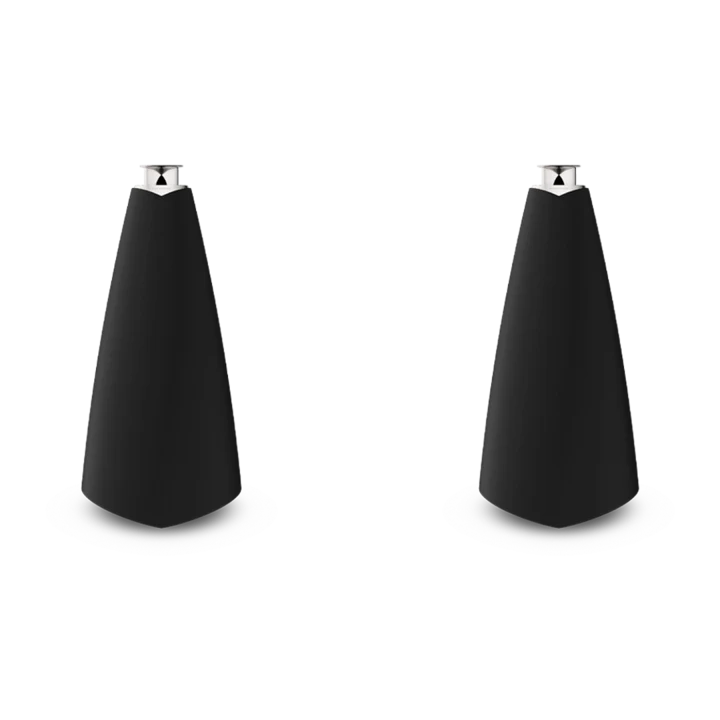
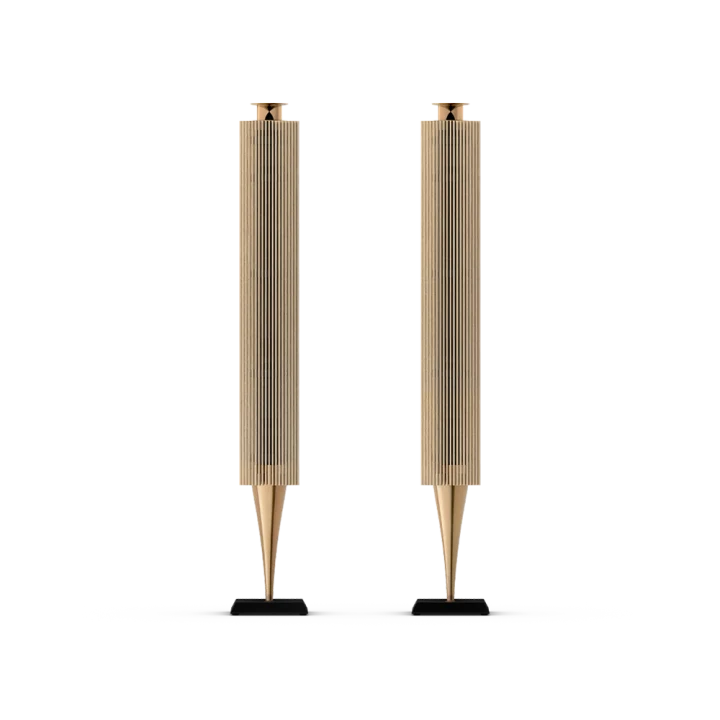
The culmination of over 25 years of design and innovation, the Beolab 18 introduces a refined symbiosis of form, craftsmanship, and performance Inspired by the legendary Beolab 8000 loudspeaker, it honours a classic silhouette with new heights of performance and flexibility. Beolab 18 requires just a power cable to unleash multi-channel wireless audio throughout the space.

Discover the impeccable experience of wireless Bang & Olufsen sound. Needing just a single power cable to perform, the speaker brings incredible opportunities to unleash the joy of multi-channel wireless audio in your home.

Any spot is the right spot

The slender speaker leaves a surprisingly small footprint. It’s designed to fit and blend in almost anywhere, regardless if you are looking for a freestanding floor speaker, want to tuck it in a corner or hang it on your wall like an artwork.

A poetic expression of sound

The aluminium pillar balances almost magically on its pointed base, while the crafted wooden lamellas appear to be fanning out the sound across your room in concert with the acoustic lens on top. Meet design and engineering in perfect harmony.

Design-driven innovation

Beolab 18 is a stunning work of design engineering with audio performance at its heart. The acoustic lens evenly distributes the upper frequencies in a 180-degree horizontal arc, delivering superior sound experiences across your room, not just in front of your speaker.

All the little big things

Behind its beautiful exterior, Beolab 18 is filled with advanced audio technologies. Adaptive Bass Linerisation automatically adjusts the bass performance to what you are playing, while the room adaptation feature optimises the sound based on your speaker’s placement.

Posted on

BeoLab 11

Bang & Olufsen Beolab 11

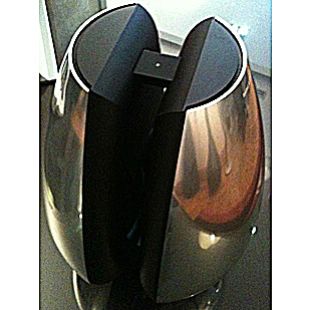
The Beolab 11 is the new lower priced subwoofer, designed in particular to accompany the Beovision 10. It utilises a design principle seen in other subwoofers of having identical units firing in opposite directions and hence making the structure more stable. Indeed the B&W PV1 does just this using B&O ICE amplification.

B&O however have added a new twist to the equation by having the two 130mm drive units firing inwardly and so allowing the external casing to be made from the same polished aluminium seen in the Beovision 10.

Amplification is via a 250W ICE unit and so the speaker can be seen to fit below the Beolab 2 in the range.

Mounting Options

As a result of the balanced drive units, the Beolab 11 will be offered both as a floor standing model and with a wall bracket. This is again designed to match the Beovision 10. The Beovision 10 in both 40″ and 46″ versions is designed so that it can be used as a stand alone set but still utilise the subwoofer output.

This should add the lower frequencies not able to be produced due to the small speaker enclosure of the Beovision 10.

The Beolab 11 will stand just 320mm high on the floor stand. The cross over frequency and bass lift is set with a collection of switches on the base. There is a Powerlink connection and two Powerlink outputs so it can be used in a stereo system.