Posted on

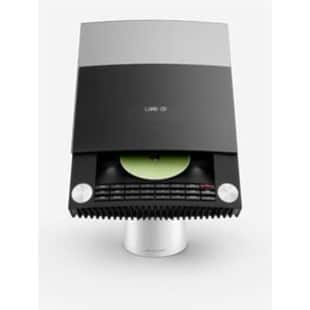
BeoSound 3

Bang & Olufsen BeoSound 3

” BeoSound 3 is a new compact music system comprising FM radio and SD card player for e.g.. music recorded on BeoSound 4. The products represents a genuine portable solution with integrated, rechargeable battery, soft-touch operation, clock-radio function, and a high quality loudspeaker. BeoSound 3 is scheduled for the second quarter of the financial year ” – taken from Bang & Olufsen’s Financial Report, August 2005

Although conceptually based on the classical transistor radio concept, BeoSound 3 is a product with modern functionality. The unit features built-in FM radio with the ability to store up to 99 pre-set frequencies. When the radio is switched on the antenna rises automatically and elegantly, similar to BeoSound 1.

With the memory card functionality the user may listen to favourite digitally-stored music on the BeoSound 3. Whereas BeoSound 2 is for the individual, BeoSound 3 can be for the whole family to enjoy. Bang & Olufsen can now offer the user a complete solution for digital music entertainment. Recorded from BeoSound 4 or transferred directly from the computer to the memory card, users can choose to take the music with them – either on BeoSound 2 or on BeoSound 3.

With the built-in wake-up timer functionality, BeoSound 3 may be used as a clock radio to wake up to in the morning.

Flexibility in placement

BeoSound 3 can be placed upright or hung on a dedicated wall bracket supplied with the unit.

Rechargeable battery

As it is supplied with a rechargeable battery, the unit is entirely free of power cables and can easily be moved from one place to another without having to plug and unplug. BeoSound 3 is a truly portable “place-and-play” product.

BeoSound 3 delivers portable and personal sound with style

In appearance, the new BeoSound 3 portable audio system from Bang & Olufsen echoes past traditions, while on the inside the technology looks to the future. BeoSound 3 is available from November/December 2005.

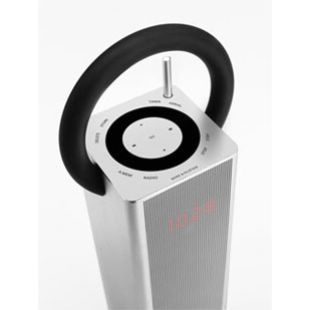
BeoSound 3 has an FM radio, SD (Secure Digital) card reader and clock-timer elegantly packaged together with a rechargeable battery in the robust, anodised aluminium cabinet. The full-range mono loudspeaker’s performance belies the small size of BeoSound 3, and provides clear rendition of music and vocal broadcasts.

Truly ‘place and play’

The distinctive appearance makes BeoSound 3 stand out from the conventional or ‘retro’ portable music systems available on the market today. “BeoSound 3 is truly a portable concept, built for robustness and with an acoustic design that facilitates sound clarity,” says Brian Stilling Laursen, Product Manager, Bang & Olufsen. “The form appears quite extraordinary at first, and yet in use BeoSound 3 proves remarkably effective with what we call ‘classic transistor radio’ use.”

In addition to the FM radio, the ability to play music and radio recorded on the new BeoSound 4 audio system offers the ease of listening to, for example, CD quality music away from home played on the very robust flash memory SD card. The SD card can also be used when on the move with the BeoSound 2 digital music player.

The large, black handle is immediately apparent to the user. The handle clicks into one of five positions at rest, ensuring no ‘clatter’ against the aluminium cabinet. In addition to the obvious placement standing on its base pretty much anywhere, BeoSound 3 is supplied with a wall bracket that fits tightly around the handle. This enables fixed placement beside the bed, for example, if the user wishes to use the clock, wake-up timer, and stop-timer functionality built in to BeoSound 3.

An experience for now – and the future

All operation of the BeoSound 3 happens on the soft-touch top panel. Soft-touch operation on aluminium was pioneered by Bang & Olufsen on the BeoCenter 2 audio and DVD system, and the absence of protruding buttons and knobs only increases the ease and convenience of carrying and placing BeoSound 3. The motorised antenna rises automatically when the radio is switched on.

Bang & Olufsen aims to be wherever the company’s customers are, with entertainment solutions that do not compromise the quality of the listening experience. “Considering the appeal of the ‘traditional’ transistor radio concept and the addition of the future-secure SD card functionality, we fully expect BeoSound 3 to be a huge hit among both existing and new Bang & Olufsen customers,” concludes Brian Stilling Laursen, Product Manager, Bang & Olufsen.

Press Release: November 2005
Posted on

BeoVision Avant 55 NG

Bang & Olufsen BeoVision Avant 55

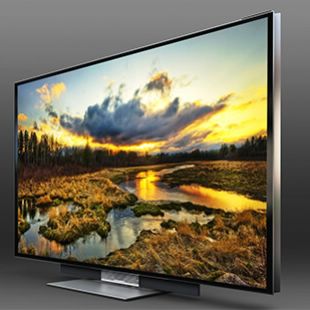
BeoVision Avant is a celebration of movement, designed to provide exceptional viewing and placement flexibility. It unfolds the experience and turns gracefully to your favourite viewing position. BeoVision Avant is a fusion of Ultra High-Definition (4K) picture and iconic Bang & Olufsen sound, redefining the audio impact a TV can deliver through a 3-channel speaker system with great speech intelligibility and power. BeoVision Avant takes control of any connected device from the BeoRemote One and provides one-touch access to the Bang & Olufsen experience.

BeoVision Avant – Turning to you

Unfolding sound

BeoVison Avant is a celebration of movement.

An unforgettable fusion of Ultra High-Definition (4K) picture and iconic Bang & Olufsen sound, that unfolds before your very eyes.

Redefining TV sound

Precision tuned to Bang & Olufsen’s most exacting standard, BeoVision Avant redefines the audio impact a TV can deliver. The 3-channel speaker system harnesses three dedicated tweeters, three midrange units and

two powerful bass drivers. The result is a fusion of clarity and power that truly embodies Bang & Olufsen’s commitment to ultimate sound.

Contrasted imagery

BeoVision Avant combines local dimming across more than 8 million pixels, bringing out the tiniest details in the action. Experience the most extreme sports or action footage with crystal sharp, dynamic precision.

Posted on

BeoVision Avant 55

Bang & Olufsen BeoVision Avant 55

Unfolding sound

BeoVison Avant is a celebration of movement.

An unforgettable fusion of Ultra High-Definition (4K) picture and iconic Bang & Olufsen sound, that unfolds before your very eyes.

Redefining TV sound

Precision tuned to Bang & Olufsen’s most exacting standard, BeoVision Avant redefines the audio impact a TV can deliver. The 3-channel speaker system harnesses three dedicated tweeters, three midrange units and

two powerful bass drivers. The result is a fusion of clarity and power that truly embodies Bang & Olufsen’s commitment to ultimate sound.

Contrasted imagery

BeoVision Avant combines local dimming across more than 8 million pixels, bringing out the tiniest details in the action. Experience the most extreme sports or action footage with crystal sharp, dynamic precision.

Posted on

BeoLab 7-2

Bang & Olufsen BeoLab 7.2

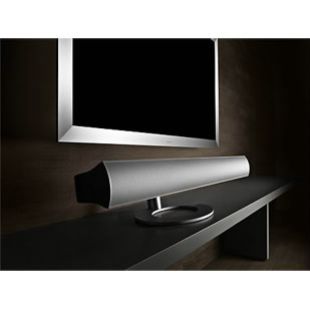
Packed with advanced technology, BeoLab 7 is, quite simply, the most powerful stereo speaker ever developed for TV. With six individual driver units, all powered by their own digital ICEpower amplifier, BeoLab 7 delivers an unequalled sound performance for your TV viewing. The beam-shaped loudspeaker below the screen provides superb acoustic performance and signifies the presence of sound as an integral part of your viewing experience. Musically, the speaker rivals many hi-fi systems, and is quite capable of being used as a BeoLink speaker.

The natural fit

BeoLab 7 is specially developed for BeoVision 7 to contribute the ultimate stereo sound performance to the viewing experience. BeoLab 7-1 is the natural accompaniment for the BeoVision 7-32 LCD television, while the broader beam of BeoLab 7-2 is designed for BeoVision 7-40. In addition, BeoLab 7 stereo loudspeakers fit naturally under the BeoVision 4 plasma screen, or under a projection screen. In this application, the speaker can be either wall-mounted or placed on a special tabletop stand.

Colours to match

Long and lean, BeoLab 7-1 and BeoLab 7-2 look at home under a BeoVision 7 or BeoVision 4, or as part of a projection screen setup. The shorter BeoLab 7-1 is best suited for the BeoVision 7-32” screen. The loudspeaker cabinet is made from a single piece of aluminium and coated in a resilient black soft-touch lacquer. The perforated aluminium front grill now comes anodised in five different colours: Light and dark grey, blue, red and black.

A firm grip on powerful sound

A special three-way bass reflex construction incorporates six individual units – two each for treble, mid-range and bass. Each driver is powered by a unique built-in ICEpower amplifier, delivering a combined effect of 750 watt. In addition, BeoLab 7-1 and 7-2 are equipped with thermal protection circuits and Adaptive Bass Linearisation (ABL), which ensures maximum performance without distortion, even at very high volume. Bang & Olufsen has a quarter of a century of experience making loudspeaker cabinets from extruded aluminium. This technique allows for very rigid and compact enclosures with powerful sound performance.

Note that BeoLab 7-1 was designed to be used with the BV4-37 and BV4-42. The wider BeoLab 7-2 may be used with the larger-version BeoVision 4: BV4-50 and BV4-65.

Mounting Options

All four versions of BeoLab 7 were designed for incorporation with Bang & Olufsen’s motor stand options.

Posted on

BeoLab 7-4

Bang & Olufsen BeoLab 7.4

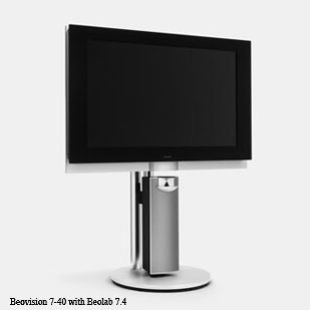
BeoLab 7-4 brings extra authenticity to any film or TV experience. Using the same acoustic lens technology found in BeoLab 5, this compact but powerful speaker is optimised specifically to reproduce the sound of voices. This is essential in a surround sound set-up, as eighty per cent of the voice information goes through the centre channel. Next time you watch a movie, you won’t miss a whisper.

Surround sound centrepiece

In a surround sound setup, BeoLab 7-4 is designed to give a powerful performance in the important centre channel. It can be used with all BeoLab loudspeakers and the BeoLab 2 subwoofer for the ultimate surround sound experience with the BeoVision 7-40 LCD or BeoVision 4 plasma televisions, or a projection screen. Moving with the motorised floor stand of your BeoVision 7, BeoLab 7-4 adds an extra dimension of sound to whatever you are watching on TV.

BeoLab 7-4 has a vertical construction that provides the best possible tonal balance found in speech. The deepest bass sounds are filtered out, ensuring greater power output and enabling BeoLab 7-4 to play up to the extreme capabilities of the BeoLab 5 loudspeaker. The acoustic lens, centred just beneath the screen as a visual emphasis of refinement, ensures an experience of tonal clarity in the horizontal plane. The sound of voices becomes extremely authentic, regardless of where you are seated.

Consistent lines and harmonious colours

The cabinet is coated in a durable yet silky black lacquer surface. Facing you is a front grill made out of anodised aluminium with a perforated pattern available in five different colours, giving a graphic touch to the overall look. As with all Bang & Olufsen products, there is always a consistency in the design lines, so you will quickly see a coherence between the curved DVD loader on BeoVision 7 and the curved front of BeoLab 7-4.

Mounting Options

All four versions of BeoLab 7 were designed for incorporation with Bang & Olufsen’s motor stand options.

Posted on

Master Control Link MCL30 & MCL82

Master Control Link MCL30 & MCL82

    Type

Language

Type

Date

    Type

User and Installation Manual

EN

2050

03-85

MCL30 User and Installation Manual


Master Control Link (abbreviated MCL or Link) was a unit which made it possible to control and enjoy a music system from any room in the house that had a Link unit installed. It was operated by infra-red remote control.

The two systems – MCL30 and MCL82 were introduced in 1982. The ’82’ of MCL82 signified the year of its introduction. Both Link systems were predecessors to MCL2 (introduced in 1987) and MasterLink from the early 1990s.

Which Link system for which product?

MCL 82, Type 2041 (1982 – Dec 1997)MCL 30, Type 2050 (1982 – May 1993)
BeoCenter 7000 type 1801/1803/1808
BeoCenter 7002 type 1801
BeoCenter 7007 type 1821 – 1829
BeoCenter 7700 type 1811 – 1819
BeoMaster 5000 type 2321 – 2329
BeoMaster 8000 type 1901 – 1909 (each Link unit had to be modified in order to function) *

BeoMaster 3000 type 2931 – 2939
BeoMaster 6000 type 2251 – 2259 *

* Master Control Link could not be connected to BeoMaster 8000 and 6000 directly because there was no connection for Datalink and supply voltage to the system through extra pins in the speaker sockets. Consequently, it had to be supplemented with an extra box, Type 1006/1007 (MCL-BeoLab kit), which was supplied with special mounting instructions.

Which Remote Control Units could be used?

This chart indicates which remote control units – Master Control Panel or Terminal – may be used in the Link room together with the various music systems:

Master Control Panels

Music systemRemote control with displayTypeOrder no:
BeoCenter 7700Master Control Panel 770020428920420
BeoCenter 7007Master Control Panel 7700 (display operated through Master Control Link)20428020420
BeoMaster 5000Master Control Panel 500020388920380

Terminals

BeoCenter 7700BeoCenter Terminal20438920430
BeoCenter 7007BeoCenter Terminal20438920430
BeoMaster 5000Terminal 500020398920390
BeoCenter 7000 – 7002BeoCenter Control Module 8052115
BeoMaster 8000BeoLab Terminal10028052142
BeoMaster 6000BeoMaster Terminal20358052139
BeoMaster 3000Terminal 300020448920440

Outline of the two Master Control Link Systems

The two Link systems consisted of two parts:

1. Transceiver (infra-red transmitter-receiver with some direct control buttons)

2. Relay box (containing control electronics and connections)

Dimensions 130 x 39 x 22mm

Dimensions: 160 x 110 x 35mm

The two parts were connected and, together with a set of speakers and a control cable, the parts constituted an extra “remote control terminal” for the music system. The control cable was an 8 mm cable run from the music system to the Link unit.
Extra rooms may be added on; all that was required was to install a Master Control Link and a set of speakers in each room and run a control cable from another Link or from a connection box.
The functions available on the music system remote control unit could be operated from Link rooms.

How did Master Control Link work?

The advantage of the Master Control Link is that it was possible to both operate and listen to music in another room. It was possible to listen to radio programmes, records and tapes, adjust volume and to switch the whole music system on and off from any room that had an MCL-unit installed. Operation was effected by means of the Master Control Panel or Terminal available for the music system (such as BeoSystem 5000).
The technical function of the Master Control Link was to pass a control signal to and from a BeoMaster or BeoCenter and to control switching of the speaker set connected.

MCL together with a music system with which a Master Control Panel could be used

When a Master Control Panel button was actuated, an infra-red signal was transmitted to the Transceiver which received the signal and transformed it into a digital code. This digital code was passed on through the relay box to the music system where the desired function was executed and confirmation that the function had been executed was sent back through the same lead. The Transceiver then fed back information to the Master Control Panel which indicated the function achieved on the display.
If the whole system was on stand-by and P1 was actuated on the Master Control Panel, then the following would happen:

  • digital signals were transmitted through the Transceiver and the relay box to the Music System and started it on radio program 1
  • digital signals were also passed to the microcomputer in the relay box and as the speakers were not switched on, this would be effected by the relay

If the next order concerned change of programme or a sound adjustment of the Music System the microcomputer checked the digital code prior to accepting it and passing it on to the Music System, and this is all that will happen in the relay box
The MUTE function, however, applied only to the room from which the system was being operated:

Only the speakers in this room were switched and the order was not passed on to the music system. A stand-by order from the Music System or from another Transceiver in a different room caused all speakers to be switched off.
After installation of a Master Control Link system with which a Master Control Panel was, testing had to be executed with the latter. This was in order to ensure that transmission both to and from the Music System was unimpeded. (Confirmation from the Music System is indicated on the Control Panel display.)

MCL together with music systems with which only Terminal could be used

When a switch on the Terminal is actuated an infra-red signal is transmitted to the Transceiver which receives the signal and transforms it into a digital code. This digital code is passed on through the relay box to the Music System where the desired function is executed.
Speaker control can only be carried out manually by pressing the speaker button on the Transceiver.
An exception to this is BeoCenter 7000/7002 where switching on is carried out automatically when operated with a Terminal, but switching off must be carried out by actuating the Transceiver speaker button.

What may be controlled from the Link room?

Chart of the functions which could be controlled from other rooms through the Master Control Link system by using a Master Control Panel (MCP) or a Terminal:
Operation with MCP or Terminal Music system:
BeoCenter 7700 – 7007 BeoMaster 5000 BeoCenter 7002 – 7000 BeoMaster 8000 BeoMaster 3000 BeoMaster 6000
What may be operated? All MCP or Terminal functions (only speakers in room selected were coupled, provided that a Link was mounted in Center room All MCP or Terminal functions. Only speakers in room selected were coupled All Terminal functions All BeoLab Terminal functions. Speakers had to be connected to Transceiver box with All BeoMaster Terminal functions. Speakers had to be connected to Transceiver box with All BeoMaster Terminal functions. Speakers had to be connected to Transceiver box with
MUTE/MUTING Speakers in this room were coupled or uncoupled Speakers in this room were coupled or uncoupled No MUTE button No MUTE button MUTE button worked when music system was on and for all speakers MUTE button worked when music system was on and for all speakers
RESET All speakers were adjusted to the pre-set volume RESET of sound each time BeoMaster was switched on. No RESET button RESET of sound each time BeoCenter was switched on. No RESET button RESET of sound each time BeoMaster was switched on. No RESET button RESET of sound each time BeoMaster was switched on. No RESET button All speakers were adjusted to the pre-set volume
STATUS (MCP only) Yes Yes
Display function (MCP only) Yes Yes
Stand-by Music system went stand-by.  Speakers were uncoupled in all rooms Music system went stand-by.  Speakers were uncoupled in all rooms Music system went stand-by.  Speakers remained coupled and were played the next time system was switched on Music system went stand-by.  Speakers remained coupled and were played the next time system was switched on Music system went stand-by.  Speakers remained coupled and were played the next time system was switched on Music system went stand-by.  Speakers remained coupled and were played the next time system was switched on
* If the Link units were connected to the SPEAKERS 1 outputs on BeoMaster 3000 and headphones were connected, the sound in the Link rooms would disappear

Operation from Transceiver

MCL82, Type 2041

If no Master Control Panel or Terminal was at hand in the Link room, operation may be executed, to a limited extent, from the Transceiver box itself. Below are the functions for speaker control and stand-by:
Operation on Transceiver box Music system:
BeoCenter 7700 – 7007 BeoMaster 5000 BeoCenter 7000 – 7002 BeoMaster 8000
Speakers in this room Coupled or uncoupled speakers.  Al speakers were adjusted to RESET level. May switch BeoMaster on last program selected Coupled or uncoupled speakers. May switch BeoMaster on last program selected Coupled or uncoupled speakers and ‘remembered’ last setting. Did not switch on BeoCenter; this had to be done via Terminal and speakers were coupled automatically Coupled or uncoupled speakers and ‘remembered’ last setting.  Did not switch on BeoCenter; this had to be done via Terminal
TIMER Used when music system was switched on by means of time programming Button in = speakers will be on Button out = speakers will be off Button in = speakers will be on Button out = speakers will be off Button not operational. Speakers were coupled or uncoupled by Button not operational. Speakers were coupled or uncoupled by
Stand-by Switched off whole music system except when recording Switched off whole music system except when recording Switched off whole music system except when recording Button not operational
The TIMER was an extension of the time programming feature of BeoCenter 7007, 7700 and BeoMaster 5000.  This button was used to determine whether or not the speakers in this room should be coupled: e.g. when the music system had been programmed to switch on say, radio programme 2 at 17:30

MCL30, Type 2050

This transceiver did not allow actual music system operation. By means of   only the speakers were switched on (did not switch on the music system).

Speaker functions in Main Room

Music system:
BeoCenter 7700 – 7007 BeoMaster 5000 BeoCenter 7002 – 7007 BeoMaster 6000/8000 BeoMaster 3000
Coupling and uncoupling in same room as music system SPEAKERS 1 button or automatic control through MCL in same room. TIMER button MUTING button SPEAKERS 1 button SPEAKERS 1 button SPEAKERS 2 button (only if Link units were connected to SPEAKERS 1 outputs)
Time programming for starting a program, speakers in same room were desired to be coupled SPEAKERS 1 button or automatic control through MCL in same room. TIMER button Connect phones or automatic control through MCL in same room, TIMER button SPEAKERS 1 button SPEAKERS 1 button
Posted on

ML / MCL Product Compatibility

ML / MCL Product Compatibility

ML Compatibility - Audio Products

BeoCenter 9000

– Has limitations. Not recommended

BeoSystem 3500

– Beolink Converter required

BeoVision LX2500/2800

– not compatible

BeoCenter AV9000

– Compatible

BeoCenter 8000

– no link connections

BeoSystem 4500

– Beolink Converter required

BeoVision LX2502/2802

Beolink Converter required (Limited use as main TV)

BeoVision Avant

– Compatible

BeoCenter 2300

– Beolink Converter required

BeoSystem 5500

– Beolink Converter required

BeoVision MX3500/5500

– Beolink Converter required

BeoVision AV5

– Compatible

BeoCenter 2500

– Beolink Converter required

BeoSystem 5500

– Beolink Converter required

BeoVision LX4500/5500

–  Beolink Converter required

BeoVision 3

– Compatible

BeoCenter 8500

Beolink Converter required

BeoSystem 7000

– Beolink Converter required

BeoVision MX 4000/6000/7000

–  Beolink Converter required

BeoVision 5

– Compatible

BeoCenter 9300

– Beolink Converter required

BeoSound 2300/2500

– Beolink Converter required

BeoVision MX8000

– Compatible

BeoVision 1L

– Compatible (Options 1 or 2)

BeoCenter 9500

– Beolink Converter required

BeoSound Ouverture/3000

– Compatible

BeoVision LX5000/6000

– Beolink Converter required

BeoVision 6

– Compatible

BeoSound 9000

– Compatible

BeoSound 3200

– Compatible

BeoVision AV9000

 – Compatible

 
BeoSound Century

– Not compatible

BeoCenter 2

– Compatible

BeoVision 1

– Not compatible

 
BeoSound 1

– Not compatible

 BeoCenter 1

– Compatible (only with BC1 updated model: Options 1 or 2)


ML Compatibility - Link-only Products

BeoVision MX4002 – Compatible
BeoLab 2000 – Compatible
BeoLab 3500 – Compatible

MCL Compatibility - Audio Products

BeoCenter 9000

– may need Beolink SW

BeoSystem 3500

– compatible

BeoVision LX 2500/2800

– not compatible

BeoVision AV9000

– ML/MCL Converter required

BeoCenter 8000

– no link connection

BeoSystem 4500

– compatible

BeoVision LX 2502/2802

– Compatible

BeoVision Avant

– ML/MCL Converter required

BeoCenter 2300

– needs ML/MCL Converter

BeoSystem 5500

-compatible

BeoVision MX3000/4500/5000

– Compatible with limitations

BeoVision AV5

ML/MCL Converter required

BeoCenter 2500

– needs ML/MCL Converter

BeoSystem 6500

– compatible

BeoVision MX3500/5500

– Compatible

 
BeoCenter 8500

– compatible

BeoSystem 7000

– compatible

BeoVision LX4500/5500

– Compatible

 
BeoCenter 9300

– compatible

BC Ouverture

– needs ML/MCL Converter

BeoVision MX4000/6000/7000

– Compatible

 
BeoCenter 9500

– compatible

BeoSound 9000

– needs ML/MCL Converter

BeoVision LX 5000/6000

– Compatible

 
BeoSound Century

– not compatible

BeoSound 1

– not compatible


MCL Compatibility - Link only products

BeoVision MX 4002 – Beolink Converter required (SW 1.3)
BeoLab 2000 – Beolink Converter required (SW 1.3)
BeoLab 3500 – Beolink Converter required (SW 1.3) – BeoLab 3500 works with both ML and MCL

NOTE: for Software updates (SW) always consult your B&O dealer

Posted on

BeoMaster 6000 (1974)

Bang & Olufsen BeoMaster 6000

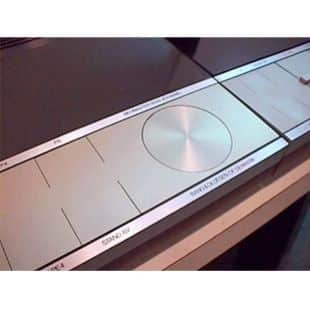
A thoroughgoing ‘black box’. Nothing in the shape of the device revealed how it worked or what it was. Only the inscription on the top of the unit told the user just how the black ‘magic mirror’ was brought to life so it could show which function has been activated. The unit was Bang & Olufsen’s first remote-controlled hi-fi system.

Beomaster 6000 History

Beomaster 6000 was the realisation of the Topline prototype on which work had progressed over the preceding years. The long flat cabinet of the Beomaster 1200 with its operation from the top and the depressed knobs was repeated. But the Beomaster 6000 is the first representative of a new phase in Jacob Jensen’s oeuvre. The slide rule motif symbolised mechanical precision, but now the entire idiom is adapted to the abstraction it was necessary to submit in communicating using electronics.

The visually, symbolically and tactilely easily understood slide rule operation belonged to the age of mechanisation and must be understood in extension of the modernistic machine aesthetics of the 1920s. The design of the Beomaster 6000 emphasises that it belongs to the electronic age and that it is part of the virtual, digital epoch. The volume is regulated stepwise by pressing one button to increase volume and another to reduce it. The buttons are gathered together in one large steel sheet, in which ‘tongues’ have been cut. These each have a play of less than half a millimetre as they are electronic micro-switches. The depressed adjustment knob, which made its first appearance in the General Electric radiogram study model around 1960, is an electronic tuner.

” The great quality of the slide rule motif was that it showed both the user’s input (setting) and the device’s output at the same time. The logical consequence of micro-electricity is a division of input and output – the electronics differ from mechanical operation in that their function is invisible. Jensen does what he can, nevertheless, to make it easy to understand what is happening. Input is placed in a silver-coloured control panel, while output (displays) is gathered under a sheet of dark glass. This magical black sheet, ‘the magic mirror’ that lights up while in use, is to give an extra experience over and above the purely aesthetical. The Beomaster 6000 is a very easy advanced quadraphonic radio. In view of the development team, four sound channels required your being able to adapt the sound to your position in the room. In this way, the first remote-controlled hi-fi system became a reality. ” – taken from ‘Jacob Jensen’ by Christain Holmsted Olesen.

Beomaster 6000 features

At the centre of the Beosystem 6000 was Beomaster 6000, a 4-channel amplifier with an FM tuner. Beomaster 6000 had a built-in SQ decoder (4-channel matrix) and was a full remote controlled system. Five FM stations could be pre-selected and there was manual tuning on the large illuminated FM scale. The FM tuner covered 87,5 – 104MHz. Tuning was carried out via feather-touch controls. The amplifier section was designed to cope with all sound reproduction systems: one, two or four channels. It produced 4×40 watts RMS (4 ohms) or 300 watts total music. 4-channel sound reproduction from records was popularly represented by two systems: CD4 discrete and SQ matrix.

CD4 (Compatible Discrete 4 channel) enabled high-quality sound reproduction with a high degree of separation between the four channels. CD4 was called at the time ‘TRUE 4 channel system’. However, many companies chose the SQ system because it was easily transmitted over FM and SQ records could be played on a high quality stereo record player. However, the price of convenience was less channel separation than the CD4 system afforded.

An SQ matrix decoder was incorporated in Beomaster 6000. Basically, its job was to reconstruct sound information for the two rear speakers. For CD4 records this reconstruction took place in the record-player, Beogram 6000.

Operation

Operation of Beomaster 6000 was child’s play. The large flat operation panel had logically grouped controls for all essential functions. Primary functions (e.g. programme source selection, volume, balance, bass and treble controls) were large, prominent, yet unobtrusive easy-touch buttons, while secondary functions (e.g. loudness, hi and low filters, etc) were smaller push buttons. Volume, balance, bass and treble controls were executed by a feather-touch of the finger tip. A servo-motor did the real work. An illuminated scale indicated position and control levels. There were facilities for frequency correction on all 4 channels. Each channel had a frequency range of 20-30,000 Hz. Distortion was lower than 0.1% at full power output.

Remote Control

The cordless (ultrasonic) remote control for the receiver could be bought as an accessory. This unit put you in true control of the music system. All the following functions could be controlled: volume, balance: left and right speakers; balance: front and rear speakers; five pre-selected FM stations; selection of external programme sources: record-player, tape/cassette-recorder; switching on and off (stand-by).

Connections

All necessary connection facilities were incorporated in Beomaster 6000: 4-channel record player, 2 or 4-channel tape-recorder. 4-channel headphones or two sets stereo headphones.

Beomaster 6000 was perfectly matched to partner the Beocord 5000 cassette recorder (introduced 1975). Beomaster 6000 was featured in an exhibition at New York’s MoMA (Museum of Modern Art) in 1975. At the time of its release it was the flagship of Bang & Olufsen’s hi-fi product range and was quite expensive to purchase. The UK price in 1978 was £581.50.

Accessories:

FM room aerial

An FM aerial type 8902010, was designed for use with Beomaster 6000 to be used in the home, within a certain radius of the radio transmitter. It was easily positioned at the rear of Beomaster 6000 and its two telescopic elements could be extended.