Cabinet for BeoSystem 2
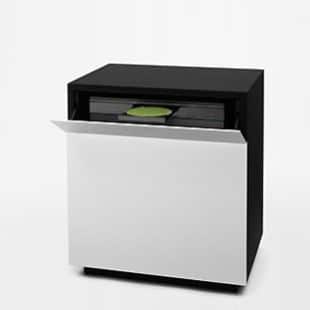
Designed to be used with BeoVision 4 to accommodate BeoSystem 2 and one set-top box or other DVD/VCR source. The cabinet is not strong enough to place a television on the top!

Designed to be used with BeoVision 4 to accommodate BeoSystem 2 and one set-top box or other DVD/VCR source. The cabinet is not strong enough to place a television on the top!

This was B&O’s first remote control, predating the Beomaster 2400. Known affectionately as the brick, it was very necessary as setting up a quad system required to be sitting at the centre of the four speakers. It allowed control of the volume and Beomaster source though it was not able to control any device except the Beomaster. It used ultrasonic rather that infra red waves and needed to be aimed at the Beomaster.
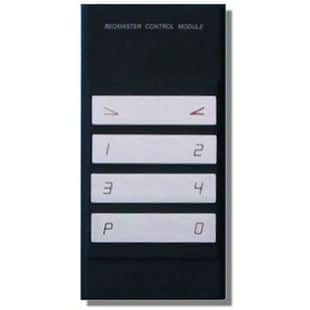
Beomaster 2400’s pièce de résistance was its remote control Commander which no hi-fi manufacturer had ever dreamed of producing before. In the USA however, remote controlled TVs had already become a reality and in Europe, the first TV commanders, with a plethora of buttons, had turned up in Germany
The 2400 system introduced the first version of system communication which allowed the Beomaster to speak to the Beogram. Either a Beogram 2400 or a Beogram 4004 could be controlled with the Beomaster controller.

This pin badge was given to dealers to either wear in-store or give to customer to commemorate the release of the new BeoSystem 2500. Measuring 2.5cm x 2.5cm and made from metal with black and blue enamel inserts. Quite a rare badge!
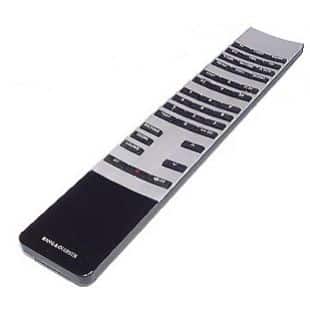
David Lewis’ Beolink 1000 from 1985 was the first step towards the intelligent audio-visual equipment that B&O continues to strive for. It was the first remote control on the market which could control both sound and picture. It is kept in a simple and harmonic design which is both timeless and functional.
” When you’ve got a superb picture and perfect sound, don’t you think it’s a shame to tie it down to one room? We think so. That’s why we’ve designed sound and pictures you can enjoy all over your house – and operate from your armchair. Say you’ve got a Bang & Olufsen TV, video and music system in your living room. And you’d like to extend the entertainment to your bedroom. It’s easily done, with some simple wiring, a small electronic box of tricks, and an extra TV.
Then you can watch not only TV and video from the equipment in your living room, but also enjoy CD, tape, radio and records. How does the remote control work? Easily, again. The Beolink 1000 remote control unit operates both sound and picture with our latest equipment. So you’ve got all the TV and audio equipment in the house at your fingertips.
It’s no good having one of the wonders of modern technology in your living room unless it’s easy to use and enjoy. We believe that truly advanced equipment should make life simpler, not more complicated. That’s why we do more than giving you remote control TV and video. And remote control music systems. We give you just ONE remote control for all of them.
It’s called Beolink 1000 remote control. All you do is put your feet up. And operate the cassette tape recorder with exactly the same buttons you use for the video tape recorder (just leave it to the equipment to sort it out). And you can do more. For example, if there’s a concert on, you can switch the sound from the TV to the loudspeakers in the music system. And courtesy of our latest technology, you can even dim the lights to suit your mood. Simple, but rather clever too ” (1988 B&O catalogue)
Beolink 1000 was the first remote control unit in the world designed to provide common access to both hi-fi systems and TV and video units. Programming like a magic wand, Beolink 1000, via its elegant an logical keypad, transmitted your every instruction. It allowed you to move from CD to TV, from radio to video, from record player to cassette recorder. It even allowed you move from TV speakers to hi-fi system stereo speakers to take full advantage of stereo video recorders.
Features
Beolink 1000 offered one-way remote control for audio, video and light control. Battery powered operation (3 x AAA) provided both primary and secondary function buttons. Could be used in any room with X-tra speakers or X-tra TV, providing easy access to all functions in the system. Could be placed conveniently on a wall as a stationary keypad held securely in place by the Beolink 1000 clip and was particularly well-suited to operate Beosystem 3500, Beocenter 8500, Beovisions LX5500 and LX4500 and Beovisions MX5500 and MX3500. The unit measured 40 x 15 x 230mm and weighed 230g.
Beolink 1000 was Bang & Olufsen’s entry remote control terminal, released in 1986. Its bigger brothers were the two-way Beolink 5000 and Beolink 7000 terminals. It originally came in a number of guises: released in 1987 was Terminal A, followed by Terminal V and then Terminal AV. Their purpose was to control the audio section of various hi-fis (Terminal A); the video sections (Terminal V) and combined functions (Terminal AV).
Beolink 1000 won the ID Award in 1986.
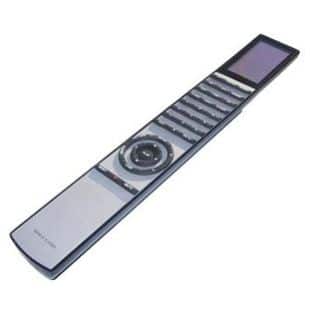
To keep up with Beolink’s ability to move sound and picture not only from one product to another, but from one room to another, Bang & Olufsen developed remote control units capable of two-way interactive and visual communication. The handheld Beolink 5000 provided a visual display which helped guide you through every stage of an operation giving you visual feedback of each system’s current status even when you were in a different room.
As the expanded capability of the terminal called for more operating buttons, Beolink 5000 had visual displays and operational buttons on both sides of the unit. Secondary-function buttons were recessed and placed to the rear while primary control buttons were positioned at the front.
Beolink 5000 added a new dimension to Bang & Olufsen’s remote control range in the early 1990’s. A fascinating transparent display, with numbers and letters apparently hanging in mid-air kept you constantly informed about the status of the Bang & Olufsen equipment that you were either watching or listening to. The layout of the unit was similar to that of Beolink 1000. However, because of its expanded capability it called for more operating buttons. To maintain its slim design, these were found on both sides of the hand-held unit. At the front, under the visual display, were the source selection buttons. Below these were the multi-function buttons arranged in a circle and designed for easy thumb operation. The circle contained buttons for analogue operation and menu-operated functions; a total of eleven buttons.
On the back were the secondary function buttons such as programming and recording, recessed in a channel to help prevent accidental operation.
Beolink 5000 was the ideal terminal to use where extra speakers or a second television were linked to a central system in a different room. Its display gave you feedback about the system’s current status to assist you in issuing your instructions.
It allowed you to fully utilise the timer recording, play and play next facilities on the Beosystem 4500 and Beocenter 9500. It was also particularly well-suited for Beosystem 2300. The remote control also maximised the programming capabilities of Beocord VX5000 video system and, via Beocenter 9500, allowed you to program LC1 and LC2 light control units.
Features
Beolink 5000 had the added benefit of a transparent display panel to guide users through complicated operations. Combining this display with fixed buttons which were positioned to provide a clear distinction between primary and secondary operations, allowed for simple and logical overall operation. The unit was light and slim, its display had low power consumption (LCD supertwist which produced map definition and detail even in bright sunlight) with a dot matrix display capacity of two lines, each with seven characters. The display could be read from either side of the handset dependant on which operations were carried out (to be read from either the back or the front).
Other important highlights of Beolink 5000 were:
Hand-held terminal for all video, audio and AV operation in central rooms and Local Control Systems
Two-way operation with display feedback
One-button source selection, video and audio
Logical layout with grouping of related functions
Secondary functions placed on the back to prevent inadvertent operation
Comprehensive secondary functions, e.g. record/time programming with display support and guidance
Companion infra-red remote control units that were available at the time of Beolink 5000’s introduction, were Beolink 1000 and Beolink 7000.
Component features
Beolink 5000 was the key to TV and video systems of the early 1990s. It was recommended for operation of such TV/video packages as Video System 5500 or Video System 6000, because these systems contained numerous advanced functions, especially in the fields of recording- and timer-programming. Beolink 5000 was optimised for the operation of such complex functions where you were guided through the options via prompts on the display of the terminal.
The display responded whenever you activated a function. When you carried out a primary operation, e.g. selected a source, you received status feedback. The feedback was dynamic, i.e. it changed according to the operation you carried out and the subsequent response the terminal received from the system. An example of this was in the adjustment of sound, where the centre balance function was only displayed when the function was available at that time in the system.
When you were in the secondary operation mode, e.g. for recording and programming, the display acted as a menu for operation, i.e. it became an active part of the operation. Thus the display was a reassuring response to your actions when you were in the primary operation mode, and an active guide when you were in the secondary operation mode.
The display was transparent, because some of the operation where the display is an active part, was initiated on the back. One example of this is when you activated the RECORD buttons on the rear of the remote control, the display read out the appropriate cues as seen from the back of the terminal i.e. V.REC PAUSE and the source you selected for the recording.
As most of the timer programming procedure was by the circle buttons on the front of Beolink 5000, the display read out the appropriate cue seen from the front as soon as you activated the PROGRAM button in the back recess. In this way it prompted you to turn the Beolink 5000 around for the rest of the programming procedure.
The advanced functions available via the Beolink 5000 included e.g. clearing TV stations, or making advanced (timer) recordings on your Bang & Olufsen VCR. The hazard with the record and program functions of course is that you could by accident clear or erase programs that you’d already made e.g. a recording on a video tape. So it was vital that the advanced functions were kept separated from the other main functions. By placing the buttons for operation of the advanced functions on the back of the terminal, Bang & Olufsen were able both to extend the number of secondary functions, and to make timer operation a real asset without risking inadvertent operation and confusing clutter on the front. Beolink 5000 was the first hand-held Beolink terminal where timer operation was possible with all recommended systems and even in stand-by.
The buttons for recording were grouped in the back recess to preclude inadvertent recording. To further secure against the inadvertent start of a recording, it was necessary first to point out the recorder and secondly start the recording on a second button.
Recording operation was refined with the Beolink 5000: all record buttons are grouped in the recess, you could address two video recorders, and no matter which one you used, you had direct access to start or stop of the recording and to make a record return.
Once you had summoned the source you wanted to record on to the TV, all you had to do was to turn the Beolink 5000 around and activate the [V.RECORD][REC.START] sequence to initiate a simple recording.
If you wanted to make an advanced recording of a TV programme as a background job, in RECORD PAUSE you selected V.TAPE + the programme number on the front before starting the recording on the back. The REC STOP button was a useful refinement here. When you had commenced a recording and switched to another source, e.g. TV, [REC STOP] gave you direct and instant access to stop of the background recording.
The third record level, timer record, was also initiated on the back, by means of the PROGRAM button. Beolink 5000 allowed you to make the timer operation both when the system was playing and when it was in stand by. In this way you would not disturb other uses of the video system and you need not even switch the system on to make a timer programming.
Picture adjustment was shown on the TV screen, and not on the Beolink 5000. In this way you could monitor and judge the changes directly on the screen, e.g. with regard to contrast. Sound adjustments were displayed both on the screen and on the terminal. In this way the feedback was always placed at the optimal point for operation and adjustments.
Teletext contains a number of secondary functions to enhance its user value, such as enlarging the page, mixing Teletext with the TV program, revealing a hidden information (e.g. VPS information on TV program page), etc. Many users never access these secondary
functions, because they have been assigned low priority on the remote controls and therefore it is difficult to access them. Beolink 5000 accesses the functions easily and as guided by its transparent display. In TEXT-mode, if you pressed MENU the display would read out:
TEXT
MENU?
If the answer was ‘yes’ [PLAY] gave access to the first item of the menu, as shown here:
Secondary Teletext functions available via [MENU]:
MENU (Teletext time programming)
LARGE
MIX
REVEAL
UPDATE
SUBCODE
As an alternative you could step through the options or leave the menu. The menu operation procedure simplified access to the secondary Teletext functions considerably and showed the advantage of using two operation logics: one for routine operations and one for important, but rarely-used, operations.
Beolink 5000 was the key to video systems such as Video System 5500, comprising Beovision MX5500 and Beocord VX5500. It was recommended for operation of such systems because this system contained numerous advanced functions, especially in the fields of recording and timer programming. Beolink 5000 was optimised for the operation of such complex functions, where you are guided through the options via prompts on the display of the terminal. Other important highlights of Beolink 5000 were:
Hand-held terminal for all video, audio and AV operation in central rooms and Local Control Systems
Two-way operation with display feedback
One-button source selection, video and audio
Logical layout with grouping of related functions
Secondary functions placed on the back to prevent inadvertent operation
Comprehensive secondary functions, e.g. record/time programming with display support and guidance
The display responded whenever you activated a function. When you carried out a primary operation, e.g. the selection of a source, you received status feedback. The feedback was dynamic, i.e. it changed according to the operation you carried out and the subsequent response the terminal received from the system. An example of this was in the adjustment of sound, where the previously mentioned centre balance function was only displayed when the function was available in the system. When you were in the secondary operation mode, e.g. for recording and programming, the display acted as a menu for operation, i.e. it became an active part of the operation. Thus the display was a reassuring response to your action when you were in the primary operation mode and an active guide when you were in the secondary operation mode. The display of Beolink 5000 was transparent, because some of the operations where the display was an active part, was initiated on the back. One example of this was when you activated the RECORD buttons on the back when the display read out the appropriate cues as seen from the back of the terminal, i.e. V.REC PAUSE and the source which you had selected for the recording.
As most of the timer programming procedure was by way of the circular button on the front of Beolink 5000, the display read out the appropriate cue as seen from the front as soon as you activated the PROGRAM button in the back recess. this way it prompted you to turn the Beolink 5000 around for the rest of the programming procedure.
The advanced functions available via Beolink 5000 include e.g. clearing (satellite) TV stations, or making advanced (timer) recordings on your VX5500. The potential problem with record and program functions was that you could by accident clear or erase previously-recorded programmes. So with Beolink 5000 the advanced functions were kept separate from the other main functions. By placing the buttons for operation of the advanced functions on the back of the terminal, Bang & Olufsen were able both to extend the amount of secondary functions, and to make timer operation a real asset without risking inadvertent operation and confusing clutter on the front. Beolink 5000 was the first hand-held Beolink terminal where timer operation was possible with all recommended systems, even while in stand by.
The buttons for recording were grouped in the back recess to preclude inadvertent recording. To further secure against inadvertent start of a recording, it was necessary first to put the VCR into a recording pause mode before commencing the recording by way of a second button.
Recording operation was refined with Beolink 5000: all record buttons were grouped in the recess; you could address two video recorders, and no matter which one you used, you had direct access to start or stop of the recording and to make a record ‘return
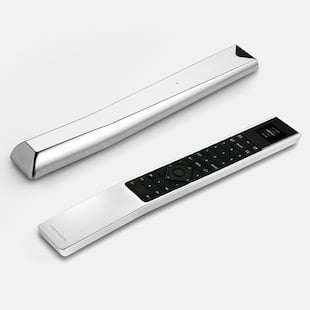
The BeoRemote One was launched alongside the new BeoVision Avant 55 LCD Television in 2015 and heralded the new, slimmer and more lightweight look and feel – in line with the new TV’s of the time.
The casing is milled from a single block of Aluminium then anodised (in various finishes and colours) and the main workings of the controller (including the batteries) are slid into place along the centre of the casing. Being soft aluminium, these remotes can very easily pick up dents and scratches – unlike the much tougher and heavier Beo4, but if it’s elegance you’re looking for, the BeoRemote One certainly ticks the boxes.
The bright LED style display is clear and easy to read, and buttons are simple and intuitive – but the lack of any backlighting can make it frustrating to use in low light or darkness!
The BeoRemote One was originally IR (infra-red) only, but the second generation heralded the new Bluetooth command as the added standard way of communicating with products.
The standard colour was the polished and anodised aluminium, with a ‘Silk’ option also available which had a satin look to it. Bang & Olufsen released a Limited Edition ’90’ housing in Rose Gold to mark their 90th Anniversary, which are quite rare, but not to everyone’s taste!
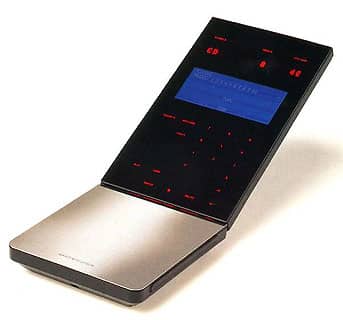
Beolink 7000, designed by David Lewis was, undoubtedly, one of the most beautiful and advanced remote control units ever made. Its completely new, radical design, with hardened glass and anodised aluminium surfaces enclosing sensi-touch panels and display menus, provided a unique interactive dialogue between the user and Bang & Olufsen’s audio and video systems.
The interactive nature of Beolink 7000 came into play as soon as you chose a function. Prompts or questions appeared on the screen to gently guide you through every stage of an operation. Beolink 7000 needed just a gentle touch of your hand to light up and literally, rise towards you, confirming its status as the world’s most advanced control unit. A simple touch on the electronically-sensitive metal front ‘woke up’ the unit and awaited your instructions.
Beolink 7000’s two-way infra-red data transfer capability could be used with every one of the latest (1991) audio and video systems. Its display panel provided two main areas of information. The top section provided data about the products and their functions. It told you which source was playing and offered the menu of functions for you to choose from. The lower section, with its combination of sensi-touch panels and displays allowed you to activate your chosen functions.
Beolink 7000 on its purpose-built wall stand incorporating mains charger to ensure that it was ready for operation at all times
A series of visual prompts guided the user through every stage of the operation with Beolink 7000 finally giving visual confirmation that your instructions had been carried out. Battery-operated for total freedom of use anywhere in the house, Beolink 7000 came with a stylish table-top recharging unit. And of course, being Bang & Olufsen, the terminal could be operated even when it was being recharged. As an alternative, Beolink 7000 could be placed high up on its purpose-designed stand next to your own armchair. The stand was adjustable for height and placed the unit at an angle slightly away from the vertical for optimum ease of operation.
This tall stand also contained a recharging unit to ensure that Beolink 7000 was fully operational at all times.
Beolink 7000 was the ideal terminal for anyone who had, or planned to have, Bang & Olufsen audio video systems linked to different rooms in the house through the Beolink® round-the-house system.
Features: Beolink 7000 was the ultimate in remote control units, its interactive nature making it ideally suited for the more complex operations of Bang & Olufsen’s systems of the early 1990’s, particularly when both audio and video systems were installed. Beosystem 6500 was designed for infra-red operation and only the Beolink 7000 terminal could operate all of its functions. Beolink 7000 was also recommended for rooms equipped with link systems. Additional speakers and an extra TV set extended the use and control of all available Bang & Olufsen sources to any room in the house. By working as part of a local Control System in a secondary room, Beolink 7000 extended the use and control of all available audio, video and light control sources. It could be attached to the wall-mounted unit where it gave a constant display and automatically recharged the terminal even when in use.
Other infra-red remote controls at the time that Beolink 7000 was available were the Beolink 1000 and Beolink 5000 terminals. The later versions of Beolink 7000 were fitted with RDS display as standard (see model Types below) which allowed you to view details of the radio channel to which you were listening. This however, would only function correctly when used with Beomaster 7000.
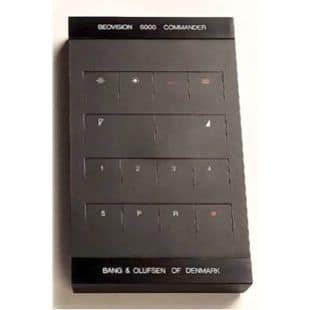
A very similar design to the Beomaster 6000 Commander, this was an ultrasound remote control for the top of the range Beovision 6000.
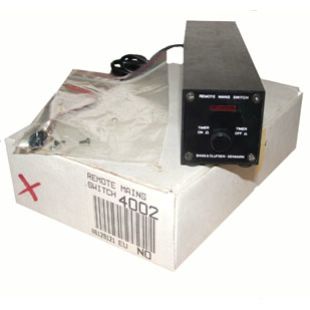
This device allowed the use of devices not normally controlled by remote to be added to a B&O system. It could be used to switch on any item which could be left on but which you did not want to be powered up all the time. It worked with the Beocenter 9000 and Beomaster 5500 in particular.